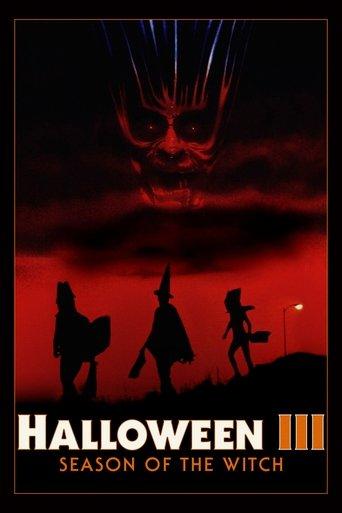
Halloween III: Season of the Witch poster
Movie

Halloween III: Season of the Witch

1982

11Score
Absolute Cinema

Story over sermons. Cinema first.

My list →Saved on this device — no account required.
Share this verdict card

Is Halloween III: Season of the Witch Woke? Quick Answer

Halloween III: Season of the Witch scores 11/100 on the IsItWoke scale and is rated Absolute Cinema.

That is the story-first end of the scale for this film.

The film significantly departs from the established Halloween franchise by removing its iconic antagonist Michael Myers and attempting to rebrand the series as an anthology, which feels like a legacy rewrite rather than a faithful continuation. Dialogue and character interactions do not exhibit overt ideological messaging or moral lecturing, focusing instead on the mystery and horror elements of the story.

See the full breakdown below.

Woke profile

How the score is shaped

Eight stored dimensions, each scored from 0 to 20.

  • Message-first dialogue

    0/20
  • Tokenistic characters

    0/20
  • Ideology over story

    0/20
  • Legacy rewriting

    15/20
  • Modern politics injection

    0/20
  • Protected protagonist pattern

    3/20
  • Anti-traditional framing

    0/20
  • Cultural normalization framing

    0/20

Receipts used in this verdict

Medium confidence

These source-linked claims were gathered before scoring. Supporting evidence can raise a relevant signal; counterevidence can reduce or contextualize it. Corporate statements, consultant credits and optional identity cosmetics are context for investigation. They do not establish narrative ideology or directly raise the score.

Reveal detailed receipts · may contain spoilers

The verdict above is spoiler-light. The concrete examples below can describe scenes, plot turns, character outcomes, or late-game material.

  • Franchise identity replacementsupporting

    Halloween III: Season of the Witch is the only Halloween series entry that does not feature Michael Myers and was conceived by producers John Carpenter and Debra Hill to rebrand the series as an anthology of standalone Halloween-themed films. [1]

  • Franchise identity replacementsupporting

    The film's disappointing critical and box-office reception prompted the franchise to return to Michael Myers six years later with Halloween 4: The Return of Michael Myers. [2]

Research checked 2026-10-23

AI vs Community

AI says Absolute Cinema. What do users say?

AI verdict: Absolute Cinema. Be among the first to challenge it.

Community verdict

Pick the band you think fits. One vote per browser on this title. You cannot change it after you vote.

Loading community votes…

Why it received this score

Based on: Published title analysisConfidence: MediumLast updated: 2026-10-23

Key reasons

  • The film significantly departs from the established Halloween franchise by removing its iconic antagonist Michael Myers and attempting to rebrand the series as an anthology, which feels like a legacy rewrite rather than a faithful continuation.
  • Dialogue and character interactions do not exhibit overt ideological messaging or moral lecturing, focusing instead on the mystery and horror elements of the story.
  • Characters are developed within the narrative context without obvious tokenism or symbolic representation for demographic checkboxes.
View full breakdown
  • The protagonist faces real danger and consequences, though some moments suggest minor invincibility without full narrative justification, typical of genre conventions.
  • There is no evidence of modern political discourse or anti-traditional framing; the story centers on a supernatural conspiracy without cultural or ideological subversion.

Score signals

SignalWhat was measuredStrengthImpact
Legacy rewritingHow much an existing franchise, adaptation, setting, or known property appears significantly altered, reinterpreted, or re-centered in ways that feel driven by modern ideological priorities rather than faithful or organic storytelling.15/20+9
Protected protagonist patternHow much the protagonist fits the protected-protagonist pattern (agenda-driven character construction) rather than competence fantasy. Score HIGH only when: competence appears unearned or unexplained; protagonist rarely faces consequences; antagonists exist mainly to demonstrate protagonist superiority; narrative treats protagonist as symbolically superior; plot shields protagonist from vulnerability. Score LOW when: competence is grounded in training, profession, or past experience; protagonist suffers damage or setbacks; real physical danger and survival tension exist (normal action storytelling). Do not penalize competence fantasy.3/20+2

AI cultural analysis

A short read on tone, themes, and messaging — not a plot synopsis.

AI read

Halloween III: Season of the Witch stands out in the Halloween franchise for its bold departure from the Michael Myers storyline, aiming to transform the series into an anthology. This significant franchise identity replacement feels more like a marketing experiment than an organic narrative evolution, which likely contributed to its poor reception and eventual abandonment of this direction.

The story focuses on a standalone horror-mystery plot involving a sinister conspiracy around Halloween masks, maintaining genre conventions without injecting overt ideological or political messaging. The characters serve the plot without apparent tokenism or forced diversity emphasis, and the protagonist experiences genuine threats and setbacks, preserving tension and stakes.
Related titles

More like this.

People also checked

What others ran after this one.

Run Halloween III: Season of the Witch through another test

Explore

Trending now

Send feedback

We send your description, report type, optional email and the current page path. No browsing history or session transcript is included.