A divided audience
The AI considers it Very Little Woke, while users consider it Very Woke. The 23-point difference (weighted 23) is among the stronger disagreements in our database.
Is this context useful?
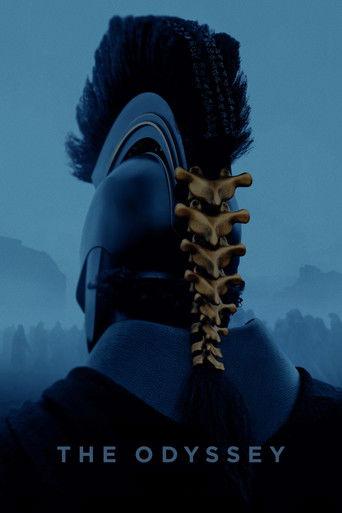
2026
Highly disputed
Mostly focused on storytelling.
The Odyssey scores 38/100 on the IsItWoke scale and is rated Very Little Woke.
Messaging can show up, but it is not the main event in this film.
The film prominently features Odysseus's reflective moralizing and thematic messaging through dialogue, especially in its opening scenes, which suggests a message-first approach to storytelling. Significant rearrangement and re-centering of the Trojan Horse and the destruction of Troy sequence shifts the narrative focus toward Odysseus's guilt, marking a clear legacy rewriting from Homer’s original epic.
Signal profile
These are structured scoring signals, not standalone factual claims. Read them together with the source-backed receipts and full analysis below.
Woke profile
Eight stored dimensions, each scored from 0 to 20.
Message
Characters
Story
Legacy
Politics
Lead
Tradition
Norms
Column height is the stored score out of 20
Message-first dialogue
14/20Tokenistic characters
0/20Ideology over story
15/20Legacy rewriting
14/20Modern politics injection
0/20Protected protagonist pattern
3/20Anti-traditional framing
0/20Cultural normalization framing
0/20These source-linked claims were gathered before scoring. Supporting evidence can raise a relevant signal; counterevidence can reduce or contextualize it. Corporate statements, consultant credits and optional identity cosmetics are context for investigation. They do not establish narrative ideology or directly raise the score.
The verdict above is spoiler-light. The concrete examples below can describe scenes, plot turns, character outcomes, or late-game material.
The New Yorker critic argues Nolan 'psychologiz[es] Odysseus' and gives the film a 'readily digestible modernity' that comes 'at the expense of the richness of detail' from Homer, indicating contemporary thematic framing displaces some of the epic's original texture and complexity. [2]
Multiple reviews note Nolan rearranged and emphasized the Trojan Horse/Destruction of Troy sequence and Odysseus's guilt-Pitchfork and Variety state the film underlines guilt over Troy and 'rearranged things' to make that moral thread central, a documented change in emphasis from Homer’s original ordering and focus. [5][4]
RogerEbert.com’s review opens by describing the film beginning 'with a man standing on a table in a banquet hall, telling a story,' and other critics note Nolan’s screenplay foregrounds Odysseus’s reflective moralizing, supporting readings that the film frames thematic messaging prominently through its opening and narrative voice. [1][3]
Sources (5)
Research checked 2026-10-12
AI vs Community
AI: Very Little Woke · Community: Very Woke · 382 votes · 23-point disagreement.
Woke Context
Based on rated titles in our database — filmography and franchise patterns, not personal judgments.
The AI considers it Very Little Woke, while users consider it Very Woke. The 23-point difference (weighted 23) is among the stronger disagreements in our database.
Pick the band you think fits. One vote per browser on this title. You cannot change it after you vote.
Loading community votes…
Community voters most often cited the following (optional tags they chose after voting). This reflects perceptions, not facts.
| Signal | What was measured | Strength | Impact |
|---|---|---|---|
| Ideology over story | How much the overall storytelling prioritizes ideological framing, message delivery, social commentary, or activism-coded narrative choices over pacing, conflict, immersion, and entertainment. | 15/20 | +10 |
| Message-first dialogue | How much the dialogue, monologues, or character interactions feel driven by overt messaging, moral lecturing, ideological framing, or making a point instead of serving the story naturally. | 14/20 | +9 |
| Legacy rewriting | How much an existing franchise, adaptation, setting, or known property appears significantly altered, reinterpreted, or re-centered in ways that feel driven by modern ideological priorities rather than faithful or organic storytelling. | 14/20 | +8 |
| Protected protagonist pattern | How much the protagonist fits the protected-protagonist pattern (agenda-driven character construction) rather than competence fantasy. Score HIGH only when: competence appears unearned or unexplained; protagonist rarely faces consequences; antagonists exist mainly to demonstrate protagonist superiority; narrative treats protagonist as symbolically superior; plot shields protagonist from vulnerability. Score LOW when: competence is grounded in training, profession, or past experience; protagonist suffers damage or setbacks; real physical danger and survival tension exist (normal action storytelling). Do not penalize competence fantasy. | 3/20 | +2 |
A short read on tone, themes, and messaging — not a plot synopsis.
This adaptation of The Odyssey leans heavily into thematic and psychological reinterpretation, prioritizing moral reflection and a modern sensibility over the original epic’s layered narrative. The storytelling is shaped to foreground Odysseus's internal guilt and ethical struggles, which shifts the focus from adventure and mythic complexity to a more message-driven character study.
This approach results in a rearranged plot structure that departs significantly from Homer’s ordering, signaling a clear legacy rewriting motivated by contemporary ideological framing. While the film avoids overt modern political injections or tokenistic characterizations, the narrative’s emphasis on moralizing dialogue and thematic exposition can feel heavy-handed and detract from immersive storytelling.
More like this.
What others ran after this one.