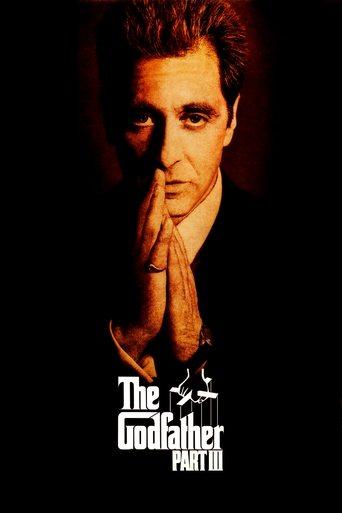
The Godfather Part III poster
Movie

The Godfather Part III

1990

17Score
Absolute Cinema

Story over sermons. Cinema first.

Share your verdict

Is The Godfather Part III Woke? Quick Answer

The Godfather Part III scores 17/100 on the IsItWoke scale and is rated Absolute Cinema.

That is the story-first end of the scale for this film. The strongest reasons behind the rating are Dialogue occasionally leans into moral lecturing, particularly regarding Michael's quest for redemption. and some characters feel underdeveloped and serve more as symbols of the mafia world than as fully realized individuals..

See the full breakdown below.

AI vs Community

AI says Absolute Cinema. What do users say?

AI verdict: Absolute Cinema. Be among the first to challenge it.

Community verdict

Pick the band you think fits. One vote per browser on this title. You cannot change it after you vote.

Loading community votes…

Why it received this score

Based on: Published title analysisConfidence: MediumLast updated: 2026-08-08

Key reasons

  • Dialogue occasionally leans into moral lecturing, particularly regarding Michael's quest for redemption.
  • Some characters feel underdeveloped and serve more as symbols of the mafia world than as fully realized individuals.
  • The story maintains a focus on character-driven narratives, though there are moments where ideology seeps in.
View full breakdown
  • While it does not rewrite the legacy of the franchise, it does introduce themes that feel somewhat modern in context.
  • The film does not overtly inject contemporary politics but hints at moral complexities relevant to its time.

Score signals

SignalWhat was measuredStrengthImpact
Message-first dialogueHow much the dialogue, monologues, or character interactions feel driven by overt messaging, moral lecturing, ideological framing, or making a point instead of serving the story naturally.6/20+4
Ideology over storyHow much the overall storytelling prioritizes ideological framing, message delivery, social commentary, or activism-coded narrative choices over pacing, conflict, immersion, and entertainment.5/20+3
Protected protagonist patternHow much the protagonist fits the protected-protagonist pattern (agenda-driven character construction) rather than competence fantasy. Score HIGH only when: competence appears unearned or unexplained; protagonist rarely faces consequences; antagonists exist mainly to demonstrate protagonist superiority; narrative treats protagonist as symbolically superior; plot shields protagonist from vulnerability. Score LOW when: competence is grounded in training, profession, or past experience; protagonist suffers damage or setbacks; real physical danger and survival tension exist (normal action storytelling). Do not penalize competence fantasy.4/20+3
Tokenistic charactersHow much characters feel inserted or shaped primarily for symbolic representation, political signaling, or demographic checkbox value rather than narrative depth, organic fit, or strong characterization.3/20+2
Cultural normalization framingHow much the title repeatedly frames a specific social model as morally instructive or culturally aspirational. Increase score when: explicit dialogue about what is normal or correct; episodes structured around validating a social viewpoint; recurring moral lessons centered on social themes. Signals: show teaches that a given lifestyle, family structure, or set of values is the right or aspirational one.3/20+2

AI cultural analysis

A short read on tone, themes, and messaging — not a plot synopsis.

AI read

The Godfather Part III continues the saga of the Corleone family with a focus on Michael's struggle for redemption and legitimacy. The film's dialogue occasionally slips into moralizing territory, particularly in Michael's reflections on his past actions, which can detract from the overall narrative flow.

While the characters are generally well-constructed, some feel more like vehicles for thematic exploration than fully fleshed-out individuals, which can lead to a sense of tokenism in character development. The storytelling remains largely character-driven, but there are moments where ideological themes emerge, particularly around the notions of power and morality.

Related titles

More like this.

People also checked

What others ran after this one.

Run The Godfather Part III through another test

Explore

Trending now