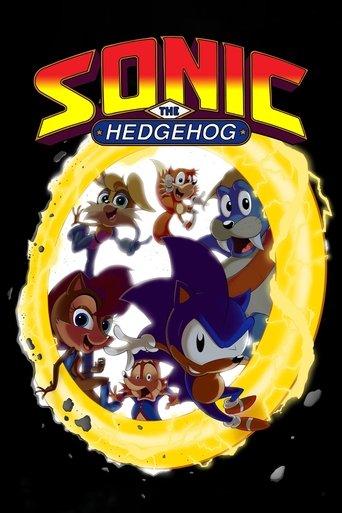
Sonic the Hedgehog poster
TV Show

Sonic the Hedgehog

1993

48Score
Slightly Woke

A few message-driven moments appear.

My list →Saved on this device — no account required.
Share this verdict card

Is Sonic the Hedgehog Woke? Quick Answer

Sonic the Hedgehog scores 48/100 on the IsItWoke scale and lands in Slightly Woke.

You get some message-forward moments, and story still has to carry the show.

The dialogue occasionally leans into environmental and political messaging, which sometimes interrupts natural character interaction. Some characters, such as Princess Sally and the Freedom Fighters, feel inserted to expand franchise lore but occasionally lack organic depth.

See the full breakdown below.

Signal profile

What is driving this verdict

Messaging

Political messaging: Medium

These are structured scoring signals, not standalone factual claims. Read them together with the source-backed receipts and full analysis below.

Woke profile

How the score is shaped

Eight stored dimensions, each scored from 0 to 20.

  • Message-first dialogue

    7/20
  • Tokenistic characters

    5/20
  • Ideology over story

    6/20
  • Legacy rewriting

    8/20
  • Modern politics injection

    7/20
  • Protected protagonist pattern

    4/20
  • Anti-traditional framing

    3/20
  • Cultural normalization framing

    8/20

Receipts used in this verdict

Medium confidence

These source-linked claims were gathered before scoring. Supporting evidence can raise a relevant signal; counterevidence can reduce or contextualize it. Corporate statements, consultant credits and optional identity cosmetics are context for investigation. They do not establish narrative ideology or directly raise the score.

Reveal detailed receipts · may contain spoilers

The verdict above is spoiler-light. The concrete examples below can describe scenes, plot turns, character outcomes, or late-game material.

  • Modern politicssupporting

    Reviewers describe the 1993 SatAM series as 'occasionally political' and note its environmental/political framing (Robotnik's industrial pollution vs. the natural Freedom Fighters). [3]

  • Legacy rewritingsupporting

    Contemporary and retrospective coverage documents that the 1993 ABC 'Sonic the Hedgehog' (SatAM) consciously took a darker, continuity-heavy direction that reframed franchise elements (Robotnik as a dictator who conquered Mobius, expanded original cast and lore) distinct from other 1993 Sonic cartoons. [2]

  • Cultural normalizationsupporting

    Multiple analyses and retrospectives state environmental themes and 'machinery=evil' visual shorthand are central recurring motifs of the series, framing industrial pollution and ecological preservation as core narrative premises. [3][1]

Research checked 2026-10-05

AI vs Community

AI says Slightly Woke. What do users say?

AI verdict: Slightly Woke. Be among the first to challenge it.

Season Wokeness Breakdown

Season-by-season woke breakdown coming soon.

Community verdict

Pick the band you think fits. One vote per browser on this title. You cannot change it after you vote.

Loading community votes…

Why it received this score

Based on: Published title analysisConfidence: MediumLast updated: 2026-10-05

Key reasons

  • The dialogue occasionally leans into environmental and political messaging, which sometimes interrupts natural character interaction.
  • Some characters, such as Princess Sally and the Freedom Fighters, feel inserted to expand franchise lore but occasionally lack organic depth.
  • The series prioritizes its ecological and anti-industrial themes, which sometimes overshadow pacing and adventure elements.
View full breakdown
  • The show significantly reinterprets the Sonic franchise by framing Robotnik as a dictator and emphasizing a darker, continuity-heavy plot.
  • Environmental preservation is a central, normalized theme, with machinery and industrialization framed as inherently evil, shaping the show's moral universe.

Score signals

SignalWhat was measuredStrengthImpact
Message-first dialogueHow much the dialogue, monologues, or character interactions feel driven by overt messaging, moral lecturing, ideological framing, or making a point instead of serving the story naturally.7/20+5
Legacy rewritingHow much an existing franchise, adaptation, setting, or known property appears significantly altered, reinterpreted, or re-centered in ways that feel driven by modern ideological priorities rather than faithful or organic storytelling.8/20+5
Cultural normalization framingHow much the title repeatedly frames a specific social model, identity/sexuality framing, lifestyle, family structure, or set of values as culturally meaningful, normalizing, morally instructive, or aspirational. Increase score when the work itself is explicitly positioned around that cultural proposition - through narrative, marketing, advocacy, or identity-specific educational/sexual content. Mere presence of any demographic or an incidental relationship is not enough.8/20+5
Ideology over storyHow much the overall storytelling prioritizes ideological framing, message delivery, social commentary, or activism-coded narrative choices over pacing, conflict, immersion, and entertainment.6/20+4
Modern politics injectionHow much contemporary political discourse, activist framing, or modern culture-war signaling appears injected into fantasy, sci-fi, historical, or otherwise escapist settings in a way that feels noticeable or immersion-breaking.7/20+4

AI cultural analysis

A short read on tone, themes, and messaging — not a plot synopsis.

AI read

The 1993 Sonic the Hedgehog series takes a distinct approach within the franchise by embedding a strong environmental and political message into its narrative fabric. This ideological framing is evident in the persistent conflict between the Freedom Fighters and Robotnik's industrial dictatorship, which colors much of the dialogue and plot.

While this gives the show thematic depth, it sometimes comes at the expense of organic storytelling, as characters occasionally serve more as symbols of ecological resistance than fully realized individuals. The series notably rewrites franchise elements, casting Robotnik as a despotic ruler and expanding the cast to support a continuity-heavy story arc.
Related titles

More like this.

People also checked

What others ran after this one.

Run Sonic the Hedgehog through another test

Explore

Trending now

Send feedback

We send your description, report type, optional email and the current page path. No browsing history or session transcript is included.