A divided audience
The AI considers it Very Little Woke, while users consider it Very Woke. The 34-point difference (weighted 29) is among the stronger disagreements in our database.
Is this context useful?
2026
Highly disputed
Mostly focused on storytelling.
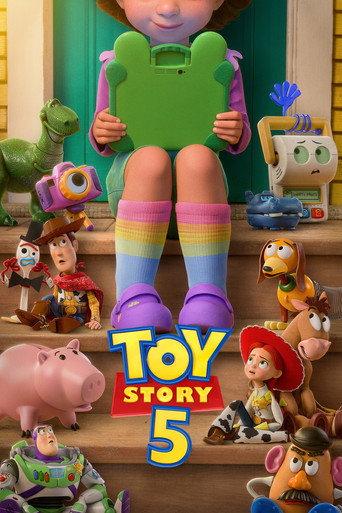
Toy Story 5 scores 34/100 on the IsItWoke scale and is rated Very Little Woke.
Messaging can show up, but it is not the main event in this film.
The dialogue primarily serves the story of toys competing with new technology, with minimal overt messaging or ideological lecturing. Characters remain consistent with previous installments, with only slight updates that feel organic rather than tokenistic.
Woke profile
Eight stored dimensions, each scored from 0 to 20.
Message
Characters
Story
Legacy
Politics
Lead
Tradition
Norms
Column height is the stored score out of 20
Message-first dialogue
3/20Tokenistic characters
2/20Ideology over story
3/20Legacy rewriting
1/20Modern politics injection
2/20Protected protagonist pattern
3/20Anti-traditional framing
0/20Cultural normalization framing
1/20AI vs Community
AI: Very Little Woke · Community: Very Woke · 51 votes · 34-point disagreement.
Woke Context
Based on rated titles in our database — filmography and franchise patterns, not personal judgments.
The AI considers it Very Little Woke, while users consider it Very Woke. The 34-point difference (weighted 29) is among the stronger disagreements in our database.
Pick the band you think fits. One vote per browser on this title. You cannot change it after you vote.
Loading community votes…
Community voters most often cited the following (optional tags they chose after voting). This reflects perceptions, not facts.
| Signal | What was measured | Strength | Impact |
|---|---|---|---|
| Message-first dialogue | How much the dialogue, monologues, or character interactions feel driven by overt messaging, moral lecturing, ideological framing, or making a point instead of serving the story naturally. | 3/20 | +2 |
| Ideology over story | How much the overall storytelling prioritizes ideological framing, message delivery, social commentary, or activism-coded narrative choices over pacing, conflict, immersion, and entertainment. | 3/20 | +2 |
| Protected protagonist pattern | How much the protagonist fits the protected-protagonist pattern (agenda-driven character construction) rather than competence fantasy. Score HIGH only when: competence appears unearned or unexplained; protagonist rarely faces consequences; antagonists exist mainly to demonstrate protagonist superiority; narrative treats protagonist as symbolically superior; plot shields protagonist from vulnerability. Score LOW when: competence is grounded in training, profession, or past experience; protagonist suffers damage or setbacks; real physical danger and survival tension exist (normal action storytelling). Do not penalize competence fantasy. | 3/20 | +2 |
| Tokenistic characters | How much characters feel inserted or shaped primarily for symbolic representation, political signaling, or demographic checkbox value rather than narrative depth, organic fit, or strong characterization. | 2/20 | +1 |
| Legacy rewriting | How much an existing franchise, adaptation, setting, or known property appears significantly altered, reinterpreted, or re-centered in ways that feel driven by modern ideological priorities rather than faithful or organic storytelling. | 1/20 | +1 |
A short read on tone, themes, and messaging — not a plot synopsis.
Toy Story 5 continues the franchise's tradition of character-driven storytelling centered around the beloved toy characters. The narrative focuses on the clash between traditional play and new digital distractions, which is handled with humor and heart rather than overt ideological framing.
Dialogue and character interactions feel natural, serving the plot and emotional beats instead of pushing a social agenda. While there are some modern cultural references, they are integrated lightly and do not dominate the story or break immersion.
More like this.
What others ran after this one.