Book

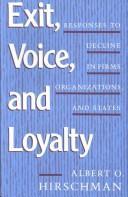
Exit, voice, and loyalty

1970

0Score
Essential Reading
Share your verdict

Community verdict

Pick the band you think fits. One vote per browser on this title. You cannot change it after you vote.

Loading community votes…

Woke Breakdown

Message-first dialogue
0
Tokenistic characters
0
Ideology over story
0
Legacy rewriting
0
Modern politics injection
0
Protected protagonist pattern
0
Anti-traditional framing
0
Cultural normalization framing
0

Quick reasons

  • The book presents a nuanced exploration of organizational dynamics.
  • Hirschman's concepts are grounded in real-world observations rather than ideological posturing.
  • There is no overt messaging or character-driven agenda.
  • The focus is on theoretical frameworks rather than contemporary political issues.
  • The analysis of exit, voice, and loyalty is methodical and insightful.

AI cultural analysis

Here's the read.

Albert O. Hirschman's 'Exit, Voice, and Loyalty' is a foundational text that delves into the complexities of organizational behavior and individual agency. The work is devoid of any overt ideological framing or agenda-driven dialogue, focusing instead on a theoretical exploration of how individuals respond to dissatisfaction within organizations. Hirschman’s distinction between 'exit' and 'voice' is presented in a way that encourages critical thought without imposing a specific moral or political viewpoint. The concepts are applicable across various contexts, allowing for a rich discussion on economic and social phenomena without succumbing to modern political discourse or activism. Overall, the book stands as a significant contribution to organizational sociology, emphasizing the interplay of loyalty and dissent without falling into the traps of tokenism or ideological bias.
Related titles

More like this.

People also checked

What others ran after this one.

Explore

Trending now