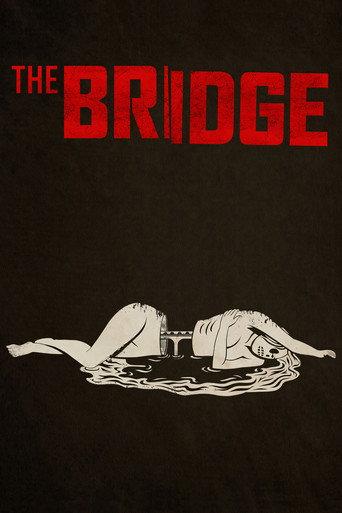
The Bridge poster
TV Show

The Bridge

2013

35Score
Very Little Woke

Mostly focused on storytelling.

My list →Saved on this device — no account required.
Share this verdict card

Is The Bridge Woke? Quick Answer

The Bridge scores 35/100 on the IsItWoke scale and lands in Very Little Woke.

Messaging can show up, but it is not the main event in this show.

The Bridge heavily foregrounds immigration and border politics as central themes, making contemporary political discourse a dominant narrative driver. Dialogue, especially from the killer character, often serves as explicit messaging and didactic political statements, which can feel hokey and detract from natural storytelling.

See the full breakdown below.

Signal profile

What is driving this verdict

Messaging

Political messaging: High

Narrative focus

Identity / sexuality centrality: Present

These are structured scoring signals, not standalone factual claims. Read them together with the source-backed receipts and full analysis below.

Woke profile

How the score is shaped

Eight stored dimensions, each scored from 0 to 20.

  • Message-first dialogue

    13/20
  • Tokenistic characters

    3/20
  • Ideology over story

    14/20
  • Legacy rewriting

    0/20
  • Modern politics injection

    15/20
  • Protected protagonist pattern

    4/20
  • Anti-traditional framing

    0/20
  • Cultural normalization framing

    6/20

Receipts used in this verdict

High confidence

These source-linked claims were gathered before scoring. Supporting evidence can raise a relevant signal; counterevidence can reduce or contextualize it. Corporate statements, consultant credits and optional identity cosmetics are context for investigation. They do not establish narrative ideology or directly raise the score.

Reveal detailed receipts · may contain spoilers

The verdict above is spoiler-light. The concrete examples below can describe scenes, plot turns, character outcomes, or late-game material.

  • Modern politicssupporting

    Multiple contemporary reviews state the series foregrounds immigration, border politics and related real-world issues as central themes of the show’s premise and episodes. [1][2][4]

  • Ideology over storysupporting

    A Washington Post column argued that The Bridge can serve as a cautionary example of a show that ‘tries to be topical,’ suggesting its topical/political material sometimes undercuts or distracts from other storytelling elements. [5]

  • Message-first dialoguesupporting

    A Washington Post review criticized aspects of the killer’s rhetoric (messages to the public) as ‘sinister (and fairly hokey)’ and noted the show’s explicit, didactic killer messages that call attention to political/philosophical themes. [3]

  • Tokenistic character writingcounter

    Several substantive reviews (Slant, TheWrap, Washington Post) describe layered, conflicted characters and nuance rather than reducing characters to mere symbolic or checklist devices. [6][4][3]

Research checked 2026-10-27

AI vs Community

AI says Very Little Woke. What do users say?

AI verdict: Very Little Woke. Be among the first to challenge it.

Season Wokeness Breakdown

Season-by-season woke breakdown coming soon.

Community verdict

Pick the band you think fits. One vote per browser on this title. You cannot change it after you vote.

Loading community votes…

Why it received this score

Based on: Published title analysisConfidence: MediumLast updated: 2026-10-27

Key reasons

  • The Bridge heavily foregrounds immigration and border politics as central themes, making contemporary political discourse a dominant narrative driver.
  • Dialogue, especially from the killer character, often serves as explicit messaging and didactic political statements, which can feel hokey and detract from natural storytelling.
  • Characters are generally well-developed and nuanced rather than tokenistic, avoiding simplistic symbolic representation despite the politically charged setting.
View full breakdown
  • The show prioritizes topical political framing over immersive crime drama pacing, which some critics note undermines the storytelling and suspense.
  • The protagonist shows some vulnerability and consequences, but occasional narrative choices lean toward protecting their competence without fully earned justification.

Score signals

SignalWhat was measuredStrengthImpact
Ideology over storyHow much the overall storytelling prioritizes ideological framing, message delivery, social commentary, or activism-coded narrative choices over pacing, conflict, immersion, and entertainment.14/20+10
Message-first dialogueHow much the dialogue, monologues, or character interactions feel driven by overt messaging, moral lecturing, ideological framing, or making a point instead of serving the story naturally.13/20+9
Modern politics injectionHow much contemporary political discourse, activist framing, or modern culture-war signaling appears injected into fantasy, sci-fi, historical, or otherwise escapist settings in a way that feels noticeable or immersion-breaking.15/20+9
Cultural normalization framingHow much the title repeatedly frames a specific social model, identity/sexuality framing, lifestyle, family structure, or set of values as culturally meaningful, normalizing, morally instructive, or aspirational. Increase score when the work itself is explicitly positioned around that cultural proposition - through narrative, marketing, advocacy, or identity-specific educational/sexual content. Mere presence of any demographic or an incidental relationship is not enough.6/20+4
Protected protagonist patternHow much the protagonist fits the protected-protagonist pattern (agenda-driven character construction) rather than competence fantasy. Score HIGH only when: competence appears unearned or unexplained; protagonist rarely faces consequences; antagonists exist mainly to demonstrate protagonist superiority; narrative treats protagonist as symbolically superior; plot shields protagonist from vulnerability. Score LOW when: competence is grounded in training, profession, or past experience; protagonist suffers damage or setbacks; real physical danger and survival tension exist (normal action storytelling). Do not penalize competence fantasy.4/20+3

AI cultural analysis

A short read on tone, themes, and messaging — not a plot synopsis.

AI read

The Bridge is a crime drama that uses its US-Mexico border setting to explore immigration and political tensions in a way that often places ideology above story. The killer’s messages and the show’s focus on topical issues sometimes overshadow natural dialogue and character interaction, making the political messaging feel overt and occasionally heavy-handed.

However, the characters themselves are treated with complexity and avoid falling into tokenistic traps, which helps maintain some narrative depth. While the series does not rewrite any legacy property, it injects contemporary politics into its setting prominently, which some viewers might find immersion-breaking.

Related titles

More like this.

People also checked

What others ran after this one.

Run The Bridge through another test

Explore

Trending now

Send feedback

We send your description, report type, optional email and the current page path. No browsing history or session transcript is included.