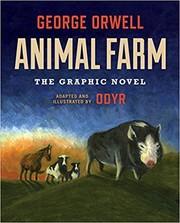
Animal Farm poster
Book

Animal Farm

9Score
Essential Reading
My list →Saved on this device — no account required.
Share this verdict card

Is Animal Farm Woke? Quick Answer

Animal Farm scores 9/100 on the IsItWoke scale and reads as Essential Reading.

That is the story-first end of the scale for this book.

The graphic novel adaptation stays largely faithful to Orwell's original political allegory, preserving the story's intensity without introducing overt new ideological messaging. Some critics feel the adaptation simplifies or loses some of the original's nuanced symbolism, which may indicate a slight tokenistic flattening of characters into more straightforward allegorical roles.

See the full breakdown below.

Woke profile

How the score is shaped

Eight stored dimensions, each scored from 0 to 20.

  • Message-first dialogue

    3/20
  • Tokenistic characters

    6/20
  • Ideology over story

    4/20
  • Legacy rewriting

    2/20
  • Modern politics injection

    0/20
  • Protected protagonist pattern

    0/20
  • Anti-traditional framing

    0/20
  • Cultural normalization framing

    0/20

Receipts used in this verdict

Medium confidence

These source-linked claims were gathered before scoring. Supporting evidence can raise a relevant signal; counterevidence can reduce or contextualize it. Corporate statements, consultant credits and optional identity cosmetics are context for investigation. They do not establish narrative ideology or directly raise the score.

Reveal detailed receipts · may contain spoilers

The verdict above is spoiler-light. The concrete examples below can describe scenes, plot turns, character outcomes, or late-game material.

  • Tokenistic character writingsupporting

    A Goodreads reviewer wrote that the graphic-novel adaptation 'changes the story for the reader and causes the graphic novel version to lack some of the symbolism and nuance of the original tale.' [1]

  • Ideology over storycounter

    Publishers Weekly described Odyr’s painterly adaptation as striking a visceral note that 'matches the intensity of Orwell’s original text,' indicating the adaptation preserves the novel's original political/plot intensity rather than displacing story with overt new messaging. [3]

  • Legacy rewritingcounter

    Multiple publisher and review listings present this as a 'fully authorized' graphic adaptation by Odyr that 'translates the world and message of Animal Farm,' framing the edition as an interpretation of the original rather than a retrospective ideological rewrite of established canon. [2]

Research checked 2026-10-16

AI vs Community

AI says Essential Reading. What do users say?

AI verdict: Essential Reading. Be among the first to challenge it.

Community verdict

Pick the band you think fits. One vote per browser on this title. You cannot change it after you vote.

Loading community votes…

Why it received this score

Based on: Published title analysisConfidence: MediumLast updated: 2026-10-16

Key reasons

  • The graphic novel adaptation stays largely faithful to Orwell's original political allegory, preserving the story's intensity without introducing overt new ideological messaging.
  • Some critics feel the adaptation simplifies or loses some of the original's nuanced symbolism, which may indicate a slight tokenistic flattening of characters into more straightforward allegorical roles.
  • The adaptation is officially authorized and positioned as a translation of the original work rather than a legacy rewrite, which limits the extent of ideological reframing or franchise displacement.
View full breakdown
  • Dialogue and narrative choices do not appear to prioritize message-first lecturing but rather serve the story's satirical and fable-like qualities.
  • There is no evidence of modern political discourse being injected into the historical allegory, nor is there any framing that glamorizes anti-traditional values beyond Orwell's original critique.

Score signals

SignalWhat was measuredStrengthImpact
Tokenistic charactersHow much characters feel inserted or shaped primarily for symbolic representation, political signaling, or demographic checkbox value rather than narrative depth, organic fit, or strong characterization.6/20+3
Ideology over storyHow much the overall storytelling prioritizes ideological framing, message delivery, social commentary, or activism-coded narrative choices over pacing, conflict, immersion, and entertainment.4/20+3
Message-first dialogueHow much the dialogue, monologues, or character interactions feel driven by overt messaging, moral lecturing, ideological framing, or making a point instead of serving the story naturally.3/20+2
Legacy rewritingHow much an existing franchise, adaptation, setting, or known property appears significantly altered, reinterpreted, or re-centered in ways that feel driven by modern ideological priorities rather than faithful or organic storytelling.2/20+1

AI cultural analysis

A short read on tone, themes, and messaging — not a plot synopsis.

AI read

This graphic adaptation of Animal Farm largely respects the original's political allegory and storytelling intensity. The adaptation’s painterly style and page design aim to evoke the visceral impact of Orwell's text without overshadowing the narrative with new ideological agendas.

However, some reviewers note a loss of symbolic subtlety, suggesting that the characters may feel somewhat more tokenistic or simplified compared to the novel's complex allegorical figures. This flattening can slightly reduce the depth of characterization but does not amount to a full ideological rewrite or message-first narrative.

Related titles

More like this.

People also checked

What others ran after this one.

Explore

Trending now

Send feedback

We send your description, report type, optional email and the current page path. No browsing history or session transcript is included.