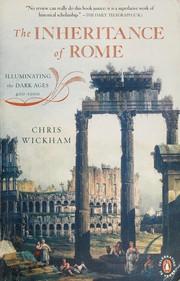
The Inheritance of Rome poster
Book

The Inheritance of Rome

4Score
Essential Reading
My list →Saved on this device — no account required.
Share this verdict card

Is The Inheritance of Rome Woke? Quick Answer

The Inheritance of Rome scores 4/100 on the IsItWoke scale and reads as Essential Reading.

That is the story-first end of the scale for this book.

The book prioritizes rigorous historical analysis over ideological messaging, keeping dialogue and narrative focused on facts and interpretations rather than moralizing. There is no evidence of tokenistic characters or symbolic representation since this is a nonfiction historical work centered on cultures and peoples, not fictional characterization.

See the full breakdown below.

Woke profile

How the score is shaped

Eight stored dimensions, each scored from 0 to 20.

  • Message-first dialogue

    1/20
  • Tokenistic characters

    0/20
  • Ideology over story

    2/20
  • Legacy rewriting

    0/20
  • Modern politics injection

    0/20
  • Protected protagonist pattern

    0/20
  • Anti-traditional framing

    1/20
  • Cultural normalization framing

    0/20

AI vs Community

AI says Essential Reading. What do users say?

AI verdict: Essential Reading. Be among the first to challenge it.

Community verdict

Pick the band you think fits. One vote per browser on this title. You cannot change it after you vote.

Loading community votes…

Why it received this score

Based on: Published title analysisConfidence: MediumLast updated: 2026-10-06

Key reasons

  • The book prioritizes rigorous historical analysis over ideological messaging, keeping dialogue and narrative focused on facts and interpretations rather than moralizing.
  • There is no evidence of tokenistic characters or symbolic representation since this is a nonfiction historical work centered on cultures and peoples, not fictional characterization.
  • The narrative does not rewrite legacy history to fit modern ideological agendas but rather challenges outdated misconceptions with scholarly evidence.
View full breakdown
  • Contemporary political discourse is largely absent, as the work concentrates on historical context without injecting modern culture-war framing.
  • The framing of the so-called Dark Ages as a formative and complex period is a corrective to traditional views rather than an anti-traditional or corrosive stance.

Score signals

SignalWhat was measuredStrengthImpact
Message-first dialogueHow much the dialogue, monologues, or character interactions feel driven by overt messaging, moral lecturing, ideological framing, or making a point instead of serving the story naturally.1/20+1
Ideology over storyHow much the overall storytelling prioritizes ideological framing, message delivery, social commentary, or activism-coded narrative choices over pacing, conflict, immersion, and entertainment.2/20+1
Anti-traditional framingHow strongly a title normalizes, glamorizes, or positively frames anti-traditional, anti-religious, anti-family, or civilizationally subversive themes in a way that should count as woke or corrosive for this product's audience.1/20+1

AI cultural analysis

A short read on tone, themes, and messaging — not a plot synopsis.

AI read

This nonfiction history book offers a broad and scholarly reexamination of the European Middle Ages, challenging the simplistic and pejorative label of the Dark Ages. The writing is grounded in extensive research and archaeological evidence, focusing on the development of European identity through a nuanced portrayal of multiple cultures and empires.

The work avoids ideological preaching or message-first dialogue, instead letting the historical record and critical synthesis drive the narrative. Unlike fiction or media that might prioritize contemporary political messaging or identity politics, this book maintains a clear focus on historical accuracy and complexity.
Related titles

More like this.

People also checked

What others ran after this one.

Explore

Trending now

Send feedback

We send your description, report type, optional email and the current page path. No browsing history or session transcript is included.