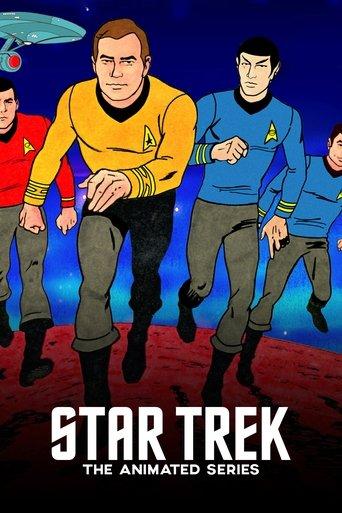
Star Trek
1973
The sourced concerns are substantially offset by delivered value.
What counts as a cash grab?
Commercial extraction prioritized over meaningful consumer or creative value. Profit, popularity, adaptations, sequels, remakes, high budgets, and normal marketing do not count by themselves.
Why?
Star Trek: The Animated Series (1973) was a 22-episode, Filmation-produced animated continuation of Star Trek that reused the original cast as voice actors and adapted some unused Original Series material, while also earning industry recognition including a Daytime Emmy. Reporting and reference sources show no evidence of predatory monetization or deceptive release tactics. The record shows both reuse of franchise assets and substantive new animated stories that leveraged animation to depict concepts impractical on the earlier live action production.
- Produced by Filmation as an animated spin-off with the original cast reprising roles, indicating clear reliance on established franchise recognition.
- Several episodes were adapted from or condensed from unused Original Series scripts, showing reuse of prior material.
- No contemporary reporting or release documentation was found that alleges predatory monetization, deceptive pricing, or rushed-for-profit release tactics.
View full breakdownHide full breakdown
- The series received industry recognition and delivered stories, such as Yesteryear, that expanded Star Trek continuity and used animation to achieve otherwise impractical scenes.
Score factors
| Direction | Factor | Evidence | Impact |
|---|---|---|---|
| For | Reuse of Original Series material | At least some episodes were condensed from or originated as unused The Original Series scripts, for example the episode 'Bem' began as a TOS script and was later produced for the animated series.[3][2] | +18 |
| Against | Industry recognition | The animated series received industry recognition, winning a Daytime Emmy in the mid 1970s for Outstanding Children's Entertainment, which supports a finding of meaningful production value.[1][4] | -16 |
| Against | Substantive new animated storytelling | The series produced 22 episodes that expanded Star Trek continuity and included original stories and characters that were not simply cheap reuses, examples include the widely-cited episode 'Yesteryear'.[5][1] | -15 |
| For | No evidence of predatory monetization | Contemporary production and release reporting consulted makes no mention of predatory monetization schemes, deceptive pricing, or paywall tactics tied to the original 1973-74 broadcast of the series.[2][1] | +13 |
| For | Use of franchise and original cast | The series was produced by Filmation as an animated spin-off and featured the original live action cast reprising their roles as voice actors, demonstrating explicit reliance on Star Trek brand recognition.[2][1] | +9 |
| Against | Artistic and technical risk via animation | Contemporaneous and retrospective sources note that animation allowed the show to depict alien environments, creatures, and effects impractical for the original live action series, indicating technical ambition rather than pure cheapness.[2][1] | -7 |
Confidence: Medium · Sources consulted are reputable reference and fan-encyclopedia pages and historical summaries, they document production facts and awards but do not include deep contemporaneous business reporting on studio motivations or detailed merchandising/contractual records so extraction evidence is limited. · Researched 2026-09-20
Sources reviewed
- [1]memory-alpha.fandom.com
- [2]en.wikipedia.org
- [3]en.wikipedia.org
- [4]www.cac.org.uk
- [5]en.wikipedia.org
- [6]en.wikipedia.org
- [7]en.wikipedia.org
- [8]en.wikipedia.org
- [9]memory-alpha.fandom.com
- [10]www.denofgeek.com
View 16 more sourcesShow fewer sources
- [11]commons.wikimedia.org
- [12]www.televisionacademy.com
- [13]wikipedia.blackbriarcomputing.com
- [14]www.worldradiohistory.com
- [15]pmueller.de
- [16]www.televisionacademy.com
- [17]sitelet.easiiodev.ai
- [18]www.tvhalloffame.com
- [19]www.denofgeek.com
- [20]tvsurveillance.wordpress.com
- [21]trekkingwithdennis.com
- [22]bclawreview.bc.edu
- [23]mspace.lib.umanitoba.ca
- [24]www.reddit.com
- [25]www.quinnemanuel.com
- [26]www.reddit.com
What does the community think?
The AI sees low cash-grab risk. What's your read?
Loading community verdict…