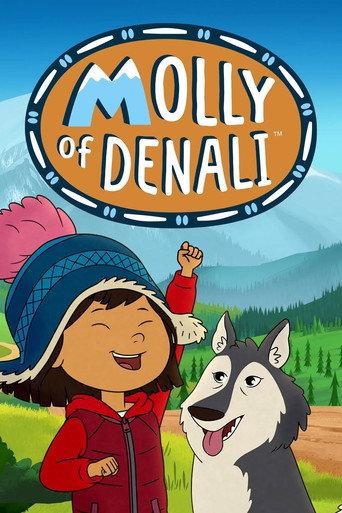
Molly of Denali
2019
The sourced concerns are substantially offset by delivered value.
What counts as a cash grab?
Commercial extraction prioritized over meaningful consumer or creative value. Profit, popularity, adaptations, sequels, remakes, high budgets, and normal marketing do not count by themselves.
Why?
Molly of Denali is a PBS KIDS animated series launched in 2019, developed with WGBH and Atomic Cartoons and funded in part by public education grants, that centers an Alaska Native lead and includes Alaska Native cast, writers, advisors and cultural review. Independent coverage and major awards praise its educational design, cultural authenticity and public service funding, and I found no credible reporting that the series used predatory monetization, rushed deceptive release tactics, or low-effort reuse to extract commercial value.
- Produced and distributed by public broadcasters with Department of Education and CPB grant funding and PBS educational mission.
- Documented Alaska Native involvement across cast and creative roles, with cultural advisors and language/music integration.
- Recognized by critics and major awards including a Peabody and positive coverage on cultural representation and pedagogy.
View full breakdownHide full breakdown
- No credible sources show exploitative monetization, deceptive release practices, or evidence of low-effort brand exploitation.
Score factors
| Direction | Factor | Evidence | Impact |
|---|---|---|---|
| Against | Indigenous creative involvement | More than 60 Alaska Native actors, writers, advisors, producers and musicians were involved and cultural advisors reviewed scripts and animation for accuracy.[1][5] | -18 |
| For | No evidence of predatory monetization | I found no reporting or disclosures indicating predatory monetization, paid gating of primary episodes, exploitative microtransactions, or deceptive pricing tied to the series.[2][1] | +15 |
| Against | Public funding and education focus | The series was developed by WGBH and Atomic Cartoons for PBS KIDS with funding from the CPB and the Department of Education Ready To Learn grant, emphasizing an educational mission rather than commercial extraction.[2][3] | -14 |
| Against | Supplementary educational resources | PBS produced digital games, curriculum resources and LearningMedia materials tied to the series, showing an intent to deliver consumer and educational value beyond merchandise sales.[4][6] | -14 |
| Against | Critical and award recognition | The show won a 2020 Peabody Award and received Television Critics Association recognition, indicating independent critical validation of quality and purpose.[1][7] | -8 |
| For | No evidence of rushed release | Press releases, funding disclosures and subsequent season announcements show standard production timelines and public broadcaster rollout, with no reporting of deceptive or rushed release practices.[3][4] | +8 |
Confidence: High · Evidence comes from primary production press releases, major broadcaster disclosures, award citations and independent mainstream coverage; there is direct documentation of funding, Indigenous creative involvement and lack of commercial exploitation reporting. · Researched 2026-10-26
Sources reviewed
- [1]peabodyawards.com
- [2]www.pbs.org
- [3]pressroom.pbs.org
- [4]www.pbs.org
- [5]www.latimes.com
- [6]pressroom.pbs.org
- [7]www.atomiccartoons.com
- [8]www.pbs.org
- [9]www.commonsensemedia.org
- [10]alaskapublic.org
View 6 more sourcesShow fewer sources
- [11]www.wgbh.org
- [12]static.pbslearningmedia.org
- [13]pressroom.pbs.org
- [14]www.uaf.edu
- [15]www.wtxl.com
- [16]www.pbs.org
What does the community think?
The AI sees low cash-grab risk. What's your read?
Loading community verdict…