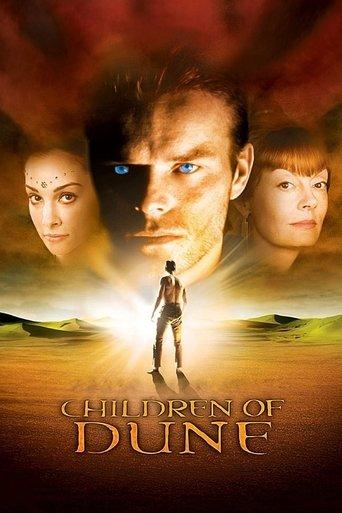
Frank Herbert's Children of Dune
2003
The sourced concerns are substantially offset by delivered value.
What counts as a cash grab?
Commercial extraction prioritized over meaningful consumer or creative value. Profit, popularity, adaptations, sequels, remakes, high budgets, and normal marketing do not count by themselves.
Why?
Frank Herbert's Children of Dune is a three-part 2003 Sci Fi Channel miniseries adapting Dune Messiah and Children of Dune, produced with roughly a $20 million budget, Emmy-winning visual effects, and broad contemporary coverage praising its production values and ambition. I found substantial reporting on production investment, awards, and positive reviews, and no credible contemporaneous reporting of predatory monetization, deceptive release tactics, or clear low-effort reuse that would meet the definition of a cash grab.
- Contemporary reporting and production notes document a roughly $20 million budget and an Emmy for visual effects.
- The adaptation combines two novels and was described as ambitiously mounted with new material and effects.
- Major outlets and retrospectives praise production craft and reception, indicating significant creative investment.
View full breakdownHide full breakdown
- I found no credible reporting of predatory monetization, deceptive release behavior, or deliberate low-effort reuse.
Score factors
| Direction | Factor | Evidence | Impact |
|---|---|---|---|
| Against | Production budget and awards | Contemporary reporting and production notes indicate a roughly $20 million production budget and the miniseries won a Primetime Emmy for visual effects in 2003.[1][2] | -18 |
| Against | Adaptation scope | The miniseries adapts both Dune Messiah and Children of Dune, combining material from two novels rather than reusing prior miniseries footage.[1][3] | -14 |
| Against | Contemporary reviews and reception | Major outlets and network retrospectives described the production as sumptuously mounted and well-received on cable, noting strong effects and positive audience response for Sci Fi Channel.[4][5] | -9 |
| For | No reported predatory monetization | I found no contemporaneous reporting or official disclosures alleging predatory monetization, exploitative pricing, or pay-to-view maneuvers associated with the miniseries release.[2][4] | +4 |
| For | No reported rushed or deceptive release practices | Contemporary sources describe planned sequel development and normal broadcast scheduling for a three-night miniseries, with no reporting of rushed production or deceptive release tactics.[1][6] | +2 |
Confidence: High · Multiple contemporary major-outlet reports, production notes, and award records provide strong, direct evidence of substantial production investment and positive reception, while independent reporting of exploitative monetization or deceptive release practices is absent. · Researched 2026-08-26
Sources reviewed
- [1]en.wikipedia.org
- [2]www.latimes.com
- [3]www.thecompanion.app
- [4]www.washingtonpost.com
- [5]www.syfy.com
- [6]www.csmonitor.com
- [7]www.nme.com
- [8]en.wikipedia.org
- [9]www.sfgate.com
- [10]dunenotes.wordpress.com
View 9 more sourcesShow fewer sources
What does the community think?
The AI sees low cash-grab risk. What's your read?
Loading community verdict…