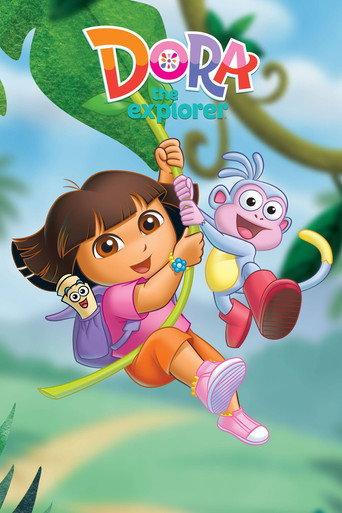
Dora the Explorer
2000
The sourced concerns are substantially offset by delivered value.
What counts as a cash grab?
Commercial extraction prioritized over meaningful consumer or creative value. Profit, popularity, adaptations, sequels, remakes, high budgets, and normal marketing do not count by themselves.
Why?
Dora the Explorer is a Nickelodeon preschool series that premiered August 14, 2000 and became a major licensed property. Industry reporting and trade data document large-scale, planned merchandising and high retail sales for the franchise, while creator interviews, academic reporting, awards, and long series run document deliberate educational design and production investment. Independent reporting also records a major 2007 toy recall affecting Dora-branded Fisher-Price/Mattel products. I found no credible reporting that the original TV series was released as a rushed, deliberately low-effort product or that it relied on predatory in-program monetization.
- Industry reporting documents large merchandising programs and high retail sales for the Dora franchise.
- Nickelodeon pursued planned licensing partnerships with book and toy companies rather than an immediate mass dump of products.
- Creators and producers have documented field research, educational design work, and sustained production investment.
View full breakdownHide full breakdown
- A major 2007 Fisher-Price/Mattel recall affected Dora-branded toys, showing consumer-harm in the merchandise supply chain.
- No credible sources allege predatory in-app/paywall monetization, rushed release of the original TV series, or intentional low-effort reuse.
Score factors
| Direction | Factor | Evidence | Impact |
|---|---|---|---|
| For | Large-scale merchandising and retail sales | Trade reporting and Nickelodeon materials show Dora generated large retail merchandise sales, cited as roughly $500 million in 2002 and multi‑billion franchise retail receipts by 2014.[2][1] | +20 |
| Against | Documented educational development and production effort | Creator and producer interviews and academic reporting describe targeted educational design, field research and production choices made during development of the series.[4][3][5] | -14 |
| Against | Independent reviews and industry recognition | Independent reviews and parental review outlets recognize Dora's educational and representational value, and the series received industry awards and nominations during its run.[1] | -10 |
| For | Planned licensing and partner strategy | Contemporaneous press coverage documents measured rollouts and licensing partnerships with Golden Books, Fisher-Price and others rather than a chaotic immediate mass push.[6][7] | +9 |
Confidence: High · Multiple contemporary trade reports, mainstream news outlets, creator interviews, and official recall notices provide direct evidence on merchandising, production intent, and consumer safety, while I found no credible reporting alleging predatory monetization or intentionally low-effort production f · Researched 2026-07-26
Sources reviewed
- [1]en.wikipedia.org
- [2]www.awn.com
- [3]www.gse.harvard.edu
- [4]www.awn.com
- [5]www.swarthmore.edu
- [6]www.tvweek.com
- [7]www.publishersweekly.com
- [8]en.wikipedia.org
- [9]www.thelicensingletter.com
- [10]www.nickanimation.com
View 54 more sourcesShow fewer sources
- [11]en.wikipedia.org
- [12]thedailyrecord.com
- [13]en.wikipedia.org
- [14]en.wikipedia.org
- [15]en.wikipedia.org
- [16]www.licenseglobal.com
- [17]www.deseret.com
- [18]paperzz.com
- [19]www.publishersweekly.com
- [20]www.commonsensemedia.org
- [21]vip-ag.com
- [22]www.reddit.com
- [23]www.rottentomatoes.com
- [24]www.filmsfatale.com
- [25]www.reddit.com
- [26]www.gamedeveloper.com
- [27]crossovia.fandom.com
- [28]www.tumlook.com
- [29]wegotthiscovered.com
- [30]www.blacktexasmag.com
- [31]www.reddit.com
- [32]apps.apple.com
- [33]www.starburstmagazine.com
- [34]www.reddit.com
- [35]www.imdb.com
- [36]www.reddit.com
- [37]www.reddit.com
- [38]www.mapquest.com
- [39]letterboxd.com
- [40]www.reddit.com
- [41]www.reddit.com
- [42]service.mattel.com
- [43]www.congress.gov
- [44]www.sec.gov
- [45]www.idph.state.il.us
- [46]www.govinfo.gov
- [47]books.murray-cloud.com
- [48]abcnews.com
- [49]www.washingtonpost.com
- [50]www.sec.gov
- [51]service.mattel.com
- [52]docslib.org
- [53]www.sec.gov
- [54]www.toydirectory.com
- [55]www.theguardian.com
- [56]www.sec.gov
- [57]escholarship.org
- [58]www.alston.com
- [59]www.nber.org
- [60]en.wikipedia.org
- [61]en.wikipedia.org
- [62]www.reddit.com
- [63]www.reddit.com
- [64]www.reddit.com
What does the community think?
The AI sees low cash-grab risk. What's your read?
Loading community verdict…