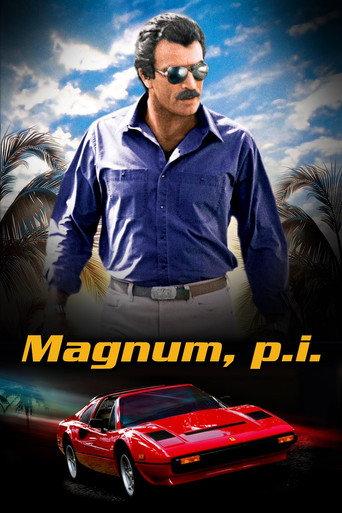
Magnum, P.I.
1980
The sourced concerns are substantially offset by delivered value.
What counts as a cash grab?
Commercial extraction prioritized over meaningful consumer or creative value. Profit, popularity, adaptations, sequels, remakes, high budgets, and normal marketing do not count by themselves.
Why?
Magnum, P.I. (1980) was a highly successful, commercially lucrative network drama that went on to record-setting syndication sales, but contemporaneous industry reporting and awards records show substantial production investment, strong Nielsen ratings, and multiple Emmy nominations and wins. I found no evidence of deceptive release practices, predatory consumer pricing, or shortchanging of creative effort in primary reporting. The commercial extraction signal is primarily large syndication and licensing income rather than proof the show was produced mainly as a predatory cash grab.
- No published evidence of predatory pricing or deceptive release practices for the 1980 series.
- Contemporary trade reports document record-setting syndication fees and large gross revenue from reruns.
- The show consistently ranked in the Nielsen top 20 and peaked at number three, indicating audience value.
View full breakdownHide full breakdown
- Industry recognition including Emmy nominations and wins supports substantive production and craft investment.
Score factors
| Direction | Factor | Evidence | Impact |
|---|---|---|---|
| For | Syndication revenue | Contemporary trade reports state Magnum, P.I. commanded record syndication prices, with one report saying it grossed almost $70 million in its first week of syndication and local stations paying six-figure fees per episode.[3][4][2] | +20 |
| Against | Industry awards | The Television Academy records show Magnum, P.I. received multiple Emmy nominations and wins for cast and technical categories, indicating recognized production quality.[5] | -17 |
| Against | Ratings and audience demand | Magnum, P.I. consistently ranked in the Nielsen top 20 during its first five years and reached number three for the 1982-83 season, demonstrating sustained audience demand.[1] | -15 |
| Against | No evidence of predatory consumer practices | Review of contemporary reporting and the series' distribution history shows standard network broadcast, normal syndication licensing and later DVD/home releases, with no published evidence of deceptive packaging or consumer-targeted predatory monetization.[1][2] | -8 |
| Against | Creative development and production | Contemporaneous interviews and production histories credit creators Donald P. Bellisario and Glen A. Larson and document active creative development and on-location Hawaii production, showing substantial production investment.[6][1] | -6 |
Confidence: High · Contemporaneous trade reporting and Television Academy records provide strong, specific evidence for both large commercial syndication returns and recognized production quality, and I found no primary-source reporting alleging predatory consumer practices. · Researched 2026-09-16
Sources reviewed
- [1]en.wikipedia.org
- [2]www.latimes.com
- [3]www.upi.com
- [4]www.washingtonpost.com
- [5]www.televisionacademy.com
- [6]interviews.televisionacademy.com
- [7]en.wikipedia.org
- [8]www.imdb.com
- [9]magnum-mania.com
- [10]www.televisionacademy.com
View 15 more sourcesShow fewer sources
- [11]www.televisionacademy.com
- [12]en.wikipedia.org
- [13]www.televisionacademy.com
- [14]www.televisionacademy.com
- [15]en.wikipedia.org
- [16]www.filmaffinity.com
- [17]fr.wikipedia.org
- [18]en.wikipedia.org
- [19]services.phaidra.univie.ac.at
- [20]citeseerx.ist.psu.edu
- [21]device.report
- [22]files01.core.ac.uk
- [23]manuals.plus
- [24]oulurepo.oulu.fi
- [25]www.reddit.com
What does the community think?
The AI sees low cash-grab risk. What's your read?
Loading community verdict…