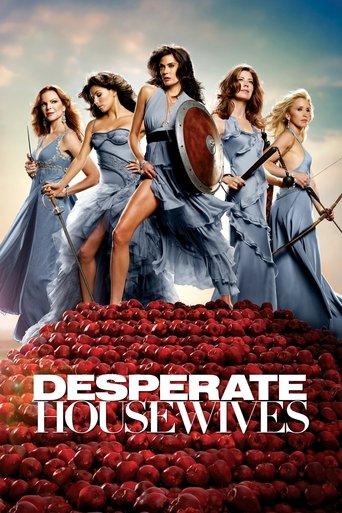
Desperate Housewives
2004
The sourced concerns are substantially offset by delivered value.
What counts as a cash grab?
Commercial extraction prioritized over meaningful consumer or creative value. Profit, popularity, adaptations, sequels, remakes, high budgets, and normal marketing do not count by themselves.
Why?
A review of contemporary press and industry records for Desperate Housewives (2004) finds no credible evidence that the series was produced as a predatory commercial extraction. The show launched with substantial creative investment, ran eight seasons and 180 episodes, and received multiple major awards. It generated ordinary commercial tie-ins such as games, soundtracks, dolls and fragrances, but I found no reporting of deceptive release practices, pay-to-view schemes, or industry allegations that the series was a low-effort exploitative cash grab.
- No credible press or industry reporting alleges predatory monetization or deceptive release practices for Desperate Housewives.
- The series received major industry awards and wide critical attention, indicating recognized production quality.
- The show produced substantial original output, eight seasons and 180 episodes, inconsistent with low-effort reuse.
View full breakdownHide full breakdown
- There were commercial tie-ins and merchandise, but coverage frames them as routine brand licensing rather than predatory practices.
Score factors
| Direction | Factor | Evidence | Impact |
|---|---|---|---|
| For | No reported predatory monetization | Contemporary industry and press coverage does not report pay-to-view tactics, predatory monetization, or allegations that the series was a deliberately exploitative cash grab.[1][2] | +20 |
| Against | Major awards and critical recognition | Desperate Housewives won major awards including Golden Globe and multiple Emmy recognitions, reflecting acknowledged production quality and industry validation.[3][1] | -18 |
| Against | Long run and episode count | The series aired eight seasons totaling 180 episodes, showing substantial original content rather than trivial reuse of existing material.[1] | -14 |
| For | No sign of rushed or deceptive release | Launch-era reporting describes planned premieres and marketer attention rather than rushed production schedules or deceptive release practices intended to extract money from consumers.[2][4] | +9 |
| For | Merchandise and tie-ins existed | The franchise produced games, soundtracks, fashion dolls and fragrances, demonstrating brand commercialization but aligning with standard licensed tie-ins rather than documented predatory exploitation.[1][4] | +6 |
| Against | Creator and production investment | The series was created by Marc Cherry, produced by ABC Studios and Cherry Productions, used single-camera production and known industry composers, indicating significant artistic and technical investment.[1] | -5 |
Confidence: High · Major contemporary reviews, industry award records, and production summaries provide strong, consistent evidence of substantive creative investment and there is no credible press alleging predatory monetization, though detailed internal marketing contracts are outside the public record. · Researched 2026-09-12
Sources reviewed
- [1]en.wikipedia.org
- [2]www.latimes.com
- [3]www.televisionacademy.com
- [4]www.mediapost.com
- [5]www.thedailybeast.com
- [6]www.techradar.com
- [7]en.wikipedia.org
- [8]goldenglobes.com
- [9]www.televisionacademy.com
- [10]en.wikipedia.org
View 21 more sourcesShow fewer sources
- [11]www.televisionacademy.com
- [12]www.imdb.com
- [13]www.tvweek.com
- [14]www.tvguide.com
- [15]www.tvline.com
- [16]en.wikipedia.org
- [17]en.wikipedia.org
- [18]www.imdb.com
- [19]www.youtube.com
- [20]en.wikipedia.org
- [21]www.paramountpressexpress.com
- [22]www.worldradiohistory.com
- [23]www.televisionacademy.com
- [24]www.reddit.com
- [25]media.midwesttapes.com
- [26]www.emmys.com
- [27]thescriptsavant.com
- [28]wrap.warwick.ac.uk
- [29]www.reddit.com
- [30]www.reddit.com
- [31]www.reddit.com
Does the community agree?
Agree or disagree with the AI's cash-grab read. One vote per browser on this title.
Loading community verdict…