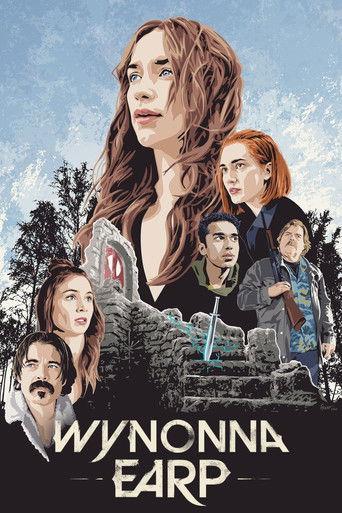
Wynonna Earp
2016
The sourced concerns are substantially offset by delivered value.
What counts as a cash grab?
Commercial extraction prioritized over meaningful consumer or creative value. Profit, popularity, adaptations, sequels, remakes, high budgets, and normal marketing do not count by themselves.
Why?
Wynonna Earp is a 2016 supernatural western television series developed by Emily Andras that ran four seasons and a feature release, it attracted a vocal fanbase that organized high-profile campaigns to secure funding and continuation, and it received generally positive critical reception and multi-season production investment, with no credible reporting of predatory monetization or rushed deceptive release practices.
- Production was multi-season with reported funding delays and fan-led campaigns to save the show.
- Critical reception across outlets is generally positive, indicating substantive creative value.
- Distribution was handled through conventional TV and streaming partners, no unusual paywalls or predatory pricing reported.
View full breakdownHide full breakdown
- No credible sources found alleging deliberate low-effort reuse or exploitative monetization.
Score factors
| Direction | Factor | Evidence | Impact |
|---|---|---|---|
| Against | Multi-season production and funding | The series ran multiple seasons and faced documented funding and distributor issues that delayed Season 4, showing continued production investment rather than a single opportunistic release.[1][2] | -17 |
| Against | Positive critical and audience reception | Aggregators and review sites show generally positive critic scores and reviews across seasons, supporting substantive creative value rather than a low-effort cash grab.[3] | -15 |
| Against | Active fan campaigns to preserve the show | Independent reporting documents sizable fan-led fundraising and billboard campaigns to support continued production, indicating audience engagement and non-exploitative continuation efforts.[2][4] | -11 |
| For | No evidence of predatory monetization | Available reporting and distribution listings show conventional TV and streaming distribution, and I found no credible reporting of pay-to-continue schemes, predatory DLC style monetization, or deceptive pricing tied to the series.[1][5] | +8 |
| For | No reporting of low-effort reuse or brand exploitation | I found no credible coverage alleging the series reused stock material, recycled prior content as a deliberate shortcut, or exploited the source IP with minimal new creative work.[1][3] | +8 |
Confidence: High · Sources include mainstream reporting on funding and fan campaigns, the series production record, and major review aggregators; there is broad documentation of production investment and no credible sources alleging exploitative monetization, though I limited searches to key outlets. · Researched 2026-10-10
Sources reviewed
- [1]en.wikipedia.org
- [2]www.latimes.com
- [3]www.rottentomatoes.com
- [4]www.curvemag.com
- [5]www.justwatch.com
- [6]www.rottentomatoes.com
- [7]en.wikipedia.org
- [8]en.wikipedia.org
- [9]en.wikipedia.org
- [10]www.metacritic.com
View 22 more sourcesShow fewer sources
- [11]www.rottentomatoes.com
- [12]editorial.rottentomatoes.com
- [13]www.primevideo.com
- [14]wikipedia.blackbriarcomputing.com
- [15]commons.wikimedia.org
- [16]en.wikipedia.org
- [17]kiwix.scoggi.net
- [18]es.wikipedia.org
- [19]br.justwatch.com
- [20]cdn3.creativecirclemedia.com
- [21]www.reddit.com
- [22]www.reddit.com
- [23]run.unl.pt
- [24]files01.core.ac.uk
- [25]www.reddit.com
- [26]georgiafotou.com
- [27]www.reddit.com
- [28]www.reddit.com
- [29]www.reddit.com
- [30]www.reddit.com
- [31]www.reddit.com
- [32]www.reddit.com
What does the community think?
The AI sees low cash-grab risk. What's your read?
Loading community verdict…