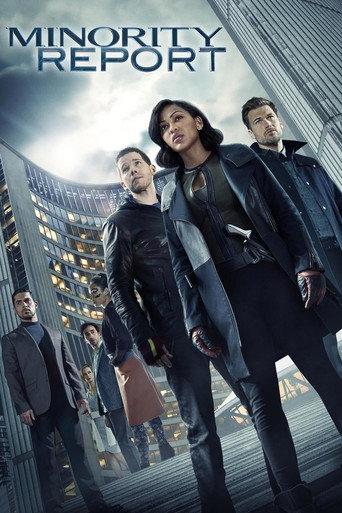
Minority Report
2015
The sourced concerns are substantially offset by delivered value.
What counts as a cash grab?
Commercial extraction prioritized over meaningful consumer or creative value. Profit, popularity, adaptations, sequels, remakes, high budgets, and normal marketing do not count by themselves.
Why?
Minority Report (Fox, 2015) was a Steven Spielberg/Amblin-produced network sequel series that aired September to November 2015 and was cut from a planned 13 episodes to 10 before being cancelled after one season. Trade reporting and critics contemporaneously described the show as a glossy but derivative crime procedural that relied on the film brand, while Amblin executives explicitly framed movie-to-TV adaptations as marketing-safe, presold properties. There is no credible evidence of predatory pricing or deceptive pay practices tied to the series release.
- Producer statements show franchise mining was a deliberate strategy to use presold titles for marketing and lower development risk.
- Contemporary critics and aggregators characterized the show as a pedestrian, procedural re-skin of the film, indicating low creative added value.
- Network trimmed the initial episode order and the series was cancelled after one season, showing limited consumer uptake.
View full breakdownHide full breakdown
- Mitigating evidence includes Spielberg/Amblin involvement and a mainstream production commitment, and no sign of predatory monetization.
Score factors
| Direction | Factor | Evidence | Impact |
|---|---|---|---|
| For | Critical reception as derivative | Major review aggregators and critics described the series as a sleek but uninspired procedural that failed to capture the film’s imagination, e.g., Rotten Tomatoes critics consensus and Metacritic-cited reviews calling it 'pedestrian' or 'fresh paint on a procedural'.[2][1][3] | +23 |
| Against | Credible production backing | The series was produced by Amblin Television and 20th Century Fox Television with Steven Spielberg as an executive producer and a professional cast and creative team, which indicates real production investment rather than token licensing.[1] | -15 |
| For | Franchise mining motive | Amblin executives said presold movie titles are chosen because they ease marketing and reduce risk, indicating a deliberate strategy to mine films for TV adaptations.[4] | +12 |
| Against | No predatory monetization found | Contemporaneous reporting and listings show Minority Report was a free, ad-supported broadcast series on Fox with standard downstream digital retail/window availability, there is no reporting of paywalls, exploitative microtransactions, or deceptive direct-to-consumer pricing tied to the series release.[1][2] | -11 |
| For | Shortened order and cancellation | Fox cut the first-season order from 13 to 10 episodes amid low ratings and the show was cancelled after a single truncated season, which limited delivery of long-form creative payoffs to viewers.[6][5] | +9 |
| Against | Sequel premise and original elements | The show positioned itself as a sequel set about ten years after the film featuring grown precogs and new lead characters, which constitutes substantive new narrative content rather than a straight remake.[1] | -8 |
Confidence: High · Trade reporting, contemporaneous reviews, and network scheduling sources provide direct evidence about production motives, critical reception, and the trimmed order, while internal financial terms and decision memos are not public so financial intent cannot be proven beyond public statements. · Researched 2026-07-27
Sources reviewed
- [1]www.metacritic.com
- [2]www.rottentomatoes.com
- [3]www.nexttv.com
- [4]qz.com
- [5]www.tvline.com
- [6]www.thewrap.com
- [7]en.wikipedia.org
- [8]en.wikipedia.org
- [9]www.metacritic.com
- [10]tvseriesfinale.com
View 137 more sourcesShow fewer sources
- [11]en.wikipedia.org
- [12]www.infrastructure.gov.au
- [13]www.cancelledscifi.com
- [14]www.ismyshowcancelled.com
- [15]en.wikipedia.org
- [16]philipdick.com
- [17]www.yahoo.com
- [18]www.rottentomatoes.com
- [19]www.thewrap.com
- [20]m.imdb.com
- [21]de.wikipedia.org
- [22]www.reddit.com
- [23]en.wikipedia.org
- [24]www.reddit.com
- [25]filmla.com
- [26]vtechworks.lib.vt.edu
- [27]www.corvallisadvocate.com
- [28]www.commonsensemedia.org
- [29]www.yahoo.com
- [30]www.tvinsider.com
- [31]bejone03.expressions.syr.edu
- [32]www.tvguide.com
- [33]www.breitbart.com
- [34]pdfs.semanticscholar.org
- [35]www.darkhorizons.com
- [36]www.pluggedin.com
- [37]www.filmfutter.com
- [38]www.researchgate.net
- [39]www.tvgroove.com
- [40]etheses.bham.ac.uk
- [41]www.scifione.com
- [42]etheses.bham.ac.uk
- [43]s3.us-west-2.amazonaws.com
- [44]www.degruyterbrill.com
- [45]en.wikipedia.org
- [46]www.reddit.com
- [47]en.wikipedia.org
- [48]reactormag.com
- [49]www.houstonchronicle.com
- [50]www.imdb.com
- [51]www.rogerebert.com
- [52]www.cjr.org
- [53]legacy.aintitcool.com
- [54]www.imdb.com
- [55]www.rogerebert.com
- [56]www.sundaytimes.timeslive.co.za
- [57]www.mediaite.com
- [58]www.goodreads.com
- [59]assets.press.princeton.edu
- [60]www.washingtonpost.com
- [61]www.architettosbaffo.com
- [62]redfame.com
- [63]en.wikipedia.org
- [64]digital.library.adelaide.edu.au
- [65]www.ccsenet.org
- [66]www.zinio.com
- [67]de.wikipedia.org
- [68]philipdick.com
- [69]dosen.profillengkap.com
- [70]www.inquisitr.com
- [71]serial.everyeye.it
- [72]s3images.coroflot.com
- [73]www.business-standard.com
- [74]www.business-standard.com
- [75]theurbandaily.com
- [76]www.bustle.com
- [77]www.excelsior.com.mx
- [78]www.worldradiohistory.com
- [79]www.rottentomatoes.com
- [80]www.ibtimes.com.au
- [81]www.antena3.com
- [82]www.metacritic.com
- [83]citeseerx.ist.psu.edu
- [84]cdn2.creativecirclemedia.com
- [85]moviemonitor.com
- [86]www.spoilertv.com
- [87]www.bustle.com
- [88]www.fantascienza.com
- [89]www.headoverfeels.com
- [90]www.yahoo.com
- [91]beta.creativecirclecdn.com
- [92]eprints.soton.ac.uk
- [93]beta.creativecirclecdn.com
- [94]everything.explained.today
- [95]the-jh-movie-collection-official.fandom.com
- [96]ru.wikipedia.org
- [97]forums.superherohype.com
- [98]www.wikizero.org
- [99]wiki2.org
- [100]yoda.wiki
- [101]culture.fandom.com
- [102]everything.explained.today
- [103]es.wikipedia.org
- [104]jhwikicollection-20.fandom.com
- [105]www.yahoo.com
- [106]the-jh-movie-collection-official.fandom.com
- [107]alpha.creativecirclecdn.com
- [108]cdn4.creativecirclemedia.com
- [109]bejone03.expressions.syr.edu
- [110]www.cancelledscifi.com
- [111]s3.amazonaws.com
- [112]www.cinemablend.com
- [113]www.syracuse.com
- [114]serial.everyeye.it
- [115]www.cinemablend.com
- [116]app.leg.wa.gov
- [117]www.informador.mx
- [118]app.leg.wa.gov
- [119]app.leg.wa.gov
- [120]lawfilesext.leg.wa.gov
- [121]en.wikipedia.org
- [122]www.broadwayworld.com
- [123]www.3qumedia.com
- [124]television.mxdwn.com
- [125]comicbook.com
- [126]www.yahoo.com
- [127]www.imdb.com
- [128]www.imdb.com
- [129]m.imdb.com
- [130]studylib.net
- [131]www.frcaction.org
- [132]www.collegeraptor.com
- [133]toppodcast.com
- [134]alex-latham-l68p.squarespace.com
- [135]toppodcast.com
- [136]studylib.net
- [137]andreaostrov.wordpress.com
- [138]dokumen.pub
- [139]www.scribd.com
- [140]www.mdcbowen.org
- [141]www.scribd.com
- [142]www.mightythunderweb.com
- [143]broadwaybaby.com
- [144]www.scribd.com
- [145]rensbox.duckdns.org
- [146]web.archive.org
- [147]deadline.com
What does the community think?
The AI sees low cash-grab risk. What's your read?
Loading community verdict…