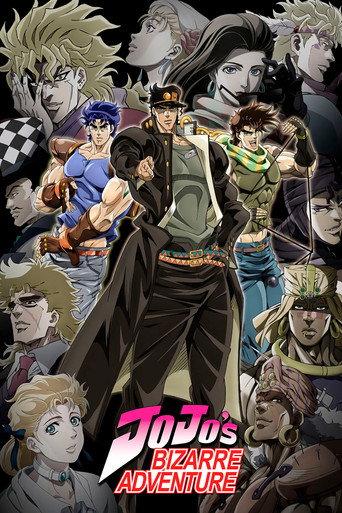
JoJo's Bizarre Adventure
2012
The sourced concerns are substantially offset by delivered value.
What counts as a cash grab?
Commercial extraction prioritized over meaningful consumer or creative value. Profit, popularity, adaptations, sequels, remakes, high budgets, and normal marketing do not count by themselves.
Why?
The 2012 JoJo's Bizarre Adventure TV adaptation by David Production is supported by substantial production and reception reporting that points to a purposeful, full-season manga adaptation rather than a cheaply assembled promotion. Critics and industry notices repeatedly praise the show’s art direction, distinctive openings, and writing while noting budgetary limits in some animation. The title generated licensed games, branded tie-ins, and sustained home-video and streaming releases, but I found no credible evidence of predatory monetization, deceptive release timing, or systemic low-effort reuse intended solely to extract consumer dollars.
- David Production produced a 26-episode adaptation covering Parts 1 and 2, a full-season release rather than a token tie-in.
- Critics and industry awards praised art direction, openings, and writing despite noted budgetary animation shortcuts.
- The series led to robust home-video, streaming, reprints, and licensed products, indicating broad monetization but not predatory practice.
View full breakdownHide full breakdown
- I found no reporting that the series was rushed, deceptively packaged, or sold with abusive microtransactions or paywalls.
Score factors
| Direction | Factor | Evidence | Impact |
|---|---|---|---|
| Against | Full-season faithful adaptation | David Production produced a 26-episode television adaptation in 2012 that adapts Parts 1 and 2 of the manga, providing a complete season-length retelling rather than a brief promotional excerpt.[1] | -18 |
| Against | Recognized production and craft | Contemporary reviews and industry notices highlight the series' art direction, writing, and opening sequences, and the openings won industry recognition at the 2013 CEDEC awards.[3] | -17 |
| Against | Measured commercial success and reprints | Industry reporting and chart data show early Blu-ray volumes ranked in Japan's animation charts and critics credited the 2012 anime with a surge in Western popularity that led to publisher reprints and new local releases.[2] | -12 |
| Against | Complete consumer-facing products | Licensed distributors released full-season Blu-ray box sets with bilingual audio and limited edition bonuses and major streaming outlets carried the show internationally, indicating complete consumer products rather than fragmented, paywalled marketing stunts.[6][5][4] | -11 |
| For | Extensive licensed tie-ins and games | The franchise generated licensed video games and branded promotions including Bandai Namco's All-Star Battle and commercial tie-ins such as character-branded coffee cans, showing broad monetization channels though not by itself proving predatory intent.[7][2] | +5 |
Confidence: High · There is substantial contemporaneous coverage, distributor product listings, industry awards, and aggregated sales reporting; the main gap is proprietary studio financial detail and internal marketing plans which are not publicly disclosed but are not required to rebut a cash-grab claim here. · Researched 2026-07-24
Sources reviewed
- [1]davidproduction.jp
- [2]en.wikipedia.org
- [3]anibase.net
- [4]www.crunchyroll.com
- [5]www.walmart.com
- [6]store.crunchyroll.com
- [7]en.wikipedia.org
- [8]jojo.fandom.com
- [9]www.imdb.com
- [10]jojowiki.com
View 140 more sourcesShow fewer sources
- [11]en.wikipedia.org
- [12]en.wikipedia.org
- [13]jojowiki.com
- [14]en.wikipedia.org
- [15]jojowiki.com
- [16]en.wikipedia.org
- [17]en.wikipedia-on-ipfs.org
- [18]www.animeherald.com
- [19]www.booksnthingswarehouse.com
- [20]arxiv.org
- [21]www.reddit.com
- [22]www.reddit.com
- [23]www.reddit.com
- [24]www.reddit.com
- [25]www.reddit.com
- [26]www.reddit.com
- [27]www.reddit.com
- [28]www.reddit.com
- [29]www.reddit.com
- [30]www.manga-news.com
- [31]everything.explained.today
- [32]blog.draggle.org
- [33]a.osmarks.net
- [34]en.wikipedia.org
- [35]anime.everyeye.it
- [36]animepantry.wordpress.com
- [37]owiki.org
- [38]draculascave.co
- [39]en.wikipedia.org
- [40]www.imdb.com
- [41]en.wikipedia.org
- [42]www.docdroid.net
- [43]nasad-portfolio.sage.edu
- [44]alphasigmaoverseas.com
- [45]uploads-ssl.webflow.com
- [46]www.reddit.com
- [47]www.reddit.com
- [48]www.reddit.com
- [49]en.wikipedia.org
- [50]mr.kuchewar.com
- [51]en.wikipedia.org
- [52]handwiki.org
- [53]rightwiki.org
- [54]a.osmarks.net
- [55]ru.wikipedia.org
- [56]everything.explained.today
- [57]ultimatepopculture.fandom.com
- [58]owiki.org
- [59]dictionary.tn
- [60]everything.explained.today
- [61]vampire-encyclopedia.fandom.com
- [62]everything.explained.today
- [63]heykidscomics.fandom.com
- [64]dokumen.pub
- [65]ru.scribd.com
- [66]majorspoilers.com
- [67]www.walmart.com
- [68]business.walmart.com
- [69]www.collectorsanime.com
- [70]www.bestbuy.com
- [71]www.deepdiscountdvd.com
- [72]www.walmart.com
- [73]www.importcds.com
- [74]en.wikipedia.org
- [75]www.fmu.ac.jp
- [76]www.reddit.com
- [77]www.reddit.com
- [78]www.reddit.com
- [79]www.reddit.com
- [80]www.reddit.com
- [81]www.reddit.com
- [82]www.reddit.com
- [83]www.reddit.com
- [84]www.reddit.com
- [85]everything.explained.today
- [86]hmong.in.th
- [87]anibase.net
- [88]yoda.wiki
- [89]everything.explained.today
- [90]hmong.in.th
- [91]p2k.stekom.ac.id
- [92]legacy.aintitcool.com
- [93]toppodcast.com
- [94]ivy.fm
- [95]www.lord-enki.net
- [96]ivy.fm
- [97]pdfcoffee.com
- [98]ivy.fm
- [99]ivy.fm
- [100]www.anibase.net
- [101]anibase.net
- [102]anibase.net
- [103]anibase.net
- [104]anibase.net
- [105]anibase.net
- [106]anibase.net
- [107]anibase.net
- [108]jojo.fandom.com
- [109]jojo.fandom.com
- [110]jojowiki.com
- [111]www.imdb.com
- [112]jojo.fandom.com
- [113]www.imdb.com
- [114]jojowiki.com
- [115]www.madinfinite.com
- [116]otakotaku.com
- [117]www.reddit.com
- [118]www.reddit.com
- [119]www.reddit.com
- [120]www.reddit.com
- [121]www.reddit.com
- [122]www.hexaproject.com
- [123]www.reddit.com
- [124]www.reddit.com
- [125]www.reddit.com
- [126]www.reddit.com
- [127]www.slideshare.net
- [128]meme.fandom.com
- [129]vipywood.net
- [130]otakuusamagazine.com
- [131]www.watchmojo.com
- [132]anigamers.com
- [133]www.reddit.com
- [134]www.tokyoweekender.com
- [135]wiki.scholarship.edu.vn
- [136]www.reddit.com
- [137]www.seasonalanimecheckup.com
- [138]www.reddit.com
- [139]recentanimenews.tumblr.com
- [140]zh.wikipedia.org
- [141]theglorioblog.com
- [142]flooricecream.wordpress.com
- [143]www.reddit.com
- [144]www.reddit.com
- [145]www.reddit.com
- [146]www.reddit.com
- [147]www.reddit.com
- [148]www.reddit.com
- [149]www.animenewsnetwork.com
- [150]en.rocketnews24.com
What does the community think?
The AI sees low cash-grab risk. What's your read?
Loading community verdict…