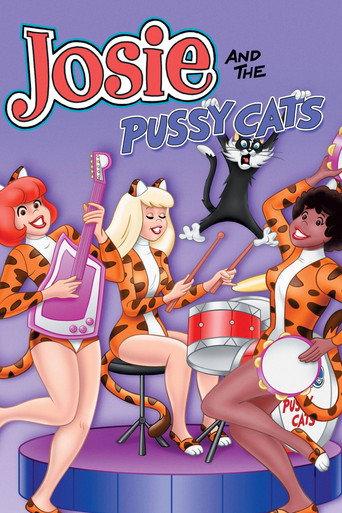
Josie and the Pussycats
1970
The sourced concerns are substantially offset by delivered value.
What counts as a cash grab?
Commercial extraction prioritized over meaningful consumer or creative value. Profit, popularity, adaptations, sequels, remakes, high budgets, and normal marketing do not count by themselves.
Why?
Josie and the Pussycats was a 1970 Hanna-Barbera Saturday morning cartoon adapted from Archie Comics, produced as a 16-episode music-driven series and later retooled as Josie and the Pussycats in Outer Space for another 16 episodes. Sources show the program included newly recorded songs and a Capitol Records tie-in, while trade and fan reporting says the series was re-conceptualized to enable a fresh season order, which suggests commercial scheduling incentives rather than overt predatory monetization.
- Network and studio re-conceptualized the show into Outer Space to secure a full new season order, an economic practice documented by industry reporting.
- Episodes featured original, newly recorded songs and a Capitol Records album tie-in, indicating substantive new content and cross-media production.
- Standard Hanna-Barbera limited animation practices and reuse are noted by reviewers, but that is common for the era and not direct proof of predatory monetization.
View full breakdownHide full breakdown
- No primary sources located showing predatory pricing, deceptive release practices, or explicit toyline/marketing contracts that would meet the cash grab definition.
Score factors
| Direction | Factor | Evidence | Impact |
|---|---|---|---|
| Against | Original songs and record tie-in | Each episode featured original newly recorded songs and a Capitol Records album was released tied to the Hanna-Barbera series.[1][4] | -14 |
| For | Re-conceptualized to sell new season | Reporting by a Saturday morning TV history site states Hanna-Barbera revamped the series into Josie and the Pussycats in Outer Space so it could be sold as a "new" show for a full episode order.[2] | +11 |
| For | Era-typical limited animation and reuse | Contemporary reviewers and retrospective commentary note Hanna-Barbera's limited animation and reuse of sequences in the series and its Outer Space retooling.[5][3] | +10 |
| Against | No found predatory monetization | Searches of production and trade coverage did not locate primary evidence of predatory pricing, deceptive consumer sales, or explicit toyline-driven monetization tied to the 1970 series.[1][2] | -9 |
| For | CBS ordering and reruns | CBS ran the original 16-episode order in rotation and the studio produced a separate 16-episode Outer Space series rather than extending the original order.[1][3] | +8 |
Confidence: Medium · Good contemporary and retrospective sources document the retooling and the show's original music, however I found no primary studio memos or contractual merchandising documentation linking the 1970 series to predatory monetization so some relevant corporate records may be missing. · Researched 2026-10-15
Sources reviewed
- [1]en.wikipedia.org
- [2]www.saturdaymorningsforever.com
- [3]cartoonresearch.com
- [4]en.wikipedia.org
- [5]manapop.com
- [6]en.wikipedia.org
- [7]en.wikipedia.org
- [8]en.wikipedia.org
- [9]en.wikipedia.org
- [10]hanna-barbera.fandom.com
View 11 more sourcesShow fewer sources
What does the community think?
The AI sees low cash-grab risk. What's your read?
Loading community verdict…