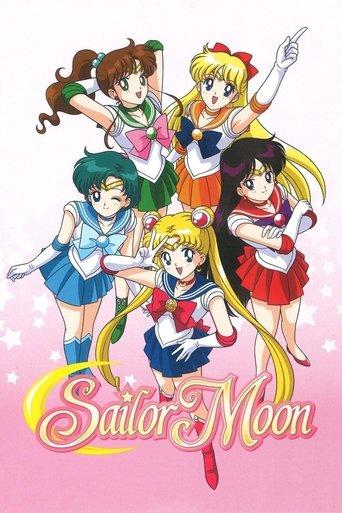
Sailor Moon
1992
The sourced concerns are substantially offset by delivered value.
What counts as a cash grab?
Commercial extraction prioritized over meaningful consumer or creative value. Profit, popularity, adaptations, sequels, remakes, high budgets, and normal marketing do not count by themselves.
Why?
Sailor Moon (1992) shows clear commercial exploitation through large-scale tie-in merchandising and a major Bandai sponsorship that drove billions in retail sales, yet it also contains substantial creator authorship, narrative invention, and sustained critical and academic recognition. Contemporary reporting and industry sources document heavy toy and accessory sales tied to the show, while scholarly and retrospective pieces credit Naoko Takeuchi and the anime with original genre impact and lasting cultural influence, leaving mixed but source-backed signals about extraction versus artistic value.
- Contemporary reporting documents large-scale tie-in merchandise and reported retail sales of roughly $1.58 billion by 1995.
- Toy manufacturer Bandai became the anime’s main sponsor and merchandising expanded markedly as the series grew in popularity.
- Coverage cites specific marketed items like brooches and scepters sold directly to viewers, showing productized character elements.
View full breakdownHide full breakdown
- Academic and retrospective sources credit Takeuchi’s authorship, narrative invention, and the series’ lasting cultural and critical influence.
Score factors
| Direction | Factor | Evidence | Impact |
|---|---|---|---|
| For | Documented retail sales | A 1995 Los Angeles Times article reported that since airing in 1992 Sailor Moon had generated approximately $1.58 billion in retail sales in Japan and abroad according to DIC.[1] | +23 |
| Against | Scholarly recognition and influence | A peer-reviewed article in The Journal of Anime and Manga Studies argues Sailor Moon remains influential, supporting readings of feminist and queer significance and scholarly interest in its narrative and cultural impact.[3] | -15 |
| Against | Creator authorship and planning | Nippon.com reports that the anime was planned around Takeuchi’s prior work, that Takeuchi wrote the anime story far in advance, and that her authorship and artistic choices underpin the series beyond mere product design.[2] | -14 |
| For | Bandai sponsorship and tie-ins | Nippon.com documents that toy manufacturer Bandai became the anime’s main sponsor and that merchandise sales expanded to large annual figures as the series grew in popularity.[2] | +12 |
| For | Specific marketed items | Contemporary reporting describes marketed items such as replica brooches, scepters and makeup kits sold in stores, with combined prices noted and high sales at specialty retailers.[1] | +9 |
| Against | Retrospective praise and role-model reading | Retrospective coverage such as ToFugu highlights Naoko Takeuchi’s intent to create a relatable heroine and credits the series with providing a positive female role model and novel genre blending.[4] | -9 |
Confidence: High · Multiple independent contemporary reports and respected retrospective and academic sources document large-scale merchandising and Bandai sponsorship while also providing concrete evidence of creator authorship and lasting cultural influence, though direct evidence of predatory pricing or deceptive r · Researched 2026-07-31
Sources reviewed
- [1]www.latimes.com
- [2]www.nippon.com
- [3]iopn.library.illinois.edu
- [4]www.tofugu.com
- [5]sensei.takeuchi-naoko.com
- [6]en.wikipedia.org
- [7]en.wikipedia.org
- [8]en.wikipedia.org
- [9]www.rottentomatoes.com
- [10]nana-nana.net
View 15 more sourcesShow fewer sources
- [11]missdream.org
- [12]groups.google.com
- [13]en.wikipedia.org
- [14]natalie.mu
- [15]comicbook.com
- [16]en.wikipedia.org
- [17]researchcommons.waikato.ac.nz
- [18]en.wikipedia.org
- [19]dl.tufts.edu
- [20]ninercommons.charlotte.edu
- [21]escholarship.org
- [22]www.awn.com
- [23]www.reddit.com
- [24]www.itratoyresearch.org
- [25]www.reddit.com
What does the community think?
The AI sees low cash-grab risk. What's your read?
Loading community verdict…