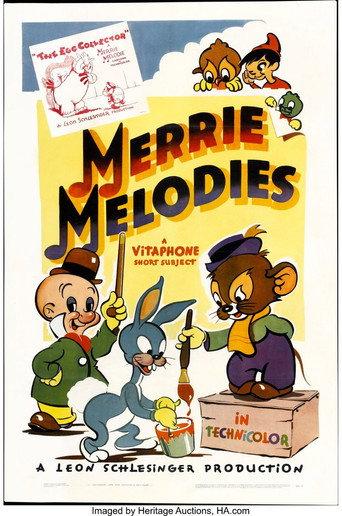
Looney Tunes
1929
The sourced concerns are substantially offset by delivered value.
What counts as a cash grab?
Commercial extraction prioritized over meaningful consumer or creative value. Profit, popularity, adaptations, sequels, remakes, high budgets, and normal marketing do not count by themselves.
Why?
Looney Tunes, the Warner Bros. theatrical short series produced roughly 1929 to 1969, shows strong primary evidence of original creative investment, direction by major Golden Age animators, technical innovation, and long-running new content. There is also clear commercial extraction after theatrical runs, notably the mid 1950s sale of pre-1950 shorts for television syndication and aggressive repackaging and sponsorship, plus later reissue and colorization practices. I found documentary proof of syndication sales and promotional monetization, and concurrent evidence of substantial artistic craft in the originals, with no sourced proof of predatory pricing or deceptive theatrical release practices.
- Warner sold large portions of the pre-1950 cartoon library to television distributors in the mid 1950s, enabling mass syndicated monetization.
- Contemporary TV promotions and sponsored broadcasts show deliberate commercial repackaging and revenue focus for television runs.
- Some later reissue and redraw/colorization programs reused earlier shorts, indicating reuse or low-effort repackaging in parts of the catalogue.
View full breakdownHide full breakdown
- The original theatrical shorts were produced by top directors, won awards, and are widely documented as high-quality animation, supporting mitigating craft evidence.
Score factors
| Direction | Factor | Evidence | Impact |
|---|---|---|---|
| For | Sale to TV syndicators | In June 1956 Warner Bros sold rights to a large portion of its pre-1950 cartoon library to Associated Artists Productions, which led to wide television syndication of Looney Tunes and Merrie Melodies.[1][3] | +20 |
| Against | Artistic and technical craft | Primary-era shorts were created and directed by major animators such as Tex Avery, Chuck Jones and Friz Freleng, earned critical acclaim and Academy Awards, and are widely documented as high-quality animation.[1][4] | -18 |
| For | Repackaging and sponsorship revenue | Promotional materials and trade coverage from the era show broadcasters and distributors promoted Looney Tunes as commercial TV inventory and sold sponsorships and local billings tied to those broadcasts.[6][5] | +15 |
| Against | Sustained original output | The series produced new theatrical shorts across multiple decades and maintained original character and creative investment rather than being solely a repackaged product.[1][2] | -14 |
| For | Reissues and redraw/colorization | Documentation notes studio reissue programs and a 1967 initiative to redraw about 79 black-and-white shorts into color, demonstrating later low-effort reuse or cosmetic updating of existing material.[1][2] | +13 |
Confidence: High · Primary trade documents and archival materials show the mid-1950s library sale and TV monetization, and scholarly/archival sources document the clear artistic production history, gaps remain only in internal studio intent beyond documented commercial transactions. · Researched 2026-08-27
Sources reviewed
- [1]en.wikipedia.org
- [2]en.wikipedia.org
- [3]en.wikipedia.org
- [4]discovery.ucl.ac.uk
- [5]www.worldradiohistory.com
- [6]www.worldradiohistory.com
- [7]en.wikipedia.org
- [8]looneytunes.fandom.com
- [9]www.worldradiohistory.com
- [10]warnerbrosanimation.fandom.com
View 16 more sourcesShow fewer sources
- [11]en.wikipedia.org
- [12]betterlivingtv.blogspot.com
- [13]looneytunes.fandom.com
- [14]en.wikipedia.org
- [15]looneytunes.fandom.com
- [16]tralfaz.blogspot.com
- [17]3863-21905.el-alt.com
- [18]www.americanradiohistory.com
- [19]looneytunes.fandom.com
- [20]en.wikipedia.org
- [21]en.wikipedia.org
- [22]en.wikipedia.org
- [23]en.wikipedia.org
- [24]www.worldradiohistory.com
- [25]www.csun.edu
- [26]georgehbalazs.com
What does the community think?
The AI sees low cash-grab risk. What's your read?
Loading community verdict…