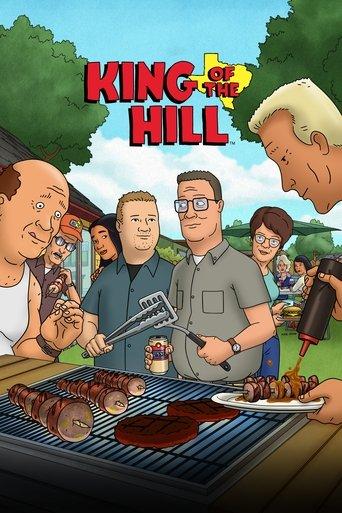
King of the Hill
1997
The sourced concerns are substantially offset by delivered value.
What counts as a cash grab?
Commercial extraction prioritized over meaningful consumer or creative value. Profit, popularity, adaptations, sequels, remakes, high budgets, and normal marketing do not count by themselves.
Why?
King of the Hill is a long running animated sitcom created by Mike Judge and Greg Daniels that aired from 1997 to 2010, it received sustained critical recognition and industry awards and its production papers and artifacts are archived at Texas institutions. Independent reporting and archival records document a deliberate writing and production process rather than rapid recycling. I found no credible reporting that the series was produced or released with predatory monetization, deceptive releases, or deliberate low-effort reuse intended to extract consumers.
- The series was created and showrun by Mike Judge and Greg Daniels and received critical acclaim and awards over a long run.
- Production archives and museum artifacts document sustained, deliberate creative work and episode-level production materials.
- Independent reporting from mainstream outlets describes a planned, character-driven series rather than a rushed product.
View full breakdownHide full breakdown
- Searches found no credible reporting of predatory monetization, deceptive release practices, or deliberate low-effort reuse, only later consumer complaints about DVD availability and packaging.
Score factors
| Direction | Factor | Evidence | Impact |
|---|---|---|---|
| Against | Production craft and creators | The show was co-created and showrun by Mike Judge and Greg Daniels and was described in contemporary reporting as a deliberate, character-driven series.[1][3][2] | -18 |
| Against | Long run and awards | King of the Hill ran for 13 years, received Emmy and Annie recognition and sustained industry acknowledgement indicating substantive original content across seasons.[1][5][4] | -17 |
| For | No credible evidence of exploitative monetization | Searches of production reporting and contemporaneous press turned up no authoritative reporting of predatory monetization, deceptive release, or price gouging tied to the initial broadcast or production model.[1][2] | +13 |
| Against | Archival documentation of creative process | University archives and a museum artifact (production whiteboard) document episode drafts, storyboards and in-office creative materials for the series.[7][6] | -11 |
| Against | Character-driven tonal risk | Contemporary reviews and interviews described the show as an atypical animated sitcom focusing on nuanced characters and conservative viewpoints, reflecting creative risk rather than formulaic reuse.[3][2] | -6 |
Confidence: High · Contemporary mainstream reporting, industry award records, and production archive materials provide strong direct evidence about creation and production; there is a lack of authoritative reporting of predatory monetization though some consumer-level DVD availability complaints exist. · Researched 2026-08-12
Sources reviewed
- [1]en.wikipedia.org
- [2]www.latimes.com
- [3]www.washingtonpost.com
- [4]www.imdb.com
- [5]www.televisionacademy.com
- [6]www.thestoryoftexas.com
- [7]docs.gato.txst.edu
- [8]en.wikipedia.org
- [9]www.imdb.com
- [10]www.imdb.com
View 15 more sourcesShow fewer sources
- [11]en.wikipedia.org
- [12]en.wikipedia.org
- [13]en.wikipedia.org
- [14]ularchives1.ul.txstate.edu
- [15]en.wikipedia.org
- [16]thetvdb.com
- [17]econ.video
- [18]www.reddit.com
- [19]kingofthehill.fandom.com
- [20]forum.dvdtalk.com
- [21]www.reddit.com
- [22]docs.gato.txst.edu
- [23]www.reddit.com
- [24]www.reddit.com
- [25]www.reddit.com
What does the community think?
The AI sees low cash-grab risk. What's your read?
Loading community verdict…