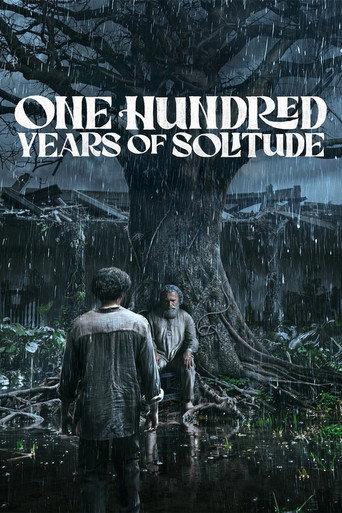
One Hundred Years of Solitude
2024
The sourced concerns are substantially offset by delivered value.
What counts as a cash grab?
Commercial extraction prioritized over meaningful consumer or creative value. Profit, popularity, adaptations, sequels, remakes, high budgets, and normal marketing do not count by themselves.
Why?
Netflix's 2024 adaptation of One Hundred Years of Solitude was produced over several years with an almost entirely Colombian cast, locations and a purpose-built Macondo set, and it premiered on Netflix as part of the platform's regular streaming offering. Reporting and reviews emphasize substantial production scale, local economic impact and ambitious craft, while I found no reliable reporting that the series was sold behind a premium paywall or launched with predatory monetization practices. The author's estate's involvement attracted some broader criticism unrelated to the series' release model.
- No reputable source shows the series was sold as a premium add-on or used predatory per-title pricing, it streamed on Netflix under the platform's subscription model.
- Reporting notes the García Márquez estate controlled rights and faced criticism for other commercial decisions, a contextual concern about brand handling.
- Multiple outlets document large-scale production, six plus years of development, on-location shooting in Colombia and a purpose-built Macondo set.
View full breakdownHide full breakdown
- Major reviews from established outlets praised the series' ambition, fidelity to the novel's tone and technical craft, indicating substantive creative value.
Score factors
| Direction | Factor | Evidence | Impact |
|---|---|---|---|
| Against | High production craft and personnel | Coverage lists notable directors, writers, cinematographers and extensive on-location crews and credits, and reviewers praise the production's cinematography, design and effects.[2][3] | -19 |
| Against | Substantive adaptation and scope | Netflix and multiple reports state the series runs broadly across 16 episodes in two parts and took over six years to realize, indicating substantial new material and scope beyond a quick reuse.[1] | -18 |
| Against | Local investment and physical setbuilding | Reporting and Netflix say the production built an extensive Macondo set, shot on location in multiple Colombian departments, and generated a reported injection of roughly $52 million into Colombia's economy.[5][1] | -11 |
| Against | Artistic and technical risk | Multiple critics and feature pieces emphasize that adapting an oft-called 'unfilmable' classic was treated as a creative gamble, with deliberate stylistic and linguistic choices such as Spanish language, Colombian casting and long-form episodic structure.[6][4] | -9 |
| For | No premium pricing evidence | Contemporary reporting and reviews describe the show as streaming on Netflix without indication of a separate premium charge or paywall for the title.[4][7] | +8 |
| For | Estate involvement and external criticism | Reporting notes the García Márquez family retained rights to the novel and the family faced criticism for other commercial decisions, which some commentators flagged as a contextual concern about monetization of the author's work.[8] | +6 |
Confidence: High · Reporting from major outlets, Netflix's own production materials and multiple contemporary reviews provide direct, repeated details about production scale and release model, and I found no reliable reporting alleging predatory monetization or deceptive premium pricing for this title. · Researched 2026-09-20
Sources reviewed
- [1]about.netflix.com
- [2]www.thewrap.com
- [3]time.com
- [4]www.theguardian.com
- [5]www.yahoo.com
- [6]www.latimes.com
- [7]www.netflix.com
- [8]foreignpolicy.com
- [9]www.yahoo.com
- [10]en.wikipedia.org
View 7 more sourcesShow fewer sources
What does the community think?
The AI sees low cash-grab risk. What's your read?
Loading community verdict…