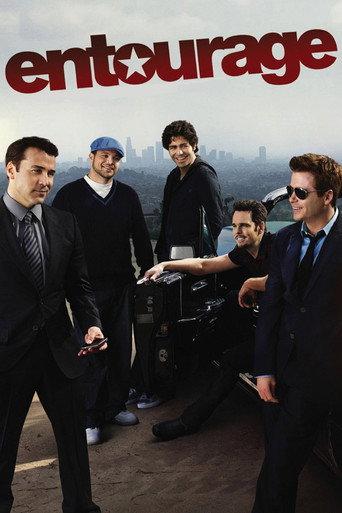
Entourage
2004
The sourced concerns are substantially offset by delivered value.
What counts as a cash grab?
Commercial extraction prioritized over meaningful consumer or creative value. Profit, popularity, adaptations, sequels, remakes, high budgets, and normal marketing do not count by themselves.
Why?
Entourage (TV, 2004) shows no credible, contemporaneous reporting that the HBO series itself was released or marketed as a predatory commercial extraction. Mainstream coverage and reviews focus on the show’s portrayal of Hollywood excess and later cultural backlash, not on deceptive pricing or rushed monetization. The series ran eight seasons, won industry awards, and received sustained coverage about production values and location work, which weighs against a straightforward "cash grab" characterization for the 2004 television run.
- No reputable reporting documents predatory monetization or deceptive release practices for the 2004-2011 TV run.
- The series ran eight seasons with continuing original episodes, not obvious low-effort reuse.
- Contemporary critics and later oral histories emphasize production values, location work, and industry recognition.
View full breakdownHide full breakdown
- Criticism that exists concerns content, representation, or later revival choices, not core exploitative monetization of the original series.
Score factors
| Direction | Factor | Evidence | Impact |
|---|---|---|---|
| Against | Noted production craft and locations | Contemporary reviews and later oral histories highlight the series’ production values and attention to Los Angeles locales, indicating substantive craft investment.[4][6][5] | -16 |
| For | No reported exploitative monetization | Major contemporaneous and retrospective coverage does not document predatory pricing, surprise paid releases, or other exploitative monetization tied to the 2004 TV series.[1][3][2] | +15 |
| Against | Substantive multi-season content | Entourage produced original scripted episodes across eight seasons from 2004 to 2011, showing ongoing new content rather than obvious recycled material.[7] | -15 |
| Against | Awards and nominations | The series and its cast received Emmys and other industry nominations and awards, which supports that the work was recognized for craft rather than solely commercial extraction.[8] | -14 |
| For | Backlash focused on content | Most critical backlash documented in retrospective pieces centers on the show’s portrayal of gender and culture, not on evidence of predatory commercial tactics during the series run.[2][3] | +8 |
| For | No evidence of rushed or deceptive release | Reporting and reviews do not record rushed production schedules or deceptive release practices for the television episodes of the 2004 series.[1] | +8 |
Confidence: High · Multiple reputable contemporary reviews, industry award listings, and retrospective reporting were available and none document predatory monetization tied to the 2004 TV run, though discussion of content and a later film revival appear in coverage. · Researched 2026-09-08
Sources reviewed
- [1]www.latimes.com
- [2]www.tvinsider.com
- [3]www.washingtonpost.com
- [4]www.latimes.com
- [5]www.wired.com
- [6]www.latimes.com
- [7]www.latimes.com
- [8]en.wikipedia.org
- [9]www.thedailybeast.com
- [10]www.thedailybeast.com
View 16 more sourcesShow fewer sources
- [11]www.cinemablend.com
- [12]www.bellandcompany.com
- [13]www.latimes.com
- [14]archives.nd.edu
- [15]www.tvinsider.com
- [16]www.latimes.com
- [17]goldenglobes.com
- [18]time.com
- [19]core.ac.uk
- [20]static1.squarespace.com
- [21]en.wikipedia.org
- [22]en.wikipedia.org
- [23]www.reddit.com
- [24]en.wikipedia.org
- [25]en.wikipedia.org
- [26]www.reddit.com
Does the community agree?
Agree or disagree with the AI's cash-grab read. One vote per browser on this title.
Loading community verdict…