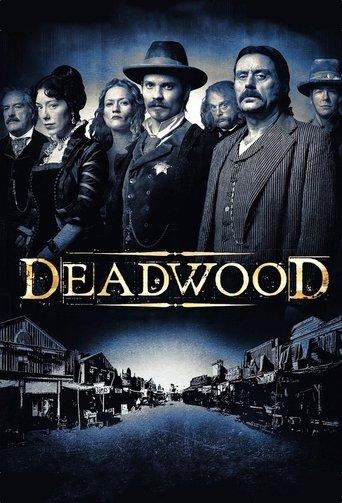
Deadwood
2004
The sourced concerns are substantially offset by delivered value.
What counts as a cash grab?
Commercial extraction prioritized over meaningful consumer or creative value. Profit, popularity, adaptations, sequels, remakes, high budgets, and normal marketing do not count by themselves.
Why?
Deadwood (HBO, 2004) shows sustained evidence of high production investment and artistic intent rather than commercial extraction. Contemporary reviews, industry profiles and awards note original writing by David Milch, ensemble performances, period production design and later a 2019 feature to close the story. I found no reputable reporting that the show used predatory monetization, deceptive release timing, or low-effort reuse to exploit the brand, instead sources emphasize critical acclaim and industry recognition.
- Major industry awards and nominations indicate recognized production craft and quality.
- Contemporary critics and aggregators record strong critical reception across the run and the 2019 film.
- Series creation and writing credited to David Milch, praised for distinctive dialogue and ensemble work.
View full breakdownHide full breakdown
- Targeted searches found no credible reporting of predatory monetization, rushed release or low-effort reuse.
Score factors
| Direction | Factor | Evidence | Impact |
|---|---|---|---|
| Against | Production craft and awards | Deadwood received major recognition including a Peabody Award and multiple Emmy nominations and wins, which signals significant craft investment by the producers and HBO.[1] | -18 |
| Against | Critical reception | Aggregator pages and contemporary reviews show broadly positive critical reception for the series as a whole and for Deadwood: The Movie, consistent with substantive creative value.[3][2][4] | -16 |
| For | No credible evidence of exploitative monetization | Targeted searches of trade coverage, major reviews and industry profiles do not reveal reporting of predatory monetization, price gouging, deceptive release practices, or systematic low-effort reuse tied to Deadwood.[3][2][1] | +10 |
| Against | Narrative closure and follow-up | HBO produced Deadwood: The Movie in 2019 to provide narrative closure for the series, and coverage frames the film as a fan-oriented coda rather than a quick monetization patch.[4][5] | -9 |
| Against | Original writing and ensemble | The series was created and largely written by David Milch and was repeatedly praised for its distinctive dialogue, ensemble acting, and historically informed production design.[6][7] | -8 |
Confidence: High · The conclusion is based on authoritative industry sources, awards records and contemporary critical coverage; publicly available corporate contract details or internal HBO monetization strategy were not accessible, but trade and press reporting contain no credible extraction signals. · Researched 2026-09-14
Sources reviewed
- [1]peabodyawards.com
- [2]static.rottentomatoes.com
- [3]www.metacritic.com
- [4]en.wikipedia.org
- [5]editorial.rottentomatoes.com
- [6]interviews.televisionacademy.com
- [7]content.time.com
- [8]en.wikipedia.org
- [9]www.tvweek.com
- [10]www.imdb.com
View 15 more sourcesShow fewer sources
- [11]www.televisionacademy.com
- [12]flixpatrol.com
- [13]www.televisionacademy.com
- [14]www.latimes.com
- [15]www.yahoo.com
- [16]en.wikipedia.org
- [17]api.pageplace.de
- [18]en.wikipedia.org
- [19]www.metacritic.com
- [20]core.ac.uk
- [21]en.wikipedia.org
- [22]en.wikipedia.org
- [23]www.reddit.com
- [24]www.reddit.com
- [25]www.worldradiohistory.com
Does the community agree?
Agree or disagree with the AI's cash-grab read. One vote per browser on this title.
Loading community verdict…