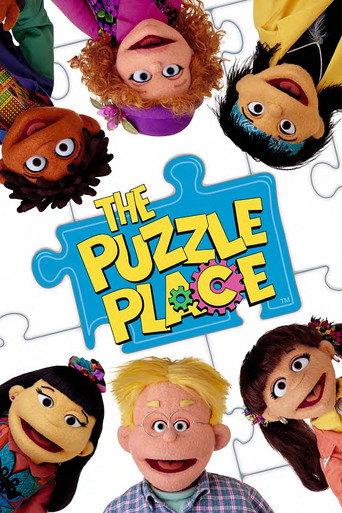
The Puzzle Place
1995
The sourced concerns are substantially offset by delivered value.
What counts as a cash grab?
Commercial extraction prioritized over meaningful consumer or creative value. Profit, popularity, adaptations, sequels, remakes, high budgets, and normal marketing do not count by themselves.
Why?
The Puzzle Place was a KCET/Lancit-produced PBS children’s series (premiering January 16, 1995) that combined public funding with commercial licensing to fund production. Contemporary reporting shows CPB and corporate underwriting covered a large portion of costs while producers also took $2.3 million in advances on licensing and secured home-video and toy licensees such as Sony Wonder and Fisher-Price. Independent coverage and station press describe substantial production investment and positive reviews, there is no credible reporting of predatory monetization or deliberately rushed low-effort reuse.
- Contemporaneous LA Times reporting states $2.3 million in advances on licensing and names Sony Wonder, Fisher-Price and Russ Berrie as licensees.
- The series received CPB funding and other corporate underwriting, and critics described it as ambitious and craft-driven.
- Sony Wonder released several Puzzle Place VHS titles and trade outlets documented home-video licensing, indicating a merchandise strategy.
View full breakdownHide full breakdown
- No credible reporting was found alleging deceptive release practices, predatory pricing, or low-effort reuse of existing content.
Score factors
| Direction | Factor | Evidence | Impact |
|---|---|---|---|
| For | Licensing advances tied to production funding | Los Angeles Times reporting states producers received $2.3 million in advances on licensing and merchandising that were counted toward series financing.[3] | +20 |
| Against | Significant public and corporate underwriting | The series was seeded by a $4.5 million CPB award and additional underwriting including Southern California Edison and an IBM donation for a second season.[1][5][2] | -18 |
| Against | Contemporaneous critical and PBS context | LA Times reviews and PBS/KCET materials described the show as an ambitious, diversity-focused preschool series that received favorable early ratings on PBS.[2][1][4] | -14 |
| For | Named home-video and toy licensees | Contemporary coverage and trade listings show Sony Wonder held home-video/audio rights and Fisher-Price and Russ Berrie were named toy/gift licensees.[3][6][7] | +9 |
| Against | Limited long-term commercial exploitation | Home media evidence shows several Sony Wonder VHS releases in the mid 1990s but no sustained modern re-release campaign or extensive ongoing monetization was documented.[8][9][4] | -6 |
| Against | Producer acquisition and corporate changes | Lancit Media, the series producer, was acquired by RCN in 1998 and later involved in corporate sales, showing the property entered standard commercial transactions after broadcast.[11][10][12] | -5 |
Confidence: High · Contemporaneous primary reporting from the Los Angeles Times and station press materials provide clear documentation of merchandising advances and licensees, while trade and library records document home-video releases; however no credible sources allege predatory or low-effort practices. · Researched 2026-07-24
Sources reviewed
- [1]www.pbssocal.org
- [2]www.latimes.com
- [3]www.latimes.com
- [4]en.wikipedia.org
- [5]www.latimes.com
- [6]www.latimes.com
- [7]www.worldradiohistory.com
- [8]search.worldcat.org
- [9]www.ebay.com
- [10]www.worldradiohistory.com
View 67 more sourcesShow fewer sources
- [11]www.lawinsider.com
- [12]en.wikipedia.org
- [13]www.rottentomatoes.com
- [14]ket.org
- [15]www.latimes.com
- [16]www.imdb.com
- [17]www.latimes.com
- [18]www.latimes.com
- [19]artikeldigital.com
- [20]trademarks.justia.com
- [21]www.worldradiohistory.com
- [22]www.velinahasuhouston.com
- [23]newspapers.swco.ttu.edu
- [24]www.worldradiohistory.com
- [25]www.velinahasuhouston.com
- [26]newspapers.swco.ttu.edu
- [27]www.reddit.com
- [28]www.reddit.com
- [29]www.reddit.com
- [30]www.reddit.com
- [31]www.reddit.com
- [32]www.reddit.com
- [33]www.reddit.com
- [34]everything.explained.today
- [35]homevideo.wikitide.org
- [36]muppetcentral.com
- [37]superlogos.fandom.com
- [38]ultimatepopculture.fandom.com
- [39]www.latimes.com
- [40]www.worldradiohistory.com
- [41]a.osmarks.net
- [42]www.worldradiohistory.com
- [43]wiki.archiveteam.org
- [44]www.worldradiohistory.com
- [45]www.worldradiohistory.com
- [46]www.worldradiohistory.com
- [47]www.sec.gov
- [48]www.sec.gov
- [49]www.sec.gov
- [50]dockets.alexandriava.gov
- [51]destination-africa.org
- [52]www.sec.gov
- [53]citeseerx.ist.psu.edu
- [54]www.sec.gov
- [55]storymaps.arcgis.com
- [56]fliphtml5.com
- [57]idrc-crdi.ca
- [58]idrc-crdi.ca
- [59]device.report
- [60]uploads-ssl.webflow.com
- [61]assets.website-files.com
- [62]www.thecanyonnews.com
- [63]www.yumpu.com
- [64]baptistfriends.org
- [65]www.psc.state.fl.us
- [66]udspace.udel.edu
- [67]www.psc.state.fl.us
- [68]www.lawinsider.com
- [69]uspto.report
- [70]manuals.plus
- [71]www.sec.gov
- [72]njbiz.com
- [73]www.lawinsider.com
- [74]www.lawinsider.com
- [75]www.nexttv.com
- [76]fraser.stlouisfed.org
- [77]user.xmission.com
What does the community think?
The AI sees low cash-grab risk. What's your read?
Loading community verdict…