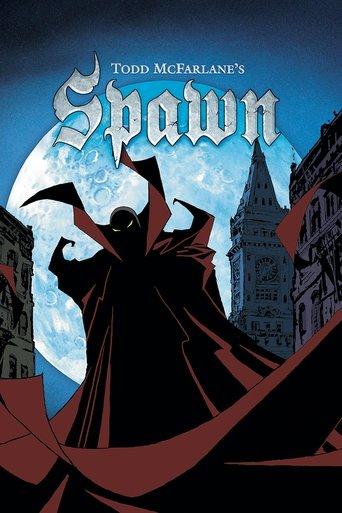
Spawn
1997
The sourced concerns are substantially offset by delivered value.
What counts as a cash grab?
Commercial extraction prioritized over meaningful consumer or creative value. Profit, popularity, adaptations, sequels, remakes, high budgets, and normal marketing do not count by themselves.
Why?
Todd McFarlane’s 1997 HBO animated series Spawn was produced into a high-profile cable project with explicit commercial tie-ins, the creator retaining merchandising control while the franchise already generated multimillion dollar toy and licensing revenue; contemporaneous reporting cites a $6 million HBO series budget and large toy sales. At the same time critics and archival industry coverage praise the show’s visuals, storytelling and technical work, and it received awards and professional oversight, with no clear evidence of rushed or predatory release practices.
- Contemporary reporting documents substantial merchandising revenue tied to Spawn and a $6 million HBO animation budget, showing clear commercial extraction incentives.
- Todd McFarlane retained control over merchandising and had an active toy manufacturing business tied to Spawn sales.
- Critical aggregation and reviews praise the HBO series’ visuals and storytelling, indicating real production craft and creative investment.
View full breakdownHide full breakdown
- Industry coverage and award listings show technical recognition and hands-on supervision, and there is no source-backed evidence of deliberate low-effort reuse or deceptive release practices.
Score factors
| Direction | Factor | Evidence | Impact |
|---|---|---|---|
| For | Merchandising revenue | Contemporary reporting states Spawn generated large merchandise revenues and that the character was a best-selling action figure, indicating strong extraction incentives tied to toys and licensing.[1] | +18 |
| Against | Critical praise for the series | Contemporary and retrospective reviews aggregate strongly positive reception, Rotten Tomatoes shows a high Tomatometer and critics praised the series’ visuals and storytelling.[2] | -15 |
| For | Creator retained merchandising control | Todd McFarlane negotiated contracts keeping merchandising control and publicly emphasized merchandising as part of the property’s business model.[1] | +9 |
| For | Franchise expansion by networks and studio | Reporting at the time linked the HBO animated series to a broader franchise rollout including a New Line live-action film and video game, showing coordinated commercial exploitation of the brand across media.[1][3] | +8 |
| Against | Production oversight and technical recognition | Industry coverage documents hands-on oversight during production and the series received professional awards for technical craft, indicating substantive production investment.[4][5] | -6 |
Confidence: High · Contemporaneous trade and mainstream reporting plus aggregated critical reviews and award listings provide multiple independent signals; gaps remain around internal studio financial incentives beyond reported merchandising revenues. · Researched 2026-08-22
Sources reviewed
- [1]www.latimes.com
- [2]www.rottentomatoes.com
- [3]www.latimes.com
- [4]www.imdb.com
- [5]awn.com
- [6]en.wikipedia.org
- [7]www.rottentomatoes.com
- [8]www.youtube.com
- [9]www.rogerebert.com
- [10]soundsofcinema.com
View 15 more sourcesShow fewer sources
- [11]en.wikipedia.org
- [12]en.wikipedia.org
- [13]www.youtube.com
- [14]comicbook.com
- [15]www.horrorthriller.com
- [16]imaginationsabyss.github.io
- [17]dcanimated.com
- [18]www.awn.com
- [19]www.courts.mo.gov
- [20]fileserver-az.core.ac.uk
- [21]www.reddit.com
- [22]www.reddit.com
- [23]www.reddit.com
- [24]www.reddit.com
- [25]en.wikipedia.org
What does the community think?
The AI sees low cash-grab risk. What's your read?
Loading community verdict…