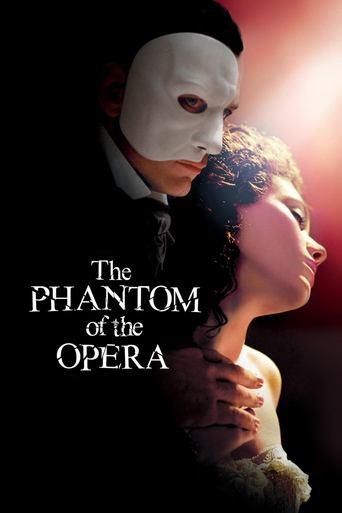
The Phantom of the Opera
2004
The sourced concerns are substantially offset by delivered value.
What counts as a cash grab?
Commercial extraction prioritized over meaningful consumer or creative value. Profit, popularity, adaptations, sequels, remakes, high budgets, and normal marketing do not count by themselves.
Why?
The 2004 film The Phantom of the Opera was a major, well financed screen adaptation of Andrew Lloyd Webber's stage musical, produced with reported budgets in the tens of millions and nominated for technical Academy Awards. Contemporary critics repeatedly described it as spectacle driven and faithful to the stage, praising production design while criticizing narrative and musical choices. I found substantial reporting about lavish production values and mixed-to-negative critical reaction, but no credible sources documenting predatory monetization, deceptive release practices, or rushed studio exploitation.
- Contemporary reviews frame the film as spectacle-heavy and stagebound, suggesting emphasis on visual commercial appeal over narrative innovation.
- Production reporting documents a large reported budget and high-profile design and crew, showing significant investment in craft.
- Prominent critics like Roger Ebert praised the film's cinematic spectacle, indicating substantive production effort rather than purely low-effort reuse.
View full breakdownHide full breakdown
- No credible reporting was found of exploitative monetization, deceptive release tactics, premium tie-ins, or rushed distribution.
Score factors
| Direction | Factor | Evidence | Impact |
|---|---|---|---|
| Against | Large budget and technical recognition | Contemporary reporting and encyclopedia entries list a multi-tens-of-millions production budget and the film received Academy Award nominations for art direction and cinematography.[1] | -18 |
| For | Critics described spectacle that overshadowed substance | Multiple reviews characterized the film as an amusement-park style, spectacle-driven adaptation that prioritizes lavish visuals over narrative or musical depth, which critics framed as commercial showmanship.[2][3] | +16 |
| Against | Wide commercial release and box-office presence | Trade reporting and box office databases record a wide December 2004 release and substantial box office returns consistent with a major commercial adaptation rather than a limited artistic release.[4] | -8 |
| Against | Cinematic spectacle praised by major critics | Roger Ebert and other reviewers singled out Joel Schumacher's visual staging, production design, and cinematography as definite artistic efforts rather than simple cost-cutting reuse.[5] | -7 |
Confidence: Medium · Evidence includes strong contemporary reviews and production reporting about budget and design, but I found no internal studio documents or reporting of monetization practices, so conclusions about intent and corporate prioritization remain partially inferential. · Researched 2026-09-30
Sources reviewed
- [1]www.latimes.com
- [2]www.salon.com
- [3]www.slantmagazine.com
- [4]www.rottentomatoes.com
- [5]www.rogerebert.com
- [6]en.wikipedia.org
- [7]www.the-numbers.com
- [8]www.theguardian.com
- [9]www.imdb.com
- [10]www.washingtonpost.com
View 8 more sourcesShow fewer sources
What does the community think?
The AI sees low cash-grab risk. What's your read?
Loading community verdict…