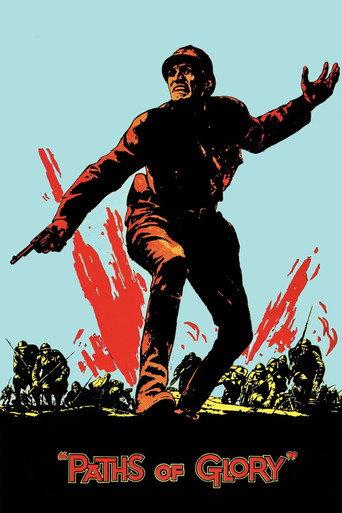
Paths of Glory
1957
The sourced concerns are substantially offset by delivered value.
What counts as a cash grab?
Commercial extraction prioritized over meaningful consumer or creative value. Profit, popularity, adaptations, sequels, remakes, high budgets, and normal marketing do not count by themselves.
Why?
Paths of Glory (1957) shows no credible evidence of being a commercial cash grab. Contemporary production histories, credits, and critical reception identify it as a low‑budget, auteur-led antiwar film directed and co-written by Stanley Kubrick with substantial craft. The picture received archival restoration and premium home video editions, and box-office reporting shows it did not generate clear windfall profits. Searches of production, distribution, and restoration records turned up no documentation of predatory monetization, rushed releases, or deceptive pricing tied to this title.
- Directed and co-written by Stanley Kubrick at age 28, indicating auteur-driven production.
- Adaptation and screenplay development involved established writers producing original antiwar content.
- Film has received restorations and premium releases, indicating investment in preservation and consumer value.
View full breakdownHide full breakdown
- Budget and box-office records show modest finances and no sign of deliberate high-margin exploitation.
Score factors
| Direction | Factor | Evidence | Impact |
|---|---|---|---|
| Against | Auteur production and craft | The film was directed and co-written by Stanley Kubrick and is widely described as an early auteur work with strong critical appraisal.[2][1] | -18 |
| For | No found evidence of predatory monetization | Searches of production, distribution, critical histories, and home-video release records produced no documentation of predatory monetization, deceptive pricing, or paywall-driven exploitation tied to this title.[5][3][4] | +18 |
| Against | Substantive new content and screenplay | Paths of Glory adapts Humphrey Cobb's novel with credited screenplay contributions from Calder Willingham and Jim Thompson, producing a distinct, thematically rich antiwar film.[1][6] | -16 |
| Against | Modest budget and limited windfall profit | Contemporary budget reporting lists a production budget around $900,000 and accounts describe the film as only modestly successful or roughly breaking even, not a high-margin exploitation picture.[1] | -12 |
| Against | Restoration and premium reissues | The film has undergone formal archival restoration and received premium home-video and Criterion releases, indicating investment in consumer-facing quality.[3][2][4] | -11 |
| For | Standard theatrical release timeline | Documentation shows a Munich premiere and US theatrical release in late 1957, consistent with a conventional release schedule rather than a rushed or deceptive launch.[1][7] | +8 |
Confidence: High · Contemporary production records, authoritative film histories, restoration documentation, and box-office summaries consistently support the conclusion and no sources were found indicating predatory monetization, though internal studio memos were not examined in these searches. · Researched 2026-08-07
Sources reviewed
- [1]en.wikipedia.org
- [2]www.criterion.com
- [3]www.film-foundation.org
- [4]www.blu-ray.com
- [5]www.rottentomatoes.com
- [6]www.filmsite.org
- [7]en.wikipedia.org
- [8]www.the-numbers.com
- [9]en.wikipedia.org
- [10]archives.arts.ac.uk
View 14 more sourcesShow fewer sources
- [11]goldenglobes.com
- [12]api.pageplace.de
- [13]airandspace.si.edu
- [14]www.military-history.org
- [15]www.moma.org
- [16]m.imdb.com
- [17]api.pageplace.de
- [18]en.wikipedia.org
- [19]afisilver.afi.com
- [20]nottingham-repository.worktribe.com
- [21]en.wikipedia.org
- [22]journals.openedition.org
- [23]www.reddit.com
- [24]it.wikipedia.org
What does the community think?
The AI sees low cash-grab risk. What's your read?
Loading community verdict…