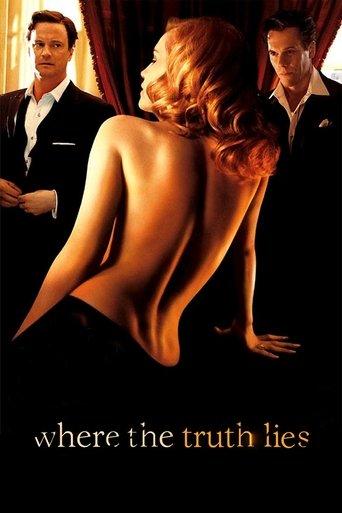
Where the Truth Lies
2005
The sourced concerns are substantially offset by delivered value.
What counts as a cash grab?
Commercial extraction prioritized over meaningful consumer or creative value. Profit, popularity, adaptations, sequels, remakes, high budgets, and normal marketing do not count by themselves.
Why?
Where the Truth Lies is a 2005 Atom Egoyan film adapted from Rupert Holmes's novel, produced at roughly a $25 million scale with major stars and festival premieres but it underperformed commercially and attracted an NC-17 rating that limited U.S. distribution. Contemporary coverage and reviews emphasize substantial period production values and artistic intent while reporting walkouts and mixed critical response. I found no credible sources showing predatory monetization, rushed deceptive release practices, or deliberate franchise-style brand exploitation intended primarily as commercial extraction.
- Produced at reported $25 million scale with festival premieres and major cast, indicating substantial production investment.
- MPAA NC-17 rating and reported test screening walkouts limited commercial reach, not evidence of exploitative monetization.
- Contemporary reviews emphasize craft, period design, and auteur direction rather than low-effort reuse.
View full breakdownHide full breakdown
- Box office was modest, but no sources link pricing, deceptive release, or predatory ancillary monetization to the film.
Score factors
| Direction | Factor | Evidence | Impact |
|---|---|---|---|
| For | No credible evidence of exploitative monetization | I found no industry reporting or documentation alleging predatory pricing, deceptive packaging, or franchise-style monetization tactics for this title.[1][2] | +20 |
| Against | Production scale and craft | Reporting lists a roughly $25 million production budget, Cannes and Toronto festival premieres, and detailed period production design, supporting substantial production effort.[3][1] | -18 |
| Against | Festival premieres and critical response | The film premiered at Cannes and Toronto and received mixed to lukewarm critical reviews that praised craft but criticized narrative impact.[2][4] | -15 |
| For | NC-17 rating and distribution limits | Contemporary reporting documents an MPAA NC-17 rating and a lost appeal, which constrained U.S. advertising and exhibition options.[5][6] | +9 |
| Against | Box office performance | Box Office reporting shows modest theatrical receipts, indicating the film did not achieve large commercial returns despite production investment.[7][3] | -8 |
Confidence: High · Contemporary industry reporting, festival records, rating appeals, production budget listings, and major reviews provide direct, specific evidence; no sources link the film to predatory monetization or deceptive release practices. · Researched 2026-10-28
Sources reviewed
- [1]cfe.tiff.net
- [2]en.wikipedia.org
- [3]www.the-numbers.com
- [4]www.rottentomatoes.com
- [5]www.latimes.com
- [6]www.screendaily.com
- [7]www.boxofficemojo.com
- [8]www.boxofficemojo.com
- [9]www.imdb.com
- [10]www.latimes.com
View 11 more sourcesShow fewer sources
What does the community think?
The AI sees low cash-grab risk. What's your read?
Loading community verdict…