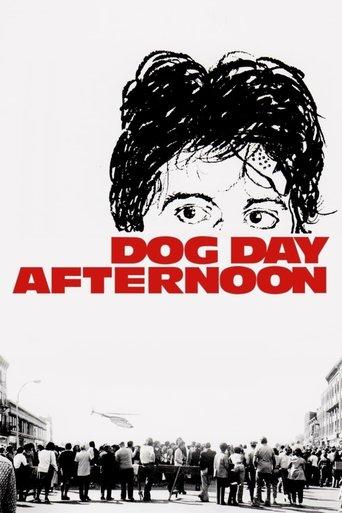
Dog Day Afternoon
1975
The sourced concerns are substantially offset by delivered value.
What counts as a cash grab?
Commercial extraction prioritized over meaningful consumer or creative value. Profit, popularity, adaptations, sequels, remakes, high budgets, and normal marketing do not count by themselves.
Why?
Dog Day Afternoon was theatrically released on September 21, 1975 and dramatizes a real Brooklyn bank robbery. Contemporary reviews and later scholarship document notable directorial craft by Sidney Lumet, an original screenplay by Frank Pierson that won the Academy Award for Best Original Screenplay, and a commercially successful release, with no credible reporting that the film was produced or distributed as a predatory monetization scheme. I found no substantive evidence of rushed release, deceptive pricing, or low effort reuse indicative of a cash grab.
- No credible reporting or archival evidence found that the film was structured as predatory monetization or a deceptive release.
- Frank Pierson wrote an original screenplay based on the true events, it won the Academy Award for Best Original Screenplay, indicating substantive new creative work.
- Widely praised direction and performances by Sidney Lumet and Al Pacino are documented in contemporary reviews.
View full breakdownHide full breakdown
- The film was both a critical and box-office success, suggesting consumer value rather than exploitative pricing or low-effort reuse.
Score factors
| Direction | Factor | Evidence | Impact |
|---|---|---|---|
| Against | Direction and performances | Contemporary critics praised Sidney Lumet's direction and Al Pacino's performance, and leading film outlets still consider the film a high-craft work.[4][1] | -18 |
| Against | Original screenplay and awards | Frank Pierson wrote the original screenplay and the film won the Academy Award for Best Original Screenplay, a strong indicator of substantive creative investment.[3][2] | -16 |
| Against | Box office and reception | The film was a critical and box-office success in 1975, with substantial lifetime domestic gross reported by industry box-office trackers.[5][6] | -8 |
| Against | Thematic risk and social specificity | The film addresses socially sensitive topics including sexuality and media spectacle and is discussed in scholarship and major outlets as thematically ambitious.[1][7] | -6 |
| For | No credible evidence of exploitative monetization | I found no contemporary or later authoritative reporting that the film was used for predatory monetization, though some outlets noted payment negotiations with the real-life robber were reported and disputed.[2][3] | +5 |
| For | Release practices | Contemporary reporting and release records show a standard theatrical release schedule with no documented rushed or deceptive release practices.[2][5] | +2 |
Confidence: High · The conclusions rest on contemporary major reviews, box-office records, and award reporting which are consistent and authoritative, though internal studio financial records or producer contracts were not examined. · Researched 2026-08-09
Sources reviewed
- [1]www.bfi.org.uk
- [2]en.wikipedia.org
- [3]www.latimes.com
- [4]www.rogerebert.com
- [5]www.the-numbers.com
- [6]www.boxofficemojo.com
- [7]time.com
- [8]www.imdb.com
- [9]www.rottentomatoes.com
- [10]www.rogerebert.com
View 37 more sourcesShow fewer sources
- [11]en.wikipedia.org
- [12]en.wikipedia.org
- [13]www.commonsensemedia.org
- [14]www.wislgbthistory.com
- [15]www.thenation.com
- [16]www.washingtonpost.com
- [17]www.atogt.com
- [18]en.wikipedia.org
- [19]afisilver.afi.com
- [20]en.wikipedia.org
- [21]escholarship.org
- [22]en.wikipedia.org
- [23]www.walterfilm.com
- [24]www.degruyterbrill.com
- [25]scholarsbank.uoregon.edu
- [26]www.reddit.com
- [27]www.reddit.com
- [28]www.reddit.com
- [29]www.reddit.com
- [30]www.reddit.com
- [31]www.reddit.com
- [32]www.reddit.com
- [33]en.wikipedia.org
- [34]m.the-numbers.com
- [35]en.wikipedia.org
- [36]www.imdb.com
- [37]warnerbros.fandom.com
- [38]www.yahoo.com
- [39]www.newyorker.com
- [40]www.newyorkcitytheatre.com
- [41]emanuellevy.com
- [42]www.the-numbers.com
- [43]en.wikipedia.org
- [44]www.reddit.com
- [45]www.worldradiohistory.com
- [46]en.wikipedia.org
- [47]en.wikipedia.org
What does the community think?
The AI sees low cash-grab risk. What's your read?
Loading community verdict…