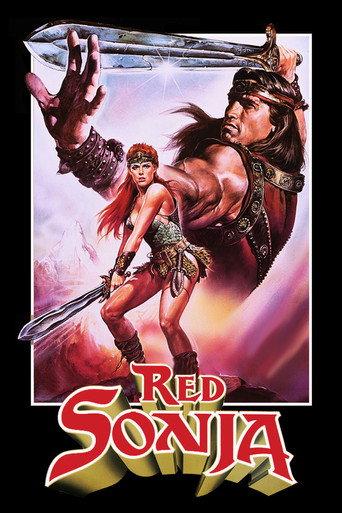
Red Sonja
1985
The sourced concerns are substantially offset by delivered value.
What counts as a cash grab?
Commercial extraction prioritized over meaningful consumer or creative value. Profit, popularity, adaptations, sequels, remakes, high budgets, and normal marketing do not count by themselves.
Why?
Red Sonja (1985) shows mixed evidence on whether commercial extraction was prioritized. Contemporary and retrospective reporting documents prominent marketing and billing of Arnold Schwarzenegger despite a brief supporting role, and last-minute casting choices are reported, which support claims of brand-driven selling. At the same time the film features high-profile production talent including composer Ennio Morricone, cinematographer Giuseppe Rotunno, and substantial studio financing and Italian production resources, which mitigates a pure cash-grab reading.
- Marketing and billing emphasized Arnold Schwarzenegger despite a small role, indicating brand-driven promotion.
- Contemporary and later critics widely described the film as poorly acted and uneven, supporting weak consumer value claims.
- High-level production talent including Ennio Morricone and Giuseppe Rotunno and Cinecittà production resources point to meaningful production investment.
View full breakdownHide full breakdown
- Reports of last-minute casting and a scaled cameo that grew on set suggest rushed or opportunistic production choices.
Score factors
| Direction | Factor | Evidence | Impact |
|---|---|---|---|
| For | Negative critical consensus on quality | Major contemporary and retrospective reviews called the film poorly made, miscast, and lacking in meaningful creative value, indicating a weak consumer product experience.[1] | +19 |
| Against | High-profile production talent | The film involved notable craftspeople, including composer Ennio Morricone and cinematographer Giuseppe Rotunno, and has been praised for cinematography and production design.[3][1] | -14 |
| For | Prominent Arnold billing | Marketing and billing prominently featured Arnold Schwarzenegger despite his small supporting role, which critics and commentators describe as a selling point used to promote the film.[2][4] | +13 |
| Against | Significant studio financing and scale | Reporting lists a substantial production budget and Dino De Laurentiis production involvement with principal photography at Cinecittà, indicating material financial investment in production values.[5] | -11 |
| For | Last-minute lead casting | Sources report Brigitte Nielsen was cast in the title role only weeks before production, a practice consistent with rushed casting decisions.[1] | +9 |
| For | Cameo expanded during production | Commentary reports Schwarzenegger was originally to do a brief cameo but his involvement expanded during shooting, which commentators interpret as producers relying on his presence to bolster the film.[2] | +8 |
| Against | Later restoration and special releases | The title has received restored home video releases and special editions, which indicate ongoing consumer interest and investment in preserving the film for fans.[3] | -6 |
Confidence: High · Multiple contemporary reviews, production summaries, and retrospective reports directly document billing practices, casting timing, critical reception, and the involvement of high-profile production talent, though internal studio memos and original marketing materials were not consulted here. · Researched 2026-08-14
Sources reviewed
- [1]editorial.rottentomatoes.com
- [2]wevegotbackissues.com
- [3]www.dvdtalk.com
- [4]www.ericdsnider.com
- [5]saturation.io
- [6]en.wikipedia.org
- [7]www.aboutfilm.com
- [8]m.imdb.com
- [9]everything.explained.today
- [10]www.on-magazine.co.uk
View 6 more sourcesShow fewer sources
What does the community think?
The AI sees low cash-grab risk. What's your read?
Loading community verdict…