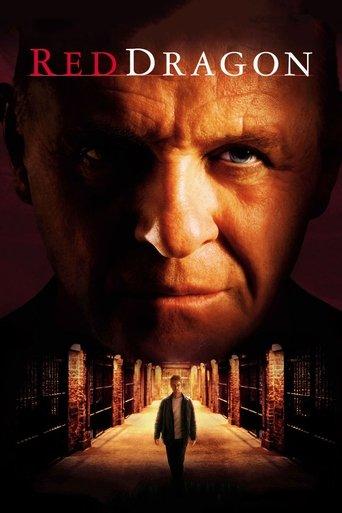
Red Dragon
2002
The sourced concerns are substantially offset by delivered value.
What counts as a cash grab?
Commercial extraction prioritized over meaningful consumer or creative value. Profit, popularity, adaptations, sequels, remakes, high budgets, and normal marketing do not count by themselves.
Why?
Red Dragon (2002), directed by Brett Ratner, was widely reviewed as a competent, more commercial retelling of Thomas Harris's novel that recycles material from the earlier Manhunter (1986) and emphasizes Hannibal Lecter. Contemporary critics noted derivative elements and a tonal shift toward accessibility, while other coverage and the finished release document a high-profile cast, established crew, and a generous home-video package with extras. I found contemporary reviews and release coverage but no primary studio memos or pricing practices that prove predatory monetization.
- Contemporary critics described the film as derivative and more commercially oriented than prior adaptations.
- Commentary singled out Brett Ratner's commercial track record as evidence of studio intent to make a mainstream follow-up.
- Mitigating evidence includes a high-profile cast and experienced crew, and reviewers acknowledged craftful elements.
View full breakdownHide full breakdown
- The released product included a director's edition and multiple extras, indicating a consumer-facing home-video offering.
Score factors
| Direction | Factor | Evidence | Impact |
|---|---|---|---|
| For | Derivative reuse | Multiple contemporary reviews remarked that Red Dragon recycles plot and tone from prior adaptations and the novel, reducing novelty and complexity.[1][3][2] | +16 |
| Against | Notable cast and crew | The film assembled a high-profile cast including Anthony Hopkins and Edward Norton and experienced crew, and reviewers frequently cited atmospheric craft elements.[1] | -15 |
| Against | Expanded material | Several reviews noted the film expands Francis Dolarhyde's backstory and adds a prologue about Graham's capture of Lecter, indicating substantive differences from earlier adaptations.[5][2] | -9 |
| For | Commercial director choice | At least one contemporary piece and several reviewers argued the studio chose Brett Ratner because of his commercial track record, framing the project as a mainstream follow-up to Hannibal.[6][4] | +8 |
| Against | Disc extras and commentary | The theatrical release was followed by a multi-disc home video edition with director commentary and multiple featurettes, showing a complete consumer product rather than a stripped-down cash-in.[4] | -5 |
Confidence: Medium · Conclusions are based on contemporary mainstream reviews and release documentation found in two targeted searches, I did not find internal studio memos or explicit monetization contracts so evidence of deliberate predatory extraction is limited. · Researched 2026-09-30
Sources reviewed
- [1]www.rogerebert.com
- [2]nitrateonline.com
- [3]www.splicedwire.com
- [4]filmfreakcentral.net
- [5]www.latimes.com
- [6]themoviereport.com
- [7]beta.thestorygraph.com
- [8]fr.scribd.com
- [9]www.cranesareflying.mistdriven.com
- [10]dokumen.pub
View 22 more sourcesShow fewer sources
- [11]www.woolfwideweb.com
- [12]adam.curry.com
- [13]cinemaretro.com
- [14]www.ranker.com
- [15]cranesareflying.mistdriven.com
- [16]www.bobatthemovies.com
- [17]www.myalternatereality.com
- [18]www.rogerebert.com
- [19]en.wikipedia.org
- [20]www.rogerebert.com
- [21]www.rottentomatoes.com
- [22]udspace.udel.edu
- [23]www.washingtonpost.com
- [24]www.rogerebert.com
- [25]en.wikipedia.org
- [26]www.screenwritersutopia.com
- [27]www.rte.ie
- [28]archives.nd.edu
- [29]en.wikipedia.org
- [30]en.wikipedia.org
- [31]www.reddit.com
- [32]dai.mun.ca
What does the community think?
The AI sees low cash-grab risk. What's your read?
Loading community verdict…