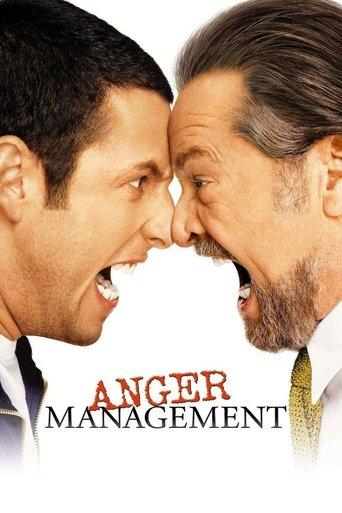
Anger Management
2003
The sourced concerns are substantially offset by delivered value.
What counts as a cash grab?
Commercial extraction prioritized over meaningful consumer or creative value. Profit, popularity, adaptations, sequels, remakes, high budgets, and normal marketing do not count by themselves.
Why?
Anger Management (2003) was a mainstream studio comedy produced by Happy Madison and Revolution Studios, budgeted in the tens of millions and built around Adam Sandler and Jack Nicholson, it opened wide on April 11, 2003 and grossed roughly $195 million worldwide. I found no credible reporting of predatory monetization, deceptive release tactics, or specialized premium tie-ins that would indicate deliberate commercial extraction. Contemporary reviews called the film formulaic and uneven, but that critical view does not by itself show materially exploitative practices.
- No credible evidence of predatory monetization, deceptive release practices, or exploitative tie-ins was found.
- The film was a sizable studio production with a reported multi-million dollar budget and A-list cast.
- Contemporary critics described the movie as formulaic and uneven, suggesting creative weakness rather than explicit extraction tactics.
View full breakdownHide full breakdown
- The theatrical and home-video rollout followed normal studio practice with no documented rushed or deceptive timing.
Score factors
| Direction | Factor | Evidence | Impact |
|---|---|---|---|
| Against | Significant production investment | The film lists a reported production budget in the tens of millions and was produced/distributed by established studios, with top-billed stars Adam Sandler and Jack Nicholson.[1] | -17 |
| Against | Strong commercial performance | Anger Management opened at number one and went on to earn roughly $195 million worldwide, indicating broad consumer demand rather than a limited extraction-focused product.[1][3] | -11 |
| For | Critics called it formulaic | Multiple contemporary reviews characterized the movie as uneven and formulaic, which indicates perceived creative weakness but does not by itself establish exploitative monetization.[2][4] | +11 |
| Against | Consumer-friendly home-video extras | Coverage of the DVD release notes special-edition materials and documentary extras, which supports a consumer-friendly product offering rather than minimal-value reuse.[5] | -6 |
Confidence: High · Major trade reporting, box office records, mainstream reviews, and home-video coverage were consulted and show no credible evidence of predatory monetization or deceptive release, though critical consensus did note formulaic elements. · Researched 2026-09-28
Sources reviewed
- [1]www.the-numbers.com
- [2]www.rogerebert.com
- [3]www.cbsnews.com
- [4]www.salon.com
- [5]www.latimes.com
- [6]www.rottentomatoes.com
- [7]en.wikipedia.org
- [8]boxofficewatch.com
- [9]www.rottentomatoes.com
- [10]www.cinafilm.com
View 29 more sourcesShow fewer sources
- [11]filmdb.co.uk
- [12]www.rottentomatoes.com
- [13]sede.mcu.gob.es
- [14]en.wikipedia.org
- [15]www.screendaily.com
- [16]www.cbsnews.com
- [17]en.wikipedia.org
- [18]en.wikipedia.org
- [19]en.wikipedia.org
- [20]lib-dspace1.ttu.edu
- [21]zh.wikipedia.org
- [22]objects.lib.uidaho.edu
- [23]core.ac.uk
- [24]catalog.afi.com
- [25]www.cinafilm.com
- [26]www.timeout.com
- [27]www.cinemaphile.org
- [28]exclaim.ca
- [29]www.rte.ie
- [30]mrqe.com
- [31]www.qwipster.net
- [32]www.comingsoon.net
- [33]mywebsite.flipcause.com
- [34]en.wikipedia.org
- [35]en.wikipedia.org
- [36]epapers.uwsp.edu
- [37]www.misacor.org.au
- [38]digital.opal-libraries.org
- [39]www.visioncommunitymanagement.com
What does the community think?
The AI sees low cash-grab risk. What's your read?
Loading community verdict…