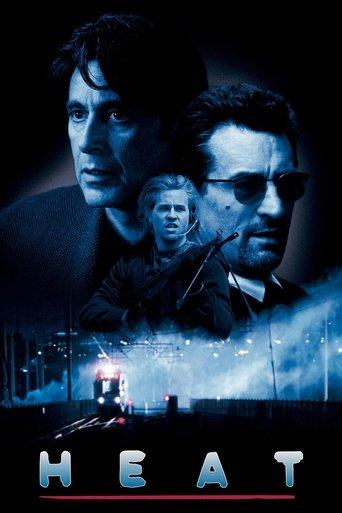
Heat
1995
The sourced concerns are substantially offset by delivered value.
What counts as a cash grab?
Commercial extraction prioritized over meaningful consumer or creative value. Profit, popularity, adaptations, sequels, remakes, high budgets, and normal marketing do not count by themselves.
Why?
Heat (1995), written and directed by Michael Mann, shows clear evidence of substantial production investment, original filmmaking choices, and critical praise rather than signs of predatory monetization or rushed exploitation. Contemporary reviews and production reporting emphasize Mann's long preparation, on-location shooting, the famous downtown shootout sequence, and later home media special editions with commentaries and documentaries. Box office receipts recouped the reported production budget. I found no credible contemporary reporting or official disclosures that characterize the film as a cash grab.
- No contemporary reporting from major outlets alleges predatory monetization or deceptive release practices.
- Multiple authoritative sources document significant production work, on-location shoots, and Michael Mann's direction.
- Critical reviews from major critics praised craft, pacing, and performances, indicating substantive creative value.
View full breakdownHide full breakdown
- Commercial performance and later home media special editions support a complete consumer-oriented release rather than a bare exploitation.
Score factors
| Direction | Factor | Evidence | Impact |
|---|---|---|---|
| Against | Substantial production craft | Sources document extensive on-location shooting, long runtime, and significant directorial and cinematographic effort under Michael Mann for Heat (1995).[1][2] | -18 |
| Against | Original and expanded screenplay | Heat is a feature-length expansion of Michael Mann's earlier material but is presented as a substantially reworked, original film script rather than a minimal reuse.[3] | -16 |
| Against | Critical praise and technical risk | Contemporary critics highlighted the film's performances, direction, pacing, and realistic action sequences, indicating artistic and technical investment rather than low-effort reuse.[4] | -8 |
| For | No reported exploitative monetization | Major contemporary reviews and production reporting do not allege predatory monetization, deceptive release, or other extraction practices for Heat (1995).[4][1] | +5 |
Confidence: High · Evidence is drawn from major contemporary reviews and reputable production and box office sources; absence of extraction signals in these outlets is notable though absence of evidence is not absolute proof. · Researched 2026-08-08
Sources reviewed
- [1]www.latimes.com
- [2]www.tcm.com
- [3]en.wikipedia.org
- [4]www.rogerebert.com
- [5]en.wikipedia.org
- [6]www.20thcenturystudios.com
- [7]en.wikipedia.org
- [8]www.wikidata.org
- [9]www.the-numbers.com
- [10]a.osmarks.net
View 26 more sourcesShow fewer sources
- [11]www.imdb.com
- [12]play.google.com
- [13]www.imdb.com
- [14]en.wikipedia.org
- [15]en.wikipedia.org
- [16]www.reddit.com
- [17]en.wikipedia.org
- [18]www.reddit.com
- [19]www.reddit.com
- [20]www.reddit.com
- [21]archives.nd.edu
- [22]www.reddit.com
- [23]www.reddit.com
- [24]www.reddit.com
- [25]thesuccessfulscreenwriter.com
- [26]www.reddit.com
- [27]www.reddit.com
- [28]www.reddit.com
- [29]www.reddit.com
- [30]www.reddit.com
- [31]assets.scriptslug.com
- [32]cursos.sis.org.br
- [33]arxiv.org
- [34]arxiv.org
- [35]arxiv.org
- [36]arxiv.org
What does the community think?
The AI sees low cash-grab risk. What's your read?
Loading community verdict…