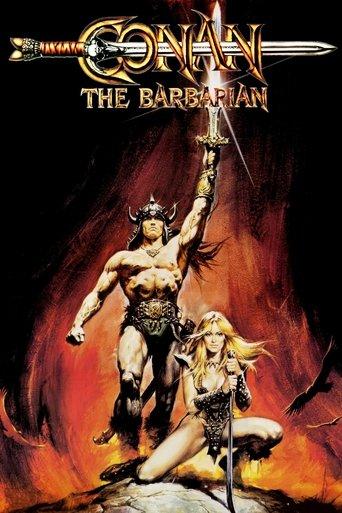
Conan the Barbarian
1982
Insufficient evidence
We did not find enough credible, independent evidence to publish a numeric cash-grab score. Unrated is more honest than a guess.
What counts as a cash grab?
Commercial extraction prioritized over meaningful consumer or creative value. Profit, popularity, adaptations, sequels, remakes, high budgets, and normal marketing do not count by themselves.
Why?
Conan the Barbarian (1982) shows substantial creative and production investment rather than clear commercial extraction. John Milius directed and rewrote earlier Oliver Stone work, the film employed production designer Ron Cobb and extensive location shoots in Spain, Basil Poledouris composed an acclaimed original score, and the editing and effects work were significant. The picture had a $20 million production budget and earned roughly $69-79 million worldwide, and contemporary reporting and later retrospectives document craft and development rather than predatory monetization or rushed release practices.
- Documented creative development under John Milius with Oliver Stone material rewritten into an original shooting script.
- Significant production craft: Ron Cobb sets, location shooting in Spain, practical effects and stunts, and a praised original score by Basil Poledouris.
- Budget and box office show commercial success but not evidence of deceptive pricing or predatory monetization in primary release records.
View full breakdownHide full breakdown
Score factors
| Direction | Factor | Evidence | Impact |
|---|---|---|---|
| Against | Production craft and design | The film employed notable production designers, location shooting in Spain, practical mechanical effects, and extended postproduction, indicating substantial craft investment.[1][2] | -18 |
| Against | Script and creative development | John Milius rewrote earlier Oliver Stone drafts and integrated varied Robert E. Howard elements, showing original creative work rather than simple reuse.[1] | -15 |
| Against | Artistic and technical risk | Milius favored mechanical effects and on-location stunts, the composer was engaged early and the score was developed alongside storyboards, indicating artistic and technical risk-taking.[1][2][4] | -7 |
| Against | Budget and box office performance | Contemporary box office and industry databases record a roughly $20 million production budget and approximately $69-79 million worldwide gross, showing commercial success but not proof of exploitative pricing.[3] | -9 |
Confidence: Low · No source-backed commercial-extraction signal was found. · Researched 2026-07-23
Sources reviewed
- [1]en.wikipedia.org
- [2]www.naxos.com
- [3]www.boxofficemojo.com
- [4]www.allmusic.com
- [5]oak3.the-numbers.com
- [6]www.imdb.com
- [7]www.metacritic.com
- [8]conan.com
- [9]en.wikipedia.org
- [10]www.newyorker.com
View 78 more sourcesShow fewer sources
- [11]www.rogerebert.com
- [12]conan.com
- [13]www.latimes.com
- [14]oak3.the-numbers.com
- [15]reference.org
- [16]en.wikipedia.org
- [17]www.commonsensemedia.org
- [18]en.wikipedia.org
- [19]en.wikipedia.org
- [20]en.wikipedia.org
- [21]www.reddit.com
- [22]www.reddit.com
- [23]journals.openedition.org
- [24]www.worldradiohistory.com
- [25]freeronin.com
- [26]conan.com
- [27]asmac.org
- [28]www.soundtrackinfo.com
- [29]www.eclassical.com
- [30]filmmusic.com
- [31]musicbrainz.org
- [32]music.apple.com
- [33]en.wikipedia.org
- [34]www.moviemusic.com
- [35]raymondusrex.wordpress.com
- [36]filmmusic.com
- [37]www.filmmining101.com
- [38]en.wikipedia.org
- [39]justmusic.s3.eu-west-2.amazonaws.com
- [40]www.filmscoremonthly.com
- [41]www.classcreator.com
- [42]es.wikipedia.org
- [43]www.reddit.com
- [44]www.reddit.com
- [45]www.reddit.com
- [46]www.reddit.com
- [47]www.rogerebert.com
- [48]www.rogerebert.com
- [49]letterboxd.com
- [50]www.imdb.com
- [51]www.rogerebert.com
- [52]www.rogerebert.com
- [53]www.imdb.com
- [54]owiki.org
- [55]www.imdb.com
- [56]pt.wikipedia.org
- [57]fr.wikipedia.org
- [58]www.reddit.com
- [59]www.reddit.com
- [60]www.reddit.com
- [61]en.wikipedia.org
- [62]www.reddit.com
- [63]spraguedecampfan.wordpress.com
- [64]mrqe.com
- [65]en-academic.com
- [66]us.headtopics.com
- [67]movies.fandom.com
- [68]www.esquire.com
- [69]gizmodo.com
- [70]en.wikipedia.org
- [71]www.filmaffinity.com
- [72]www.imdb.com
- [73]s3-euw1-ap-pe-df-pch-content-store-p.s3.eu-west-1.amazonaws.com
- [74]www.penguinrandomhouse.com
- [75]books.google.com
- [76]books.google.com
- [77]prhcomics.com
- [78]www.simonandschuster.com.au
- [79]penguinrandomhouselibrary.com
- [80]www.barnesandnoble.com
- [81]titanbooks.com
- [82]www.ark.no
- [83]culture.fandom.com
- [84]en.wikipedia.org
- [85]www.staff.ces.funai.edu.ng
- [86]www.rayharryhausen.com
- [87]www.staff.ces.funai.edu.ng
- [88]manuals.plus