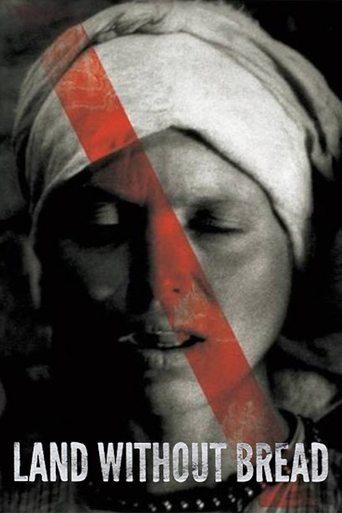
Land Without Bread
1933
There are sourced concerns, but the case is limited.
What counts as a cash grab?
Commercial extraction prioritized over meaningful consumer or creative value. Profit, popularity, adaptations, sequels, remakes, high budgets, and normal marketing do not count by themselves.
Why?
Land Without Bread (Las Hurdes, Tierra sin pan, 1933) is a short film by Luis Buñuel that deliberately staged and manipulated scenes of poverty in the Las Hurdes region, including documented animal deaths and faked situations presented as documentary evidence. Contemporary records show the film was privately financed and provoked censorship and scandal on release. I found no credible evidence that the film was produced as a predatory commercial monetization scheme or that studio-driven price/value extraction was prioritized over creative or critical aims.
- The film contains documented staged and deceptive scenes presented as documentary, indicating ethical exploitation of subjects.
- There is no contemporaneous evidence of predatory monetization, studio-driven pricing, or release practices aimed at consumer extraction.
- Primary funding appears private and idiosyncratic rather than commercial studio financing intended for quick profit.
View full breakdownHide full breakdown
- The film has substantial scholarly and critical recognition and was banned or censored, suggesting artistic risk and controversy rather than straightforward commercial calculation.
Score factors
| Direction | Factor | Evidence | Impact |
|---|---|---|---|
| For | Documented cruelty and faked events | Accounts note Buñuel killed at least two animals during filming and staged scenes that would later be characterized as exploitative of local inhabitants.[3][1] | +15 |
| For | Staged and deceptive content | Scholarly and press sources report that Buñuel staged and manipulated scenes and presented them as documentary evidence of Las Hurdes conditions.[2][4] | +14 |
| For | No evidence of predatory monetization | I found no sources indicating studio-driven predatory pricing, paywalls, packaged consumer ripoffs, or explicit commercial schemes tied to the film's release.[2][1] | +10 |
| Against | Private or non-commercial financing | Contemporary accounts and reference entries state the film was co-produced by Buñuel and Ramón Acín and was financed in part by a friend rather than by a commercial studio seeking fast profit.[2][1] | -10 |
| Against | Scholarly recognition and artistic risk | The film is the subject of substantial academic analysis and festival/archival entries, and its form is widely discussed as a risky ethnofiction and surrealist experiment rather than a straightforward commercial product.[5][6] | -8 |
Confidence: High · The film's production methods, funding, and reception are well documented in academic, archival, and press sources; there is a lack of contemporary evidence for studio-driven predatory monetization, though specific distributor profit records are not available. · Researched 2026-07-29
Sources reviewed
- [1]www.imdb.com
- [2]en.wikipedia.org
- [3]es.wikipedia.org
- [4]www.theguardian.com
- [5]www.idfa.nl
- [6]doaj.org
- [7]www.tandfonline.com
- [8]cinehistoria.com
- [9]revistes.uab.cat
- [10]www.cambridge.org
View 12 more sourcesShow fewer sources
What does the community think?
The AI found some cash-grab signs. What's your read?
Loading community verdict…