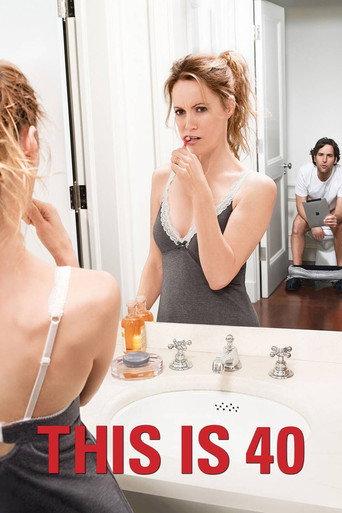
This Is 40
2012
The sourced concerns are substantially offset by delivered value.
What counts as a cash grab?
Commercial extraction prioritized over meaningful consumer or creative value. Profit, popularity, adaptations, sequels, remakes, high budgets, and normal marketing do not count by themselves.
Why?
This Is 40 is Judd Apatow's 2012 follow-up to Knocked Up that centers on Pete and Debbie, produced for about $35 million and earning roughly $88 million worldwide. Contemporary trade and press coverage show a standard theatrical roll and routine home-video window, and I found no reporting of predatory monetization, special paid add-ons, or deceptive release tactics. Critics were mixed, with several calling the film overlong and self-indulgent while others defended its emotional honesty, and the film's status as a Knocked Up spin-off is a potential brand-exploitation signal but not proof of a cash grab.
- No credible reporting found of predatory monetization, premium-packaging, or deceptive release practices.
- The film was a Knocked Up spin-off elevating supporting characters, which is a brand-exploitation risk but not proof of extraction.
- Production budget ~$35M and worldwide gross ~ $88M show commercial success and a fully financed production.
View full breakdownHide full breakdown
- Multiple reputable critics described the movie as overlong and self-indulgent, a creative weakness that could support a cash-grab claim but is not conclusive.
Score factors
| Direction | Factor | Evidence | Impact |
|---|---|---|---|
| Against | Budget and box office | Reported production budget is about $35 million and worldwide gross is about $88 million, indicating a commercially successful, fully funded production rather than an ultra-low-cost cash grab.[1][2] | -14 |
| For | Critical complaints about self-indulgence and length | Several reputable reviews described the film as sprawling, overlong, and self-indulgent, criticisms that point to creative weakness which could support a cash-grab allegation but do not prove exploitative monetization.[4][3][5] | +13 |
| Against | No evidence of predatory monetization or deceptive release | Trade records and release information show a normal theatrical release on December 21, 2012 and a routine home-video window, with no reporting of premium-tier ticketing, bundled microtransactions, or deceptive sales practices.[1][6][2] | -9 |
| Against | Critical defenses against 'cash-grab' label | Some critics and outlets explicitly rejected the cash-grab label, describing the movie as emotionally honest and a character-focused work rather than a cynical franchise ploy.[7][3] | -8 |
| For | Spin-off from Knocked Up | The film is widely described as a 'sort-of sequel' or spin-off that promotes supporting Knocked Up characters to leads, which can be a brand-exploitation signal but does not by itself prove predatory intent.[8][9] | +5 |
Confidence: Medium · Findings rely on mainstream box-office records and contemporary critical reviews; I searched trade, review, and box-office sources but did not locate internal studio disclosures or reporting on marketing deals that could reveal subtler monetization practices. · Researched 2026-09-28
Sources reviewed
- [1]www.boxofficemojo.com
- [2]www.the-numbers.com
- [3]www.latimes.com
- [4]www.theguardian.com
- [5]www.reelviews.net
- [6]theatreowners.org
- [7]theplaylist.net
- [8]en.wikipedia.org
- [9]cinemalogue.com
- [10]www.rottentomatoes.com
View 35 more sourcesShow fewer sources
- [11]www.reddit.com
- [12]www.boxofficemojo.com
- [13]filmdb.co.uk
- [14]preview.boxofficemojo.com
- [15]en.wikipedia.org
- [16]zh.wikipedia.org
- [17]saturation.io
- [18]nathanzoebl.com
- [19]boxofficewatch.com
- [20]www.brandongray.com
- [21]boxofficewatch.com
- [22]en.wikipedia.org
- [23]de.wikipedia.org
- [24]www.reddit.com
- [25]en.wikipedia.org
- [26]www.filmcomment.com
- [27]cms-article.forbesindia.com
- [28]www.canyon-news.com
- [29]colincarman.net
- [30]www.thelastthingisee.com
- [31]www.moviesaboutgladiators.com
- [32]www.zekefilm.org
- [33]ufdcimages.uflib.ufl.edu
- [34]en.wikipedia.org
- [35]thatshelf.com
- [36]www.slantmagazine.com
- [37]soundsofcinema.com
- [38]www.mv-voice.com
- [39]mediafiles.cineplex.com
- [40]www.dailyinfo.co.uk
- [41]www.reddit.com
- [42]en.wikipedia.org
- [43]en.wikipedia.org
- [44]www.portmann-content.com
- [45]www.reddit.com
What does the community think?
The AI sees low cash-grab risk. What's your read?
Loading community verdict…