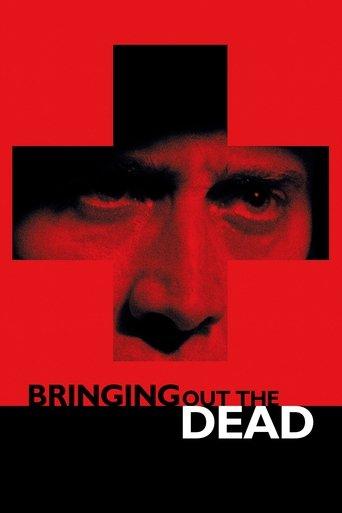
Bringing Out the Dead
1999
Insufficient evidence
We did not find enough credible, independent evidence to publish a numeric cash-grab score. Unrated is more honest than a guess.
What counts as a cash grab?
Commercial extraction prioritized over meaningful consumer or creative value. Profit, popularity, adaptations, sequels, remakes, high budgets, and normal marketing do not count by themselves.
Why?
Bringing Out the Dead (1999) does not present credible evidence of being a commercial cash grab. It is a literary adaptation directed by Martin Scorsese with a Paul Schrader screenplay, featuring identifiable production investment and distinctive stylistic choices that critics discussed as artistic risk. Contemporary box office and distribution records show a standard theatrical run and routine home-video release, and searches turned up no signs of predatory monetization, rushed release tactics, or cheap franchise recycling.
- Directed by Martin Scorsese and written by Paul Schrader, indicating substantial creative investment.
- Based on Joe Connelly's 1998 novel, it is an original adaptation rather than franchise exploitation.
- Contemporary reviews emphasize challenging tone and stylistic risk rather than formulaic reuse.
View full breakdownHide full breakdown
Score factors
| Direction | Factor | Evidence | Impact |
|---|---|---|---|
| Against | High-profile creative team | The film was directed by Martin Scorsese with a screenplay by Paul Schrader, showing substantial creative leadership and production commitment.[2][1] | -18 |
| Against | Original literary adaptation | Bringing Out the Dead is adapted from Joe Connelly's 1998 novel, an original non-franchise source tailored for the film.[1][2] | -15 |
| Against | Distinctive style and risky tone | Contemporary reviews and aggregator coverage describe the film's challenging tone and stylistic choices indicative of artistic and technical risk rather than formulaic production.[5][4] | -7 |
| Against | Box office underperformance | Reported box office returns of roughly $16 million against commonly cited production budgets around $32 million show the film underperformed commercially, which undermines an argument that it was primarily engineered as a profit-extractive product.[1] | -9 |
| Against | No evidence of predatory monetization | Available distribution and release records indicate a conventional theatrical release and routine home-video window with no contemporaneous reporting of premium tie-ins, heavy merchandising, or pay-to-access schemes.[3] | -8 |
Confidence: Low · No source-backed commercial-extraction signal was found. · Researched 2026-08-08
Sources reviewed
- [1]en.wikipedia.org
- [2]catalog.afi.com
- [3]www.boxofficemojo.com
- [4]www.rottentomatoes.com
- [5]www.salon.com
- [6]www.the-numbers.com
- [7]www.moviefone.com
- [8]www.imdb.com
- [9]www.imdb.com
- [10]www.imdb.com
View 10 more sourcesShow fewer sources
- [11]www.imdb.com
- [12]bombreport.com
- [13]editorial.rottentomatoes.com
- [14]en.wikipedia.org
- [15]en.wikipedia.org
- [16]arxiv.org
- [17]en.wikipedia.org
- [18]en.wikipedia.org
- [19]en.wikipedia.org
- [20]manuals.plus