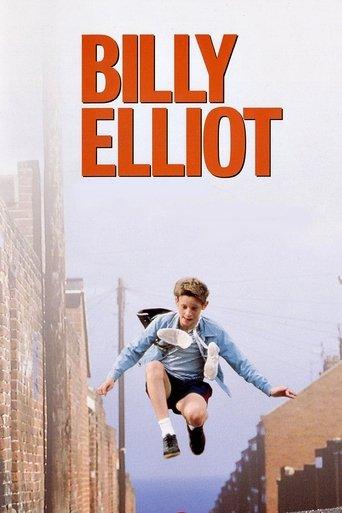
Billy Elliot
2000
The sourced concerns are substantially offset by delivered value.
What counts as a cash grab?
Commercial extraction prioritized over meaningful consumer or creative value. Profit, popularity, adaptations, sequels, remakes, high budgets, and normal marketing do not count by themselves.
Why?
Billy Elliot (2000) is a critically acclaimed, original British coming-of-age film set during the 1984 miners strike, written by Lee Hall and directed by Stephen Daldry. Contemporary production notes, reviews, award records, and box office reporting document substantive creative investment, major festival and awards recognition, and strong audience response, and they do not show evidence of predatory monetization, rushed deceptive release, or low-effort reuse that would support calling the title a cash grab.
- The film was written by Lee Hall and directed by Stephen Daldry, an original screenplay with clear authorship.
- It won major awards including BAFTA Outstanding British Film and strong acting recognition, indicating high production craft.
- Box office and release history show a successful limited-to-wide expansion and $109M worldwide on a roughly $5M budget.
View full breakdownHide full breakdown
- Contemporary reviews and director interviews describe deliberate artistic choices and choreographic work, not rushed reuse.
- A later stage musical adaptation involved the original creative team and substantial new investment, not cheap exploitation.
Score factors
| Direction | Factor | Evidence | Impact |
|---|---|---|---|
| Against | Production and craft | Billy Elliot won major awards including BAFTA Outstanding British Film and received multiple award nominations, reflecting recognized production quality.[2][1] | -18 |
| Against | Original screenplay and authorship | The film is an original screenplay by Lee Hall, directed by Stephen Daldry, telling a specific local story rather than repurposing an existing franchise.[1][3] | -16 |
| Against | Audience response and box office | Contemporary reporting and box office records show a limited release that expanded strongly, ultimately earning roughly $109 million worldwide on an estimated $5 million budget.[4][1] | -11 |
| Against | Artistic and technical risk | Director interviews and critical coverage describe intentional artistic choices combining political context, choreography, and child performance, showing artistic risk and craft.[6][5] | -7 |
| For | No documented exploitative monetization | I found no credible sources documenting predatory monetization practices, deceptive release tactics, or pay-to-play schemes around the film's initial theatrical release.[4][1] | 0 |
Confidence: High · Contemporary production notes, mainstream critical reviews, awards records, and box office databases provide consistent, primary evidence of original creative investment and no sign of predatory monetization; gaps are limited to the absence of internal studio memos about business intent. · Researched 2026-09-22
Sources reviewed
- [1]en.wikipedia.org
- [2]www.imdb.com
- [3]cinema.com
- [4]www.boxofficemojo.com
- [5]www.theguardian.com
- [6]www.bfi.org.uk
- [7]www.theguardian.com
- [8]www.theguardian.com
- [9]www.theguardian.com
- [10]www.theguardian.com
View 16 more sourcesShow fewer sources
- [11]www.theguardian.com
- [12]www.theguardian.com
- [13]en.wikipedia.org
- [14]www.jpbox-office.com
- [15]en.wikipedia.org
- [16]en.wikipedia.org
- [17]s3.broadway.com
- [18]en.wikipedia.org
- [19]en.wikipedia.org
- [20]www.uky.edu
- [21]theses.ubn.ru.nl
- [22]image.guardian.co.uk
- [23]hgb.se
- [24]www.reddit.com
- [25]www.reddit.com
- [26]www.reddit.com
What does the community think?
The AI sees low cash-grab risk. What's your read?
Loading community verdict…