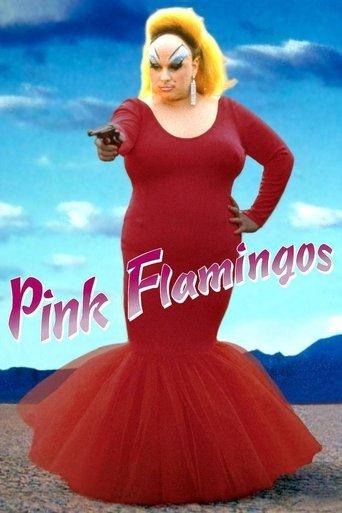
Pink Flamingos
1972
Insufficient evidence
We did not find enough credible, independent evidence to publish a numeric cash-grab score. Unrated is more honest than a guess.
What counts as a cash grab?
Commercial extraction prioritized over meaningful consumer or creative value. Profit, popularity, adaptations, sequels, remakes, high budgets, and normal marketing do not count by themselves.
Why?
Pink Flamingos (1972) was an ultra low budget independent film written and directed by John Waters and produced by Dreamland Productions, shot in and around Baltimore on roughly a $10,000-$12,000 budget and created as intentional transgressive provocation for midnight‑movie and underground audiences. It was picked up for midnight-circuit distribution, later issued on home video, restored and released by reputable preservers including the Criterion Collection, and inducted into the Library of Congress National Film Registry in 2021. I found no credible reporting that the production or later releases used predatory monetization, deceptive release practices, or cheap franchise reuse typical of cash grabs.
- Documented as a very low budget, DIY independent production with creative intent and local 'Dreamlanders' collaborators.
- Contemporaneous and retrospective criticism frames the film as deliberate transgressive artmanipulation rather than opportunistic franchise reuse.
- Picked up for midnight‑movie distribution and later preserved by Criterion and the Library of Congress, which supports cultural value.
View full breakdownHide full breakdown
Score factors
| Direction | Factor | Evidence | Impact |
|---|---|---|---|
| Against | Low‑budget DIY production | Primary production histories report Pink Flamingos was an independent Dreamland production filmed in Baltimore for about $10,000-$12,000 over months with a volunteer company of regular collaborators.[4] | -16 |
| Against | Original transgressive content and cult impact | Contemporary and later reviews characterize the film as intentionally transgressive, original underground work that generated a sustained midnight‑movie cult audience rather than a repackaged existing property.[2][3][1] | -17 |
| Against | High artistic and reputational risk | The film’s deliberately shocking scenes led to censorship, bans, and notoriety which indicate artistic risk taking rather than safe commercial repurposing.[6] | -8 |
| Against | Preservation and reputable reissues | The film was later restored and issued by reputable organizations including the Criterion Collection and was added to the Library of Congress National Film Registry in 2021.[5] | -11 |
Confidence: Low · No source-backed commercial-extraction signal was found. · Researched 2026-07-22
Sources reviewed
- [1]www.filmlinc.org
- [2]www.rogerebert.com
- [3]www.denofgeek.com
- [4]www.theguardian.com
- [5]www.loc.gov
- [6]en.wikipedia.org
- [7]catalog.afi.com
- [8]www.imdb.com
- [9]www.imdb.com
- [10]us.macmillan.com
View 91 more sourcesShow fewer sources
- [11]www.imdb.com
- [12]m.imdb.com
- [13]www.imdb.com
- [14]catalog.afi.com
- [15]www.filmsite.org
- [16]to-hollywood-and-beyond.fandom.com
- [17]en.wikipedia.org
- [18]en.wikipedia.org
- [19]en.wikipedia.org
- [20]catalogues.iksv.org
- [21]en.wikipedia.org
- [22]lsa.umich.edu
- [23]d2b8urneelikat.cloudfront.net
- [24]www.boo-hooray.com
- [25]boo-hooray.cdn.bibliopolis.com
- [26]en.wikipedia.org
- [27]www.reddit.com
- [28]www.reddit.com
- [29]www.movielore.johnnydepp-zone2.com
- [30]vanityfair-staging.azurewebsites.net
- [31]www.formacinema.it
- [32]paperzz.com
- [33]ilmanifesto.it
- [34]en-academic.com
- [35]www.ilxor.com
- [36]digicoll.lib.berkeley.edu
- [37]digicoll.lib.berkeley.edu
- [38]mubi.buzzsprout.com
- [39]www.movingimagesource.us
- [40]www.deepfocusreview.com
- [41]brooklynrail.org
- [42]www.movingimagesource.us
- [43]digicoll.lib.berkeley.edu
- [44]tianlu-tw.com
- [45]www.criterion.com
- [46]www.criterion.com
- [47]www.criterion.com
- [48]www.criterion.com
- [49]warnerbros.fandom.com
- [50]www.criterion.com
- [51]goldenglobes.com
- [52]en.wikipedia.org
- [53]luminosoa.org
- [54]www.denofgeek.com
- [55]www.siskelfilmcenter.org
- [56]www.kauai.hawaii.edu
- [57]www.midnightonly.com
- [58]kclpure.kcl.ac.uk
- [59]en.wikipedia.org
- [60]www.reddit.com
- [61]www.reddit.com
- [62]www.reddit.com
- [63]mediarep.org
- [64]media.journoportfolio.com
- [65]www.reddit.com
- [66]www.loc.gov
- [67]www.loc.gov
- [68]www.loc.gov
- [69]www.loc.gov
- [70]www.loc.gov
- [71]blogs.loc.gov
- [72]www.cbsnews.com
- [73]en.wikipedia.org
- [74]blogs.loc.gov
- [75]lib.ccsdetroit.edu
- [76]www.cbsnews.com
- [77]blogs.loc.gov
- [78]cityclerk.lacity.org
- [79]www.tcm.com
- [80]ttabvue.uspto.gov
- [81]cityclerk.lacity.org
- [82]conference.awpwriter.org
- [83]www.reddit.com
- [84]api.pageplace.de
- [85]www.reddit.com
- [86]www.reddit.com
- [87]www.reddit.com
- [88]www.imdb.com
- [89]www.grindhousedatabase.com
- [90]styrous.blogspot.com
- [91]www.worldradiohistory.com
- [92]www.worldradiohistory.com
- [93]www.comicbasics.com
- [94]www.worldradiohistory.com
- [95]www.ebay.com
- [96]www.ebay.com
- [97]ffshrine.org
- [98]scratchpad.fandom.com
- [99]dokumen.pub
- [100]doczz.net
- [101]www.ebay.com