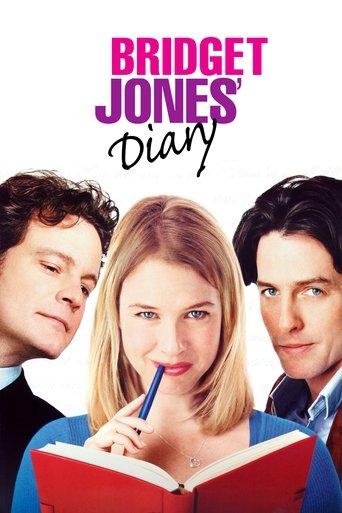
Bridget Jones's Diary
2001
The sourced concerns are substantially offset by delivered value.
What counts as a cash grab?
Commercial extraction prioritized over meaningful consumer or creative value. Profit, popularity, adaptations, sequels, remakes, high budgets, and normal marketing do not count by themselves.
Why?
Bridget Jones's Diary (2001) shows strong evidence of being a commercially successful, well-resourced adaptation rather than a predatory cash grab. Production records and contemporary reporting document established writers, a credited director, and major cast investment. The film received broadly positive reviews, significant award recognition including an Academy Award nomination for Renée Zellweger, and large box office returns on a modest budget. I found no credible reporting of rushed releases, deceptive pricing, or predatory monetization tied to the original 2001 theatrical or home releases.
- No credible reporting found of predatory monetization, deceptive release, or rushed production.
- Production assembled experienced writers, director, and high-profile cast, indicating substantive craft investment.
- The film received broadly positive critical reception and an Academy Award nomination for Renée Zellweger.
View full breakdownHide full breakdown
- It was a highly profitable adaptation of a bestselling novel, but profit alone is not evidence of exploitation.
Score factors
| Direction | Factor | Evidence | Impact |
|---|---|---|---|
| Against | Experienced creative team | The film was written by Helen Fielding with Andrew Davies and Richard Curtis, directed by Sharon Maguire, and produced by Working Title, showing significant creative and production investment.[1][4] | -16 |
| Against | Adaptation preserved and added material | Contemporary reviews and production commentary describe the screenplay as preserving the book's tone while adding cinematic material, indicating substantive new content rather than low-effort reuse.[2][5] | -12 |
| Against | Positive critical reception and consumer recognition | Contemporary reviews were generally positive and the film received industry and audience recognition, consistent with genuine consumer and creative value.[6][2][3] | -11 |
| For | High profitability from a bestselling property | The film grossed roughly $280 million worldwide on a reported $22-25 million production budget, showing strong commercial exploitation of the source material.[8][7] | +8 |
| Against | Notable actor commitment and recognition | Renée Zellweger undertook a visible physical and performance commitment and earned major award recognition, including an Academy Award nomination for Best Actress.[1][3] | -7 |
| For | No sign of rushed or deceptive release | I found no contemporary reporting or production histories alleging a rushed theatrical launch or deceptive release practices for the 2001 film.[4][9] | +2 |
| For | No evidence of predatory monetization | Searches of production reporting and home-video release records show standard commercial distribution, with no evidence of predatory tie-ins, deceptive pricing, or pay-to-win style monetization linked to the original release.[7][9] | +1 |
Confidence: High · Sources include contemporary reviews, production reporting, box office databases, and official distributor material, which provide direct evidence of production investment and the absence of reporting that would indicate exploitive monetization, though exhaustive archival research beyond these sourc · Researched 2026-08-15
Sources reviewed
- [1]en.wikipedia.org
- [2]www.rogerebert.com
- [3]www.imdb.com
- [4]www.latimes.com
- [5]www.theguardian.com
- [6]www.rottentomatoes.com
- [7]www.the-numbers.com
- [8]www.boxofficemojo.com
- [9]www.miramax.com
- [10]www.imdb.com
View 11 more sourcesShow fewer sources
- [11]firth.com
- [12]en.wikipedia.org
- [13]fr.wikipedia.org
- [14]www.moviefone.com
- [15]en.wikipedia.org
- [16]en.wikipedia.org
- [17]www.latimes.com
- [18]eoi1zaragoza.org
- [19]en.wikipedia.org
- [20]repository.gatech.edu
- [21]archives.nd.edu
What does the community think?
The AI sees low cash-grab risk. What's your read?
Loading community verdict…