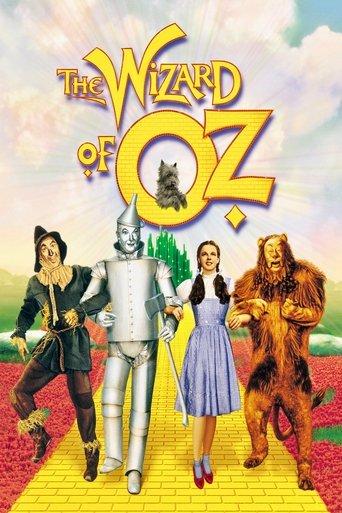
The Wizard of Oz
1939
Insufficient evidence
We did not find enough credible, independent evidence to publish a numeric cash-grab score. Unrated is more honest than a guess.
What counts as a cash grab?
Commercial extraction prioritized over meaningful consumer or creative value. Profit, popularity, adaptations, sequels, remakes, high budgets, and normal marketing do not count by themselves.
Why?
The Wizard of Oz (1939) was a large scale, costly MGM production that used three-strip Technicolor, complex effects, extensive sets and many crew and cast members, and it generated original, award winning music. Contemporary and retrospective sources document production difficulties and high technical ambition, the film received Academy recognition and long term cultural prominence, and it did not recoup its costs in the initial theatrical run but became profitable through later TV licensing and re-releases. I found no credible evidence that the film was released as a predatory cash grab.
- Large, well-documented production investment and technical ambition, including Technicolor and extensive sets.
- Original score and song won Academy Awards, the film received major nominations and enduring critical acclaim.
- Film did not immediately recoup its budget but became profitable through standard re-releases and TV licensing beginning in 1956.
View full breakdownHide full breakdown
Score factors
| Direction | Factor | Evidence | Impact |
|---|---|---|---|
| Against | High-cost, technically ambitious production | Contemporary and retrospective production histories record a $2.7-2.8 million budget, three-strip Technicolor photography, 65 studio sets covering 25 acres and a production involving thousands of cast and crew, indicating substantial investment and craft.[1][3][2] | -20 |
| Against | Original, award-winning music and critical recognition | The film featured original songs including "Over the Rainbow" and won Academy Awards for Best Original Song and Best Original Score while also receiving multiple nominations and an honorary Juvenile Award for Judy Garland.[1] | -18 |
| Against | Standard re-releases and TV licensing led to profitability | Authoritative histories report the film did not make a profit on its original 1939 release and became reliably profitable only after studio licensing for annual television broadcasts beginning in 1956, showing conventional long-term monetization rather than predatory tactics.[1][4] | -11 |
Confidence: Low · No source-backed commercial-extraction signal was found. · Researched 2026-08-11
Sources reviewed
- [1]www.tcm.com
- [2]www.latimes.com
- [3]catalog.afi.com
- [4]www.latimes.com
- [5]www.rottentomatoes.com
- [6]en.wikipedia.org
- [7]www.tcm.com
- [8]filmcolors.org
- [9]en.wikipedia.org
- [10]www.browardcenter.org
View 10 more sourcesShow fewer sources
- [11]en.wikipedia.org
- [12]en.wikipedia.org
- [13]en.wikipedia.org
- [14]www.reddit.com
- [15]www.reddit.com
- [16]de.wikipedia.org
- [17]www.reddit.com
- [18]cits.wa.gov.au
- [19]media.unesco.org
- [20]www.reddit.com