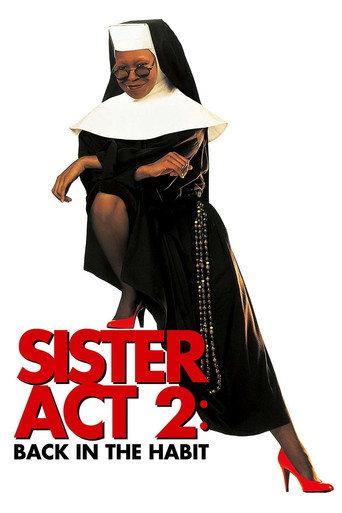
Sister Act 2: Back in the Habit
1993
The sourced concerns are substantially offset by delivered value.
What counts as a cash grab?
Commercial extraction prioritized over meaningful consumer or creative value. Profit, popularity, adaptations, sequels, remakes, high budgets, and normal marketing do not count by themselves.
Why?
Sister Act 2: Back in the Habit (1993) was released a year after the original and received largely mixed to negative contemporary reviews that called it formulaic and derivative while singling out the musical numbers. Production reporting documents a concrete creative source, the Iris Stevenson choir story, and the film produced a commercially successful soundtrack that earned RIAA recognition. I found criticism that it felt like an unnecessary sequel, but no direct primary-source evidence of predatory monetization, rushed deceptive release tactics, or explicit studio memos admitting exploitation.
- Contemporary critics described the sequel as formulaic and an unnecessary follow-up rather than a clear artistic advance.
- The film was produced quickly after the 1992 original and was widely seen as a commercial follow-up, though that alone is not proof of exploitation.
- Production reporting shows the movie was built around a real choir teacher story and significant new musical content.
View full breakdownHide full breakdown
- The soundtrack performed well commercially and has been credited with influencing modern gospel exposure.
Score factors
| Direction | Factor | Evidence | Impact |
|---|---|---|---|
| For | Contemporary critical reception | Major contemporary reviews described Sister Act 2 as formulaic and an unnecessary sequel that abandoned much of what made the first film distinctive.[1][3] | +18 |
| Against | Substantive production sourcing | Los Angeles Times reporting documents that the film drew on the real Iris Stevenson choir story and related behind-the-scenes compromises during development.[4] | -15 |
| Against | Soundtrack success and influence | The soundtrack charted and received a Gold certification, and sources credit the film with helping popularize contemporary gospel fusion.[2][6] | -12 |
| For | Quick commercial follow-up timing | The sequel arrived in December 1993, one year after Sister Act, consistent with a studio strategy to capitalize on the original's success.[2][5] | +8 |
| Against | Musical sequences and direction | Several reviews and industry writeups highlighted the film's musical sequences and credited director Bill Duke and the cast for keeping audience attention despite narrative weaknesses.[1][7] | -8 |
| Against | No documented predatory monetization or deceptive release | I found no primary-source reporting or official disclosures that the film used predatory monetization, deceptive release practices, or paywalled essential content.[8][5] | -6 |
Confidence: Medium · Contemporaneous major reviews and production reporting provide solid evidence about creative content and reception, but I could not find studio internal memos, contract disclosures, or authoritative reporting explicitly proving predatory monetization or rushed/deceptive business practices. · Researched 2026-09-11
Sources reviewed
- [1]www.rogerebert.com
- [2]en.wikipedia.org
- [3]www.washingtonpost.com
- [4]www.latimes.com
- [5]www.boxofficemojo.com
- [6]www.allmusic.com
- [7]www.latimes.com
- [8]www.the-numbers.com
- [9]thecornercritic.wordpress.com
- [10]www.worldradiohistory.com
View 32 more sourcesShow fewer sources
- [11]www.worldradiohistory.com
- [12]americanradiohistory.com
- [13]kiwix.thunderforge.net
- [14]www.buzzfeed.com
- [15]www.scribd.com
- [16]www.cheatsheet.com
- [17]badmovietwins.com
- [18]wikipedia.nlaha.com
- [19]pod.wave.co
- [20]cdn4.creativecirclemedia.com
- [21]cdn5.creativecirclemedia.com
- [22]www.scmp.com
- [23]cdn4.creativecirclemedia.com
- [24]note.com
- [25]en.wikipedia.org
- [26]music.amazon.in
- [27]www.rogerebert.com
- [28]www.rottentomatoes.com
- [29]www.deseret.com
- [30]www.brandongray.com
- [31]www.spokesman.com
- [32]en.wikipedia.org
- [33]www.rogerebert.com
- [34]udspace.udel.edu
- [35]en.wikipedia.org
- [36]zh.wikipedia.org
- [37]rmsc.org
- [38]es.wikipedia.org
- [39]device.report
- [40]en.wikipedia.org
- [41]newspapers.swco.ttu.edu
- [42]api.pageplace.de
What does the community think?
The AI sees low cash-grab risk. What's your read?
Loading community verdict…