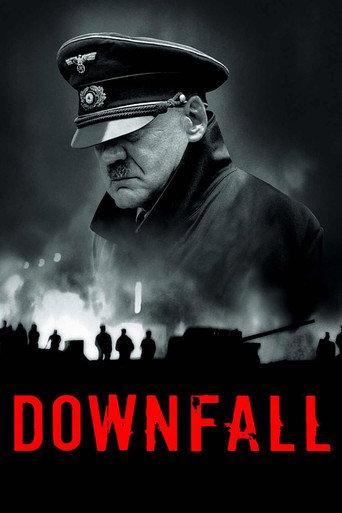
Downfall
2004
The sourced concerns are substantially offset by delivered value.
What counts as a cash grab?
Commercial extraction prioritized over meaningful consumer or creative value. Profit, popularity, adaptations, sequels, remakes, high budgets, and normal marketing do not count by themselves.
Why?
Downfall (Der Untergang, 2004) was produced and released as a mainstream historical drama based on Joachim Fest and Traudl Junge source material, it received wide international release, strong critical attention and substantial box office for a German production, and reporting focuses on historical accuracy debates and Bruno Ganz’s performance rather than predatory monetization or rushed/deceptive release practices. Scholarly and press accounts note an aggressive publicity effort and public controversy over depiction choices, but they do not present evidence of exploitative pricing or low-effort reuse.
- No credible reporting alleges predatory monetization, deceptive release practices, or pay-to-view manipulation for Downfall.
- Production reporting and box office records show a multi-million euro budget and substantial global revenue, consistent with a standard commercial arthouse release.
- Multiple reviews and scholarly pieces emphasize source-based research and Bruno Ganz’s intensive performance, indicating substantial new creative work.
View full breakdownHide full breakdown
- Scholars and critics documented a deliberate publicity strategy and controversy about humanizing Hitler, this is discussion-focused not proof of extraction.
Score factors
| Direction | Factor | Evidence | Impact |
|---|---|---|---|
| Against | Critical reception and performance | Contemporary reviews and later critical overviews emphasize Bruno Ganz’s acclaimed performance and the film’s craftsmanship rather than labeling it low-effort or exploitative.[3][1] | -18 |
| Against | Based on primary historical sources | The film adapts and cites major historical sources, notably Joachim Fest’s work and Traudl Junge’s accounts, indicating substantive new narrative content grounded in source material.[2] | -15 |
| Against | Budget and commercial release | Box-office and industry listings report a production budget in the low-to-mid tens of millions and strong international gross, consistent with a substantial production and typical theatrical/home-video monetization.[4][1] | -11 |
| For | No reported predatory monetization | Major press and film-industry coverage of Downfall focuses on historical sourcing, performance, and controversy, and does not report predatory monetization or deceptive consumer pricing practices.[5][2] | +8 |
| Against | Awards attention and festival/award circuit | Downfall screened widely internationally and received major awards attention including an Academy Award nomination for Best Foreign Language Film, signaling artistic ambition and mainstream festival/award exposure.[1] | -6 |
| For | Scholarly note on publicity strategy | Scholarly analysis documents a sophisticated publicity campaign intended to generate discussion about historical accuracy and authenticity, this is documented publicity strategy but not direct evidence of cash-grab style exploitation.[6] | +6 |
Confidence: High · Multiple reputable contemporary sources, box-office/industry records, reviews, and scholarly analysis were available and show extensive production, sourcing, and critical debate but no reporting of predatory monetization or rushed/deceptive release, though very detailed internal marketing cost data · Researched 2026-09-22
Sources reviewed
- [1]warhistory.org
- [2]time.com
- [3]www.rottentomatoes.com
- [4]www.the-numbers.com
- [5]www.latimes.com
- [6]www.tandfonline.com
- [7]en.wikipedia.org
- [8]de.wikipedia.org
- [9]en.wikipedia.org
- [10]www.theguardian.com
View 11 more sourcesShow fewer sources
What does the community think?
The AI sees low cash-grab risk. What's your read?
Loading community verdict…