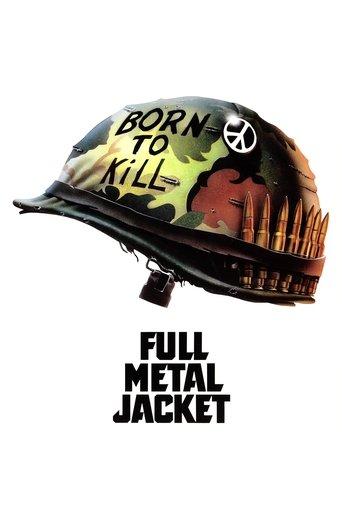
Full Metal Jacket
1987
The sourced concerns are substantially offset by delivered value.
What counts as a cash grab?
Commercial extraction prioritized over meaningful consumer or creative value. Profit, popularity, adaptations, sequels, remakes, high budgets, and normal marketing do not count by themselves.
Why?
Full Metal Jacket (1987) is Stanley Kubrick’s Vietnam-era war film and contemporary coverage consistently treats it as a high-effort auteur picture rather than a rushed commercial exploit. I found no credible reporting that the production or release was engineered as a predatory cash grab. Production and reviews emphasize Kubrick’s meticulous, sometimes troubled filmmaking, the adaptation credits with Michael Herr and Gustav Hasford, and ongoing licensed merchandising and reissues that appear routine, not deceptive or predatory.
- No credible contemporary or later reporting identifies predatory monetization, rushed release, or deceptive pricing tied to the film.
- Contemporary reviews and production coverage emphasize Kubrick’s meticulous direction and troubled, resource-intensive production.
- The screenplay is a credited adaptation by Kubrick, Michael Herr, and Gustav Hasford, indicating substantive creative work.
View full breakdownHide full breakdown
- Licensed apparel drops and later home-video reissues exist, but sources frame these as routine licensing rather than exploitative practices.
Score factors
| Direction | Factor | Evidence | Impact |
|---|---|---|---|
| Against | Directorial craft and production | Stanley Kubrick directed and produced Full Metal Jacket, contemporary reviews and production reporting describe meticulous, costly, and sometimes troubled on-location work.[3][2][1] | -18 |
| Against | Adaptation and authorship | The screenplay is credited to Stanley Kubrick with Michael Herr and Gustav Hasford, adapting Hasford’s novel The Short-Timers, showing substantive adaptation and authorship work.[1][2] | -16 |
| Against | Stylistic risk and authenticity | Critics and production accounts cite the film’s two-part structure, realistic boot-camp sequences and use of former drill-instructor Lee Ermey, indicating artistic and technical risk taken for authenticity.[4][6][1] | -9 |
| Against | Standard release and box office | The film received a standard theatrical distribution and substantial box office gross, with box office and trade reporting describing a normal commercial release rather than deceptive practices.[5][1] | -9 |
| For | Licensed merchandising and reissues | Documented licensed apparel drops and anniversary merchandise exist, for example Mondo apparel and anniversary coverage, but sources present these as routine licensing rather than predatory monetization.[7][8] | +5 |
| For | No credible allegations of predatory practices found | Searches of contemporary reviews, major press production reporting and later coverage turned up no credible allegations of predatory pricing, deceptive release, or rushed, cash-driven production tied to the film.[4][3][2] | +4 |
Confidence: High · Contemporary reviews, box office records and production reporting from major outlets consistently document auteur-driven, resource-intensive production and adaptation, and I found no credible reporting of predatory monetization or deceptive release practices, though licensed merchandise and later re · Researched 2026-07-28
Sources reviewed
- [1]en.wikipedia.org
- [2]www.denofgeek.com
- [3]www.latimes.com
- [4]www.rogerebert.com
- [5]www.boxofficemojo.com
- [6]www.latimes.com
- [7]mondoshop.com
- [8]www.military.com
- [9]fullmetaljacket.com
- [10]content.propstore.com
View 53 more sourcesShow fewer sources
- [11]fullmetaljacket.com
- [12]content.propstore.com
- [13]humanitiesinstitute.org
- [14]www.fire.org
- [15]www.mentalfloss.com
- [16]moviesense.io
- [17]digital-collections.csun.edu
- [18]www.slashfilm.com
- [19]www.criteriononline.com
- [20]govdocs.nebraska.gov
- [21]www.reddit.com
- [22]arxiv.org
- [23]www.reddit.com
- [24]www.reddit.com
- [25]www.reddit.com
- [26]www.reddit.com
- [27]www.reddit.com
- [28]www.reddit.com
- [29]www.reddit.com
- [30]www.reddit.com
- [31]www.reddit.com
- [32]www.reddit.com
- [33]www.reddit.com
- [34]arxiv.org
- [35]arxiv.org
- [36]arxiv.org
- [37]www.rottentomatoes.com
- [38]www.imdb.com
- [39]www.washingtonpost.com
- [40]www.imdb.com
- [41]www.filmspiegel.de
- [42]www.latimes.com
- [43]mrqe.com
- [44]www.cine.com
- [45]journals.openedition.org
- [46]www.rarenewspapers.com
- [47]de.wikipedia.org
- [48]coolpapae.com
- [49]libres.uncg.edu
- [50]en.wikipedia.org
- [51]www.reddit.com
- [52]rauli.cbs.dk
- [53]honors.libraries.psu.edu
- [54]en.wikipedia.org
- [55]es.wikipedia.org
- [56]en.wikipedia.org
- [57]www.reddit.com
- [58]www.reddit.com
- [59]www.reddit.com
- [60]www.reddit.com
- [61]www.reddit.com
- [62]www.reddit.com
- [63]www.reddit.com
What does the community think?
The AI sees low cash-grab risk. What's your read?
Loading community verdict…