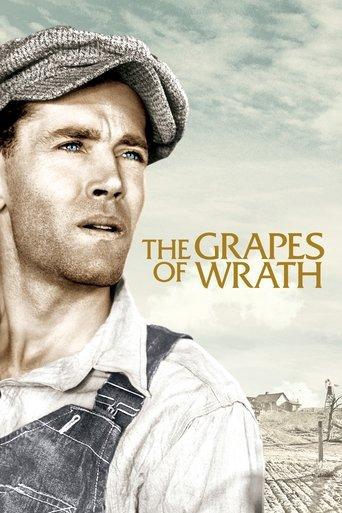
The Grapes of Wrath
1940
The sourced concerns are substantially offset by delivered value.
What counts as a cash grab?
Commercial extraction prioritized over meaningful consumer or creative value. Profit, popularity, adaptations, sequels, remakes, high budgets, and normal marketing do not count by themselves.
Why?
The Grapes of Wrath (1940) is a major studio adaptation directed by John Ford and produced by Twentieth Century-Fox, with top craftspeople and Academy recognition. Contemporary documentation and later archival summaries show careful production, location work, and awards including Best Director and Best Supporting Actress, and note fidelity to John Steinbeck's novel. Searches of production histories, studio records, and film-archive materials turned up no credible evidence of predatory monetization, rushed or deceptive release, or price/value exploitation associated with the 1940 release.
- Directed by John Ford with top technicians and Academy awards, indicating substantial production craft.
- Contemporary and retrospective sources describe the film as a serious, faithful adaptation of Steinbeck.
- Archival records show normal production and release scheduling rather than deceptive rushing.
View full breakdownHide full breakdown
- No sources consulted document predatory monetization, merchandising schemes, or explicit cash-grab practices tied to the 1940 release.
Score factors
| Direction | Factor | Evidence | Impact |
|---|---|---|---|
| Against | Production craft | The film was directed by John Ford with high-profile technicians and won major awards, showing significant studio investment in craft.[4][3] | -20 |
| Against | Faithful adaptation and critical reception | Contemporary and later film histories describe the movie as a serious, largely faithful cinematic adaptation of Steinbeck's novel that was and remains critically respected.[5] | -17 |
| Against | Archival documentation | Library of Congress and Stanford Steinbeck project materials document the production timeline, credits, and release, supporting a standard studio production rather than a deceptive commercial scheme.[1][2] | -12 |
| For | No exploitative monetization found | Searches of production histories, archival summaries, and major film-reference sources produced no credible evidence of predatory monetization, excessive franchise exploitation, or deceptive pricing tied to the 1940 release.[1][2] | +10 |
| Against | Awards and recognition | At the 13th Academy Awards the film won Best Director and Best Supporting Actress and received multiple nominations, confirming critical and industry recognition.[6] | -9 |
Confidence: High · The conclusion is based on multiple authoritative primary and secondary sources including studio and archive records, major film institutions, and the Academy, and these sources contain specific production, release, and award details while producing no credible evidence of exploitation. · Researched 2026-08-07
Sources reviewed
- [1]www.loc.gov
- [2]steinbeck.stanford.edu
- [3]www.encyclopedia.com
- [4]www.tcm.com
- [5]www.bfi.org.uk
- [6]www.oscars.org
- [7]en.wikipedia.org
- [8]en.wikipedia.org
- [9]en.wikipedia.org
- [10]en.wikipedia.org
View 13 more sourcesShow fewer sources
What does the community think?
The AI sees low cash-grab risk. What's your read?
Loading community verdict…