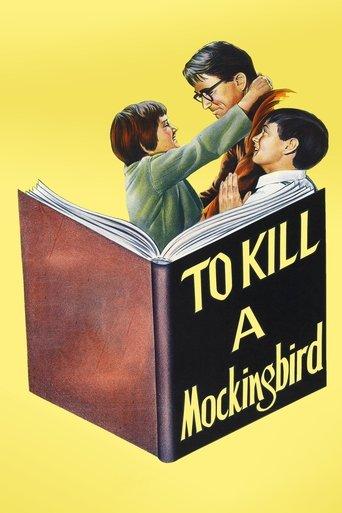
To Kill a Mockingbird
1962
The sourced concerns are substantially offset by delivered value.
What counts as a cash grab?
Commercial extraction prioritized over meaningful consumer or creative value. Profit, popularity, adaptations, sequels, remakes, high budgets, and normal marketing do not count by themselves.
Why?
To Kill a Mockingbird (1962) shows strong evidence of being a carefully produced literary adaptation rather than a commercial cash grab. Contemporary production reporting documents a deliberate adaptation by Horton Foote, direction by Robert Mulligan, and high-profile casting choices. The film earned major awards recognition and enduring cultural status, including selection for the Library of Congress National Film Registry. Searches of production reporting, box-office databases, and preservation records turned up no credible reports of predatory monetization, rushed release tactics, or deceptive pricing for the original release.
- No credible sources report predatory monetization or deceptive release practices for the 1962 film.
- Contemporary production accounts document deliberate adaptation and careful casting by a committed creative team.
- The film received major awards recognition, including Academy Award win(s) and multiple nominations.
View full breakdownHide full breakdown
- Selected for preservation in the Library of Congress National Film Registry, indicating lasting cultural value.
Score factors
| Direction | Factor | Evidence | Impact |
|---|---|---|---|
| Against | Production and creative investment | Contemporary production reporting documents direction by Robert Mulligan, a screenplay by Horton Foote, producer Alan J. Pakula, and careful casting that included Gregory Peck and introduced Robert Duvall, indicating significant creative investment.[2][1] | -18 |
| Against | Substantive adaptation | Horton Foote adapted Harper Lee's novel into a full-length screenplay praised in production accounts, showing substantive new cinematic work rather than simple low-effort reuse.[4][1] | -16 |
| For | Absence of credible exploitation reports | Searches of production reporting, trade coverage, and preservation records did not locate credible reporting of predatory monetization, rushed release, or deceptive practices tied to the 1962 release or primary reissues.[2][1][3] | +15 |
| Against | Cultural preservation | The Library of Congress selected To Kill a Mockingbird for the National Film Registry in 1995 as culturally, historically, or aesthetically significant.[3][5] | -11 |
| Against | Critical acclaim and awards | The film received major awards recognition at the 35th Academy Awards with multiple nominations and a Best Actor win for Gregory Peck, reflecting recognized artistic value.[6] | -9 |
Confidence: High · Authoritative production histories, box-office databases, and Library of Congress records provide strong specific evidence about the 1962 film, and searches found no credible sources alleging exploitative monetization, though exhaustive archival merchandising accounting was not consulted. · Researched 2026-08-10
Sources reviewed
- [1]catalog.afi.com
- [2]www.tcm.com
- [3]www.loc.gov
- [4]www.tcm.com
- [5]www.loc.gov
- [6]en.wikipedia.org
- [7]www.boxofficemojo.com
- [8]www.tcm.com
- [9]www.the-numbers.com
- [10]en.wikipedia.org
View 42 more sourcesShow fewer sources
- [11]www.imdb.com
- [12]www.boxofficemojo.com
- [13]en.wikipedia.org
- [14]en.wikipedia.org
- [15]www.imdb.com
- [16]worldwideboxoffice.com
- [17]en.wikipedia.org
- [18]www.moma.org
- [19]citeseerx.ist.psu.edu
- [20]en.wikipedia.org
- [21]www.nps.gov
- [22]en.wikipedia.org
- [23]www.electronicsandbooks.com
- [24]uclamediascapearchive.erraticplay.com
- [25]www.theatre3dallas.com
- [26]www.reddit.com
- [27]www.reddit.com
- [28]www.reddit.com
- [29]www.loc.gov
- [30]www.kpl.gov
- [31]awardsdatabase.oscars.org
- [32]www.govinfo.gov
- [33]authorities.loc.gov
- [34]search.cpl.org
- [35]www.loc.gov
- [36]awardsdatabase.oscars.org
- [37]awardsdatabase.oscars.org
- [38]www.loc.gov
- [39]www.kpl.gov
- [40]digitalcollections.oscars.org
- [41]digitalcollections.oscars.org
- [42]digitalcollections.oscars.org
- [43]en.wikipedia.org
- [44]eidr.org
- [45]en.wikipedia.org
- [46]en.wikipedia.org
- [47]en.wikipedia.org
- [48]www.reddit.com
- [49]www.reddit.com
- [50]www.reddit.com
- [51]www.reddit.com
- [52]www.reddit.com
What does the community think?
The AI sees low cash-grab risk. What's your read?
Loading community verdict…