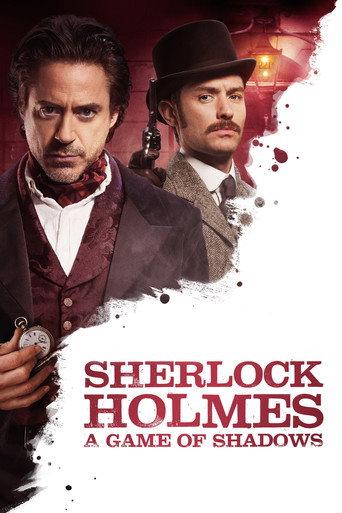
Sherlock Holmes: A Game of Shadows
2011
The sourced concerns are substantially offset by delivered value.
What counts as a cash grab?
Commercial extraction prioritized over meaningful consumer or creative value. Profit, popularity, adaptations, sequels, remakes, high budgets, and normal marketing do not count by themselves.
Why?
Sherlock Holmes: A Game of Shadows (2011) shows no credible, sourced evidence of predatory monetization or rushed deceptive release practices; it received a standard theatrical rollout, conventional home video and soundtrack releases, and widely reported box office success. Contemporary coverage criticizes storytelling and some creative choices, while praising cast performances and action sequences, and production records show a large-scale sequel production with substantial budget and effects work. Taken together the published record supports that the film was a commercial sequel but lacks direct evidence of deliberate exploitation beyond ordinary franchise planning.
- No authoritative reporting found that the film used predatory monetization or paywalled extras at release.
- The film was a high-budget, widely distributed sequel with $543 million plus reported worldwide gross.
- Contemporary reviews note expanded action and production values rather than accusations of lazy asset reuse.
View full breakdownHide full breakdown
- Home media and soundtrack releases followed normal commercial patterns, not unusual premium gating.
Score factors
| Direction | Factor | Evidence | Impact |
|---|---|---|---|
| Against | Large scale production and investment | Production and box office records indicate a large scale commercial production, credited budget and industry reporting show substantial investment and global distribution culminating in a reported $543 million plus worldwide gross.[1] | -18 |
| Against | Substantive new content and setpieces | Reviews and coverage emphasize original action setpieces, new plot centered on Moriarty, and distinct sequences compared with the 2009 film, indicating substantive new creative content rather than trivial reuse.[3][2] | -15 |
| Against | Standard consumer releases | The film had standard consumer-facing releases including theatrical, home video and an official soundtrack, consistent with a complete product rather than a deliberately fragmented paid experience.[1] | -9 |
| For | Critical complaints without cash-grab claims | Contemporary critics criticized plot choices and stylization but primarily focused on storytelling and tone, they did not present evidence that the film was a deliberately low-effort reuse designed solely to extract consumers.[2][4] | +8 |
| For | Exploitative monetization absent | I found no authoritative sources reporting predatory monetization such as microtransactions, pay-to-win content, or paywalled theatrical add-ons tied to this film at release.[1] | +5 |
| For | No rushed or deceptive release evidence | Release history and reporting show a standard theatrical rollout and scheduled home video releases, with no reporting of deceptive last-minute releases or surprise premium schemes.[1] | +2 |
Confidence: High · Sourced industry records, box office databases, and contemporary reviews provide consistent coverage of the film's production, release, and reception, while I found no reputable reporting alleging predatory monetization or deceptive release practices; gaps remain only for internal studio intentions · Researched 2026-09-29
Sources reviewed
- [1]en.wikipedia.org
- [2]www.slantmagazine.com
- [3]www.reelviews.net
- [4]www.independent.co.uk
- [5]www.criticsatlarge.ca
- [6]antiscribe.com
- [7]www.jonathanlack.com
- [8]www.avforums.com
- [9]www.the-numbers.com
- [10]www.timesunion.com
View 15 more sourcesShow fewer sources
- [11]cinefeelyeah.net
- [12]blueprintreview.co.uk
- [13]www.kqed.org
- [14]en.wikipedia.org
- [15]en.wikipedia.org
- [16]en.wikipedia.org
- [17]yorkspace.library.yorku.ca
- [18]www.reddit.com
- [19]cnrsw.cnic.navy.mil
- [20]bloximages.newyork1.vip.townnews.com
- [21]en.wikipedia.org
- [22]www.reddit.com
- [23]arxiv.org
- [24]fr.wikipedia.org
- [25]ec.europa.eu
What does the community think?
The AI sees low cash-grab risk. What's your read?
Loading community verdict…