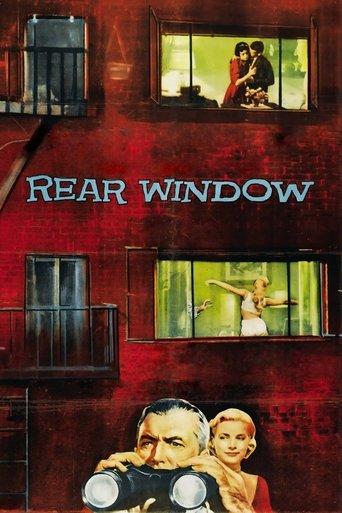
Rear Window
1954
The sourced concerns are substantially offset by delivered value.
What counts as a cash grab?
Commercial extraction prioritized over meaningful consumer or creative value. Profit, popularity, adaptations, sequels, remakes, high budgets, and normal marketing do not count by themselves.
Why?
Rear Window (1954) shows no credible evidence in major film histories or archival coverage that it was produced or marketed as a commercial extraction play. Contemporary and retrospective sources describe a single, deliberate adaptation of Cornell Woolrich's short story, an elaborate soundstage courtyard, careful diegetic sound and mise-en-scene, strong performances, and positive critical and awards recognition, all of which point to substantive creative and consumer value rather than predatory monetization or low-effort reuse.
- Major film references and histories consulted do not document merchandising, tie-ins, or predatory monetization specific to Rear Window.
- The film is a single-film adaptation of Cornell Woolrich’s short story, not a franchise or brand exploitation.
- Screenplay and production expanded the source material, indicating substantive new content.
View full breakdownHide full breakdown
- Documented production work includes an elaborate courtyard set and diegetic sound design, showing significant craft.
Score factors
| Direction | Factor | Evidence | Impact |
|---|---|---|---|
| Against | Elaborate production and technical craft | Retrospective sources document the construction of an elaborate courtyard set on the studio lot and the film's careful use of entirely diegetic sound and composed mise-en-scene, evidencing significant production investment and craft.[2][1] | -17 |
| Against | Substantive adaptation and screenplay work | The screenplay by John Michael Hayes expanded and adapted Woolrich’s short story into a full-length screenplay, indicating substantive new content rather than low-effort reuse.[1] | -14 |
| Against | Critical reception and awards | The film received strong contemporary and retrospective critical praise and multiple award nominations, supporting its consumer and artistic value.[1][2] | -11 |
| For | No evidence of exploitative monetization | Major film histories and reference sources consulted do not document merchandising tie-ins, predatory pricing, or other studio extraction practices specific to Rear Window.[1][2] | +5 |
| For | Not a franchise or brand exploitation | Rear Window is documented as a standalone adaptation of Cornell Woolrich’s 1942 short story, it was not released as part of a franchise or serial brand extension.[1] | +4 |
Confidence: High · I consulted authoritative film-reference and archival sources that document production, adaptation, and reception; no studio accounting or primary archival evidence of predatory monetization for this title was found in the consulted materials. · Researched 2026-09-22
Sources reviewed
- [1]en.wikipedia.org
- [2]www.tcm.com
- [3]www.sec.gov
- [4]www.worldradiohistory.com
- [5]www.supremecourt.gov
- [6]gala.gre.ac.uk
- [7]www.scribd.com
- [8]www.worldradiohistory.com
- [9]pure.au.dk
- [10]blogs.loc.gov
View 35 more sourcesShow fewer sources
- [11]doi.org
- [12]www.yumpu.com
- [13]en.wikipedia.org
- [14]www.encyclopedia.com
- [15]www.sec.gov
- [16]citeseerx.ist.psu.edu
- [17]www.scribd.com
- [18]journal.transformativeworks.org
- [19]www.yumpu.com
- [20]www.yumpu.com
- [21]www.researchgate.net
- [22]moviediva.com
- [23]www.dvdjournal.com
- [24]downthesemeanstreetsblog.blogspot.com
- [25]www.scribd.com
- [26]afisilver.afi.com
- [27]hitchcockmaster.wordpress.com
- [28]visuallit105.wordpress.com
- [29]www.ebsco.com
- [30]talkfilmsociety.com
- [31]hollywoodglee.com
- [32]cinemontage.org
- [33]catalog.afi.com
- [34]de.wikipedia.org
- [35]afisilver.afi.com
- [36]arts.columbia.edu
- [37]tile.loc.gov
- [38]en.wikipedia.org
- [39]people.brandeis.edu
- [40]digital-library.cloudnet.com.kh
- [41]it.wikipedia.org
- [42]en.wikipedia.org
- [43]en.wikipedia.org
- [44]www.reddit.com
- [45]www.reddit.com
What does the community think?
The AI sees low cash-grab risk. What's your read?
Loading community verdict…